Zielinsky presents at Art Basel Miami Beach, Moist, Smoke and Hole, featuring new works by three Brazilian artists: oil and acrylic paintings created for the fair by Rodrigo Bivar (b. 1981), smoke-based action paintings by Shirley Paes Leme (b. 1955), and a video installation by Pedro Torres (b. 1982), produced with a grant from the Spanish Ministry of Culture.
Though rooted in distinct practices, the projects converge in a shared investigation of painting and its extensions and warps, as well as notions of atmospheric order: moisture, smoke and quantum particles. Through different materialities, temporalities, and scales, the works challenge the notion of a stable image of the world, engaging displacement, opacity, wandering, and impermanence.
The works presented in this project share an interest in images that evade fixed definitions, shift between states, and resist definitive capture. Together, they propose the image as a transitory and performative condition, constantly shaped by processes of transformation.
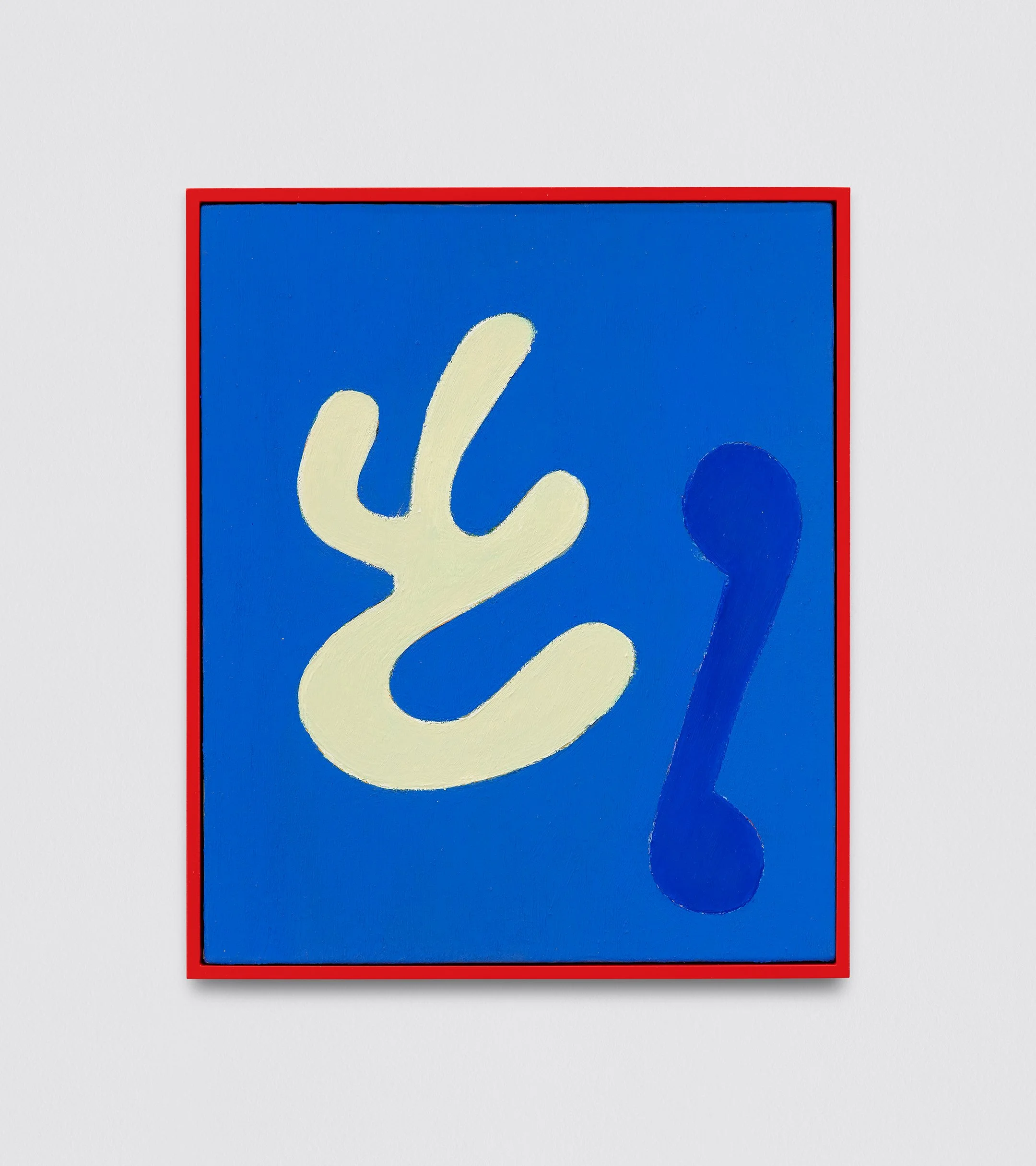
In Rodrigo Bivar’s work, landscape is no longer a place to be represented but a condition experienced through painting. Oscillating between recognition and indeterminacy, his works evoke humid and saturated environments reminiscent of an imagined Atlantic Forest, where moisture, sedimentation, and collapse become gesture and form. Figures and chromatic fields emerge as provisional states rather than stable images, producing a pictorial space shaped by transformation and atmospheric forces.
The installation remains in a state of continuous reconfiguration throughout the fair. Large panoramic paintings serve as supports for smaller abstract canvases attached to their surfaces through hooks that pierce the larger works and connect to the back of the smaller ones. Additional paintings are stored in a cabinet within the booth, allowing the composition to be continually transformed.
During the period of lowest humidity and greatest light incidence in Miami Beach, between 12pm and 2pm, the installation is activated through a performative action. The artist, gallery staff, and visitors are invited to alter the arrangement of the paintings, transforming the booth into a shifting environment shaped by atmospheric conditions. Painting becomes responsive to climate, movement, and collective participation.
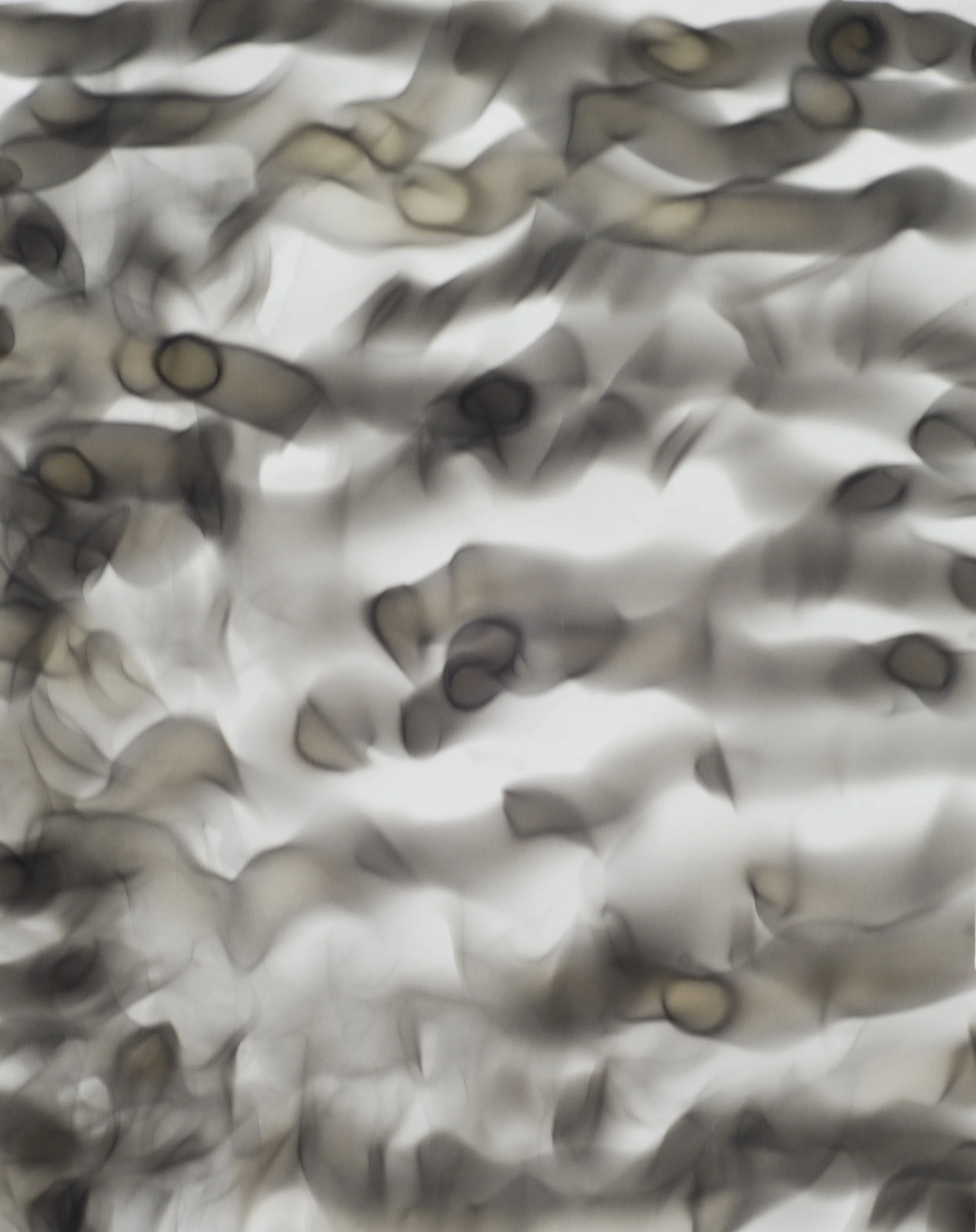
In Shirley Paes Leme’s work, smoke becomes a means of registering what resists permanence. Since the 1970s, the artist has worked with ephemeral materials such as smoke, soot, dust, light, air, blood, pollen, investigating forms that exist between presence and disappearance. Her drawings and paintings transform transient phenomena into traces, operating at the threshold between event and image.
For ABMB, Paes Leme presents a new body of paintings produced through the deposition of smoke onto canvas. Generated through a process that embraces chance and the unpredictable behavior of an unstable material, the works record the movement of soot as it accumulates in layers of varying density. Rather than representing an image, each painting registers an event. Smoke becomes both medium and subject: a material suspended between matter and immateriality, permanence and dissolution.
Paes Leme reverses the conventional position of the canvas: lying on the floor, she works on a surface positioned above her body. Using a kerosene lamp, she produces smoke whose soot settles on the canvas, forming drawings through the movement of air and its interaction with the surface. In this process, the gesture involves a kind of choreography between body and matter, in which the artist directs the action but does not fully control the paths taken by the smoke.
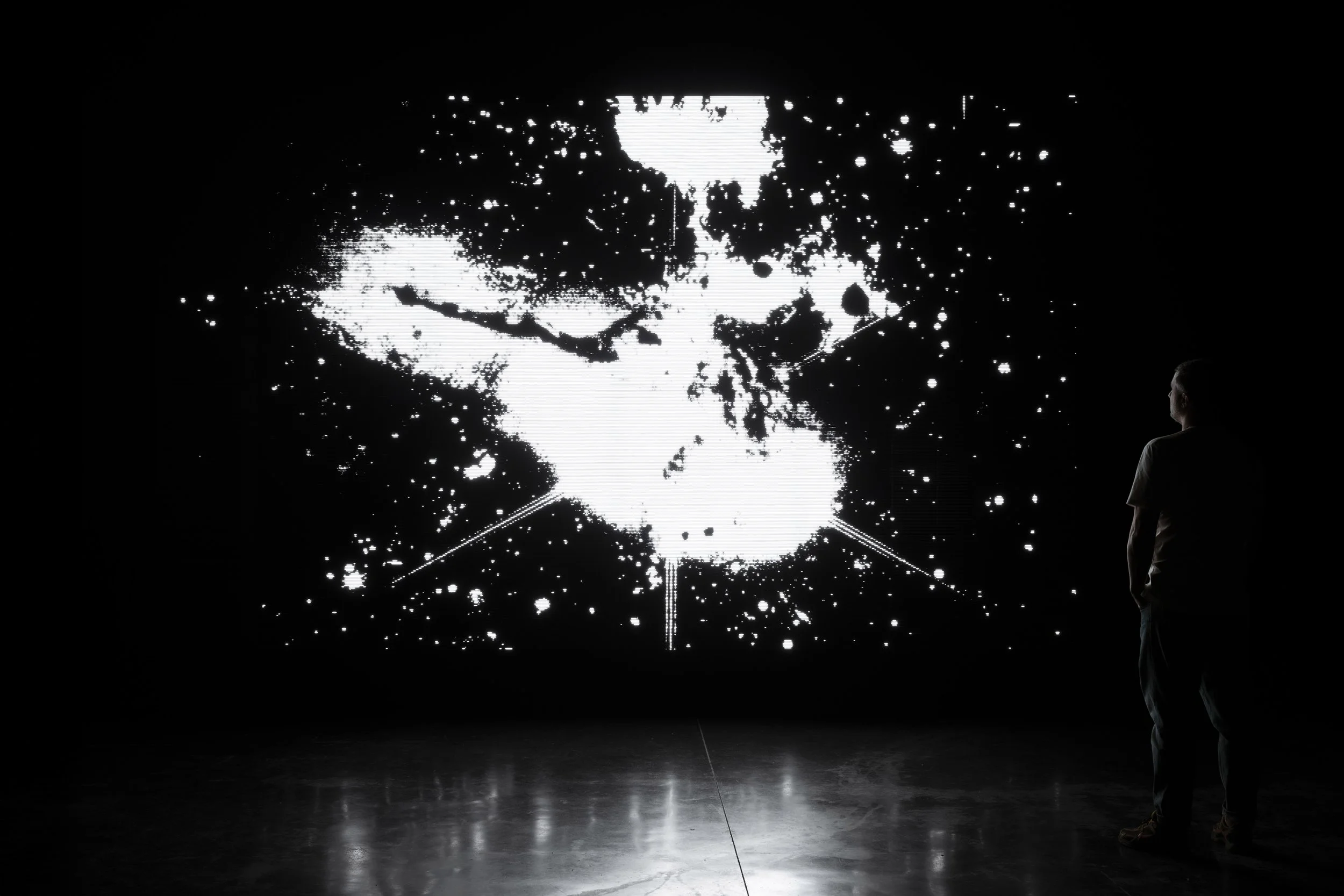
In The Hole in the Grain, Pedro Torres approaches space not as a continuous field but as a constellation of discontinuous relations. Drawing on theories of granular space, the work explores the possibility that reality is composed of finite particles whose connections remain unstable and contingent.
Developed through research on Joan Miró’s work, the installation combines astronomical phenomena and microscopic realms through archival images with Miró’s pictorial space. Through digital processing, these materials lose their descriptive character and become abstract visual sequences suspended between recognition and abstraction. Engaging with Édouard Glissant’s notion of errantry, the work opens a space for imagination, association, and wandering, where images remain in constant movement between different scales and systems of perception.
Moisture, smoke, and particles function throughout the project as material and conceptual agents through which images emerge, transform, and dissolve. Rather than presenting fixed representations, the works create situations in which painting expands beyond its conventional limits, becoming atmosphere, trace, event, and process.