Cobra Norato
Claudio Cretti, Denis Moreira, Gabriel Giucci, Lia Chaia, Lucas Cordeiro, Renata Padovan, Rodrigo Bivar, Trojany e Vera Chaves Barcellos
Curadoria
Adriano Casanova
Inauguração
28 de março, 2026
15h-19h
28 de março –
30 de maio, 2026
Zielinsky São Paulo
PDF preview
COBRA NORATO
Publicado em 1931, Cobra Norato, de Raul Bopp, ocupa uma posição singular no modernismo brasileiro. O poema, escrito em 1927, tornou-se um marco do movimento antropofágico, que nasce em sequência à Semana de 22. Bopp foi gerente da Revista de Antropofagia, uma das referências desse movimento, encabeçado também por Oswald de Andrade, Tarsila do Amaral, Anita Malfatti e outros artistas vanguardistas da geração.
Essa introdução é necessária para contextualizar Cobra Norato, que narra a história de um homem que veste a pele de uma cobra para atravessar a Floresta Amazônica. Inspirado no folclore amazônico do Honorato, o livro parte do olhar de um gaúcho, descendente de alemães, que se encanta pela floresta e por suas mitologias.
Esse gesto é decisivo: não se trata de uma releitura metafórica qualquer, mas de uma fantasia narrada pelo autor — uma travessia possível apenas porque o personagem abandona sua condição humana estável e assume uma forma animal.
O percurso do livro não é somente geográfico; é uma mudança de estado de espírito. Cobra Norato não permanece em posição voyeurística diante da floresta. Além de observá-la, passa a existir dentro dela, num gesto claro de pertencimento que exemplifica de maneira direta a relação entre homem e natureza.
Ao longo do poema surgem continuamente animais e criaturas indefinidas — serpentes, aves, peixes, insetos, raízes, rios, galhos e lama — que ajudam a ambientar o leitor e a organizar a própria narrativa. Cada encontro de Norato sugere uma nova perspectiva da floresta, situando-o nesse espaço utópico e indicando que é o homem quem deve adaptar-se ao entorno, e não o contrário. Há aí uma posição sobre a natureza e, sobretudo, sobre a simbiose entre humano e animal, entre o homem e seu habitat.
Essa condição aproxima o livro de um pensamento xamânico, não em sentido religioso ou folclórico, mas estrutural: atravessar territórios implica mudar de corpo, alterar o ponto de vista, experimentar outras formas de existência. Avança-se quando se admite não ser inteiramente humano.
É justamente nessa perspectiva que Cobra Norato realiza de modo particular a antropofagia modernista. A antropofagia não propõe uma síntese entre cultura e natureza nem a recuperação de uma origem. Ela devora aquilo que não domina para modificar a própria forma de ver e existir.
Na exposição, essa operação é revisitada. Os trabalhos reunidos não têm a função de ilustrar o livro nem de tomar a Amazônia como tema. O que os aproxima é a investigação de situações em que o humano deixa de ser medida absoluta do espaço.
A recorrência de animais e pássaros no poema aparece visualmente. Surgem nas pinceladas do brasiliense Rodrigo Bivar e do carioca Gabriel Giucci, assim como nas composições escultóricas do belenense Cláudio Cretti e do itapetinguense Lucas Cordeiro.
Essas obras deslocam a percepção do observador, confrontando o visitante com formas de vida que não compartilham sua lógica. A escala da imagem e da experiência se altera; o olhar deixa de ocupar posição central para adaptar-se ao ambiente.
Não se trata de representação fantástica, mas de investigação sobre mudança de perspectiva proposta pelo artista contemporâneo — distante da antropofagia histórica da Semana de 22 — que pergunta qual é o homem híbrido de hoje: um ser em metamorfose, animal político, estético e tribal.
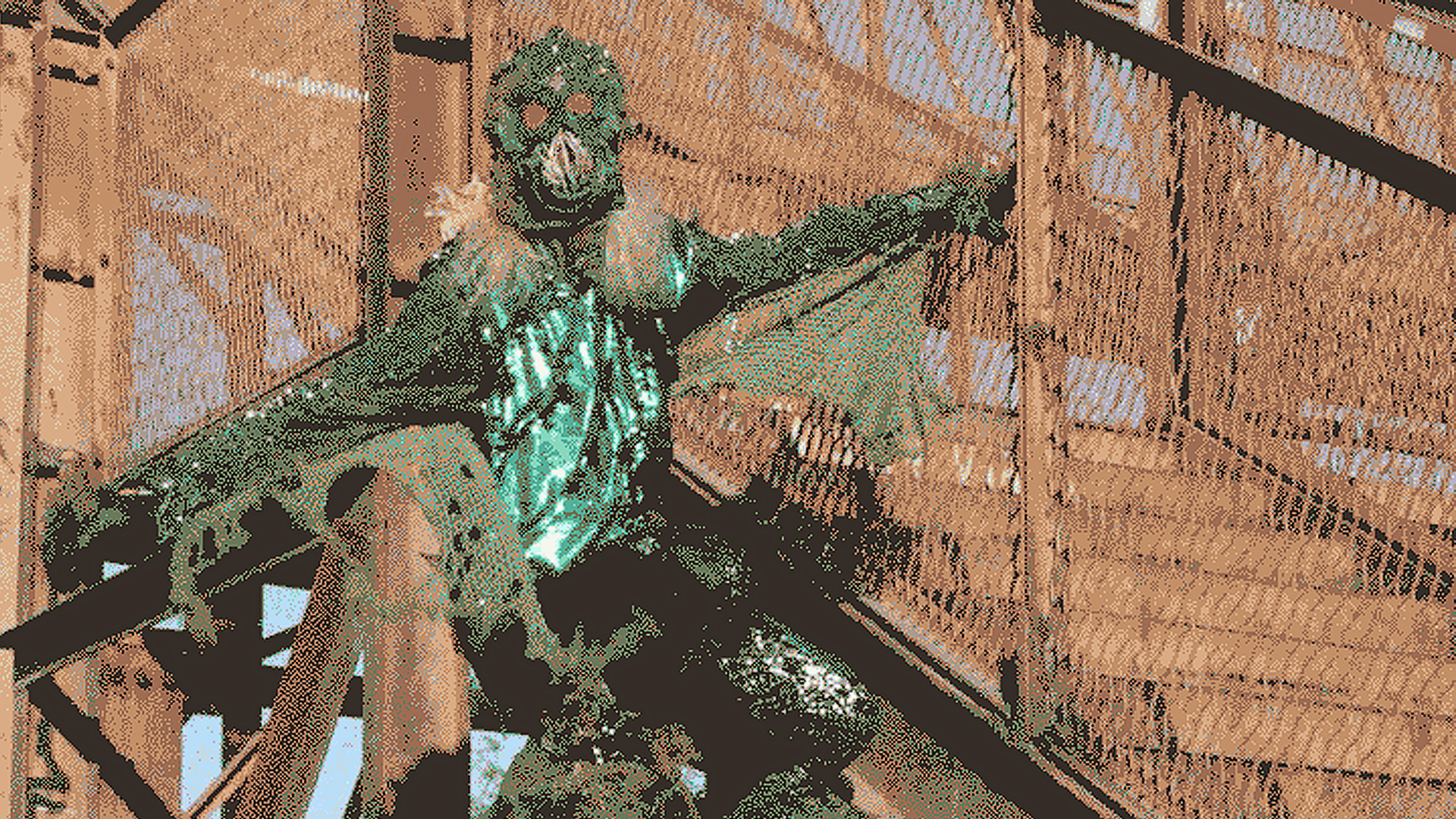
Alguns trabalhos explicitam esse estado intermediário por meio de figuras híbridas, corpos ambíguos e presenças entre humano e animal. Em Jacarecangoscópio, a icoense Trojany parte da história de criação do bairro Jacarecanga, em Fortaleza, e produz animações em que um ser quase monstruoso ocupa simultaneamente cidade e rio. Em paralelo, o paulistano Denis Moreira dá continuidade à sua pesquisa sobre ancestralidade em uma série de aquarelas nas quais um ser encantado surge como presença recorrente, situado numa espiritualidade mágica.
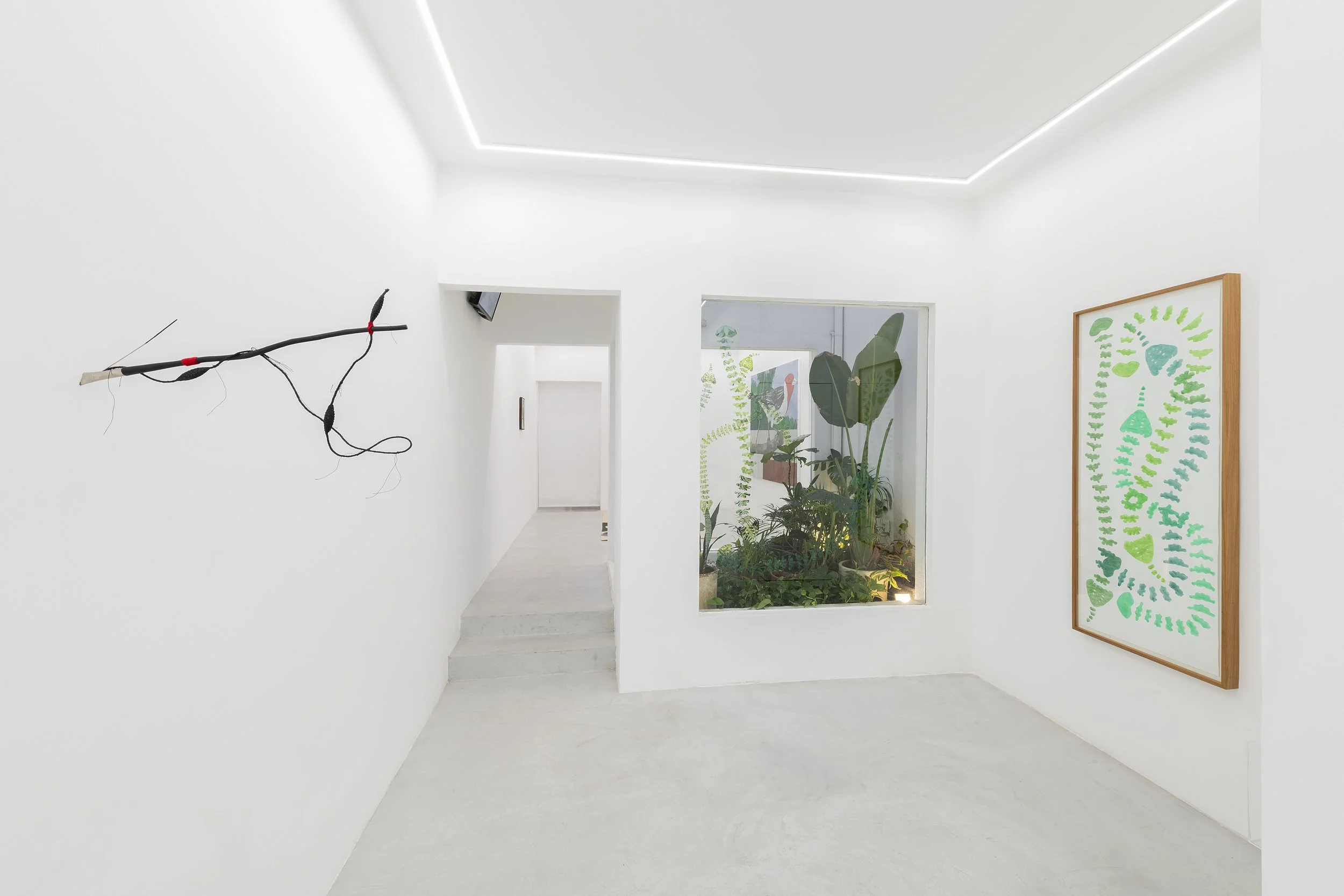
Também paulistana, Lia Chaia intervém na galeria com uma derivação site-specific de sua série Vértebra por vértebra, abraçando o espaço com desenhos de ossos que remetem a folhas ou serpentes.
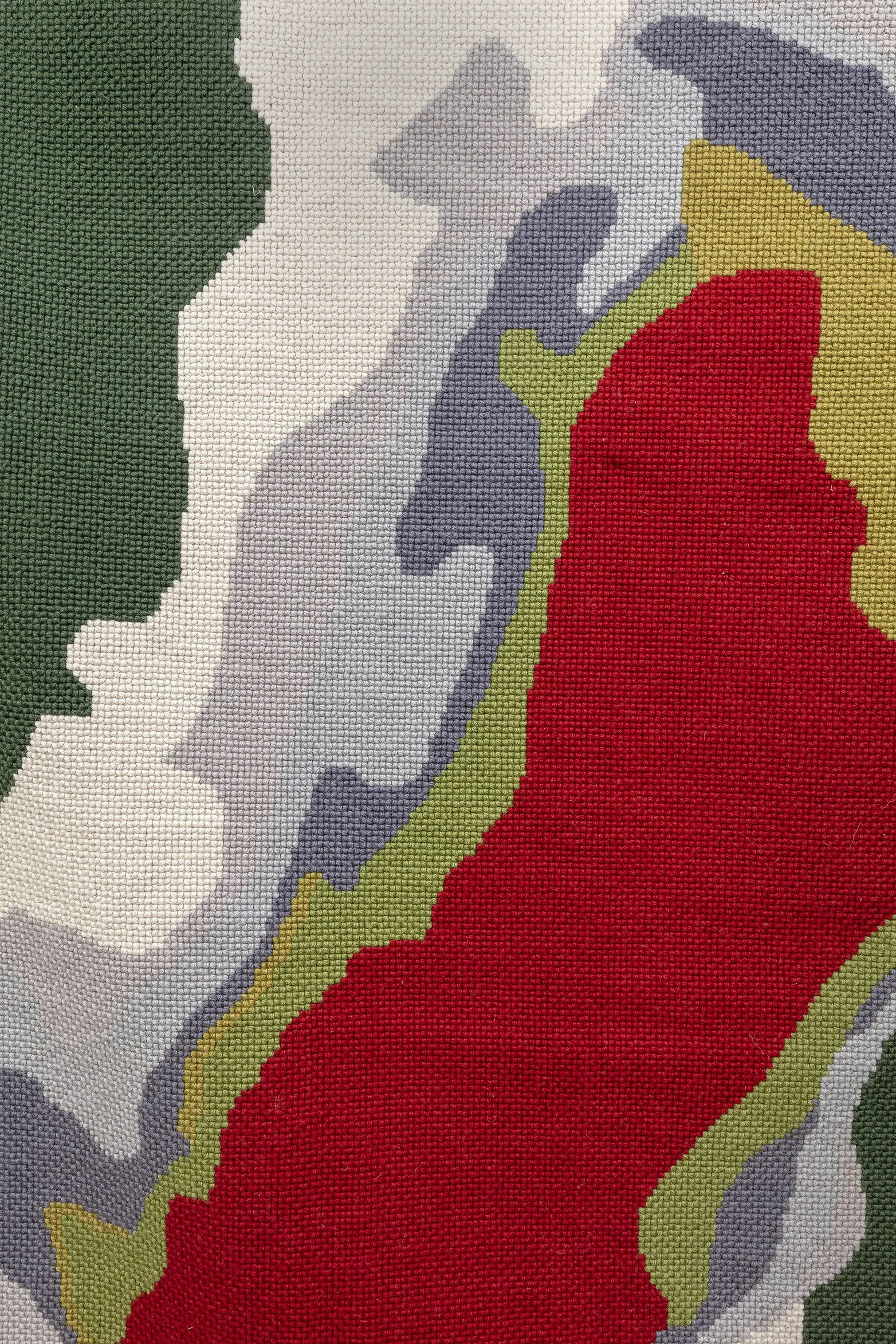
Quando surgem mapas ou delimitações, revelam sua insuficiência. São territórios que não se fixam inteiramente na representação: reorganizam a rota e a experiência. Como no poema, deslocar-se implica lidar com desvios e interrupções para tornar-se parte da narrativa. Em Rompimento (1969), a porto-alegrense Vera Chaves Barcellos apresenta uma forma geométrica atravessada por uma linha orgânica que remete a uma serpente. Em contraponto, a paulistana Renata Padovan, na série Para saber onde está pisando — um tapete produzido por bordadeiras pernambucanas da Casa Caiada — apresenta a imagem de satélite da nuvem de fumaça que encobriu milhões de quilômetros quadrados da América do Sul em 7 de setembro de 2022.
Os trabalhos da exposição operam por desgaste, repetição ou crescimento; o tempo atua diretamente sobre a matéria. A natureza não aparece como imagem, mas como processo. O que se apresenta não é a paisagem da floresta, mas a experiência de coexistir com ritmos que não seguem a lógica produtiva humana.
A atualidade de Raul Bopp decorre desse deslocamento. Cobra Norato antecipa uma questão contemporânea: a crise da separação entre homem e natureza.
A importância do livro para a história da arte brasileira passa por essa inflexão. Ao deslocar a natureza de motivo representado para experiência perceptiva, Bopp contribuiu para uma imaginação moderna em que o ambiente deixa de ser fundo pictórico e passa a ser condição de trabalho. A arte já não representa a natureza: passa a operar com ela.
E, no momento em que o livro termina, a exposição se inicia:
“Quero povo de Belém, de Porto Alegre, de São Paulo!”
Adriano Casanova. Março de 2026.
Agradecimento: Galeria Marilia Razuk e Vermelho
Cobra Norato
Claudio Cretti, Denis Moreira, Gabriel Giucci, Lia Chaia, Lucas Cordeiro, Renata Padovan, Rodrigo Bivar, Trojany and Vera Chaves Barcellos
Curated by
Adriano Casanova
Opening
march 28, 2026
3–7pm
march 28 –
may 30, 2026
Zielinsky São Paulo
PDF preview
COBRA NORATO
Published in 1931, Cobra Norato, by Raul Bopp, occupies a singular position within Brazilian modernism. Written in 1927, the poem became a landmark of the Anthropophagic movement¹, which emerged in the aftermath of the Week of 22². Bopp served as manager of Revista deAntropofagia, one of the references of this movement, also led by Oswald de Andrade, Tarsila do Amaral, Anita Malfatti, and other avant-garde artists of the generation.
This introduction is necessary to contextualize Cobra Norato, which tells the story of a man who puts on the skin of a snake in order to cross the Amazon rainforest. Inspired by the Amazonian folklore of Honorato, the book unfolds from the perspective of a gaúcho³, a descendant of Germans, who becomes enchanted with the forest and its mythologies.
This gesture is decisive: it is not merely a metaphorical reinterpretation, but a fantasy narrated by the author - a journey made possible only because the character abandons his stable human condition and assumes an animal form.
The trajectory of the book is not merely geographical; it is a change in state of mind. Cobra Norato does not remain in a voyeuristic position before the forest. Beyond observing it, he begins to exist within it, in a clear gesture of belonging that directly exemplifies the relationship between human beings and nature.
Throughout the poem, animals and undefined creatures constantly appear - snakes, birds, fish, insects, roots, rivers, branches, and mud - helping to situate the reader and organize the narrative itself. Each encounter with Norato suggests a new perspective on the forest, placing him within this utopian space and indicating that it is humans who must adapt to their surroundings, not the other way around. What emerges here is a stance on nature and, above all, on the symbiosis between human and animal, between humans and their habitat.
This condition brings the book close to a shamanic mode of thought, not in a religious or folkloric sense, but in a structural one: crossing territories implies changing bodies, altering one’s point of view, and experimenting with other forms of existence. One advances when one admits not being entirely human.
It is precisely from this perspective that Cobra Norato enacts modernist anthropophagy in a particular way. Anthropophagy does not propose a synthesis between culture and nature, nor a recovery of some original state. Rather, it devours what it does not dominate in order to transform its own way of seeing and existing.
In the exhibition, this operation is revisited. The works gathered here do not aim to illustrate the book nor to treat the Amazon as a theme. What connects them is the investigation of situations in which the human ceases to be the absolute measure of space.
The recurrence of animals and birds in the poem appears visually. They emerge in the brushstrokes of the brasiliense⁴ artist Rodrigo Bivar and the carioca⁵ Gabriel Giucci, as well as in the sculptural compositions of the belenense⁶ Cláudio Cretti and the itapetinguense⁷ Lucas Cordeiro.
These works shift the observer’s perception, confronting visitors with forms of life that do not share their logic. The scale of image and experience changes: the gaze ceases to occupy a central position and must adapt to the environment.
This is not a matter of fantastic representation, but an investigation into a change of perspective proposed by contemporary artists - distant from the historical anthropophagy of the Week of 22 - who ask what the hybrid human of today might be: a political being in aesthetical and tribal metamorphosis.
Some works make this intermediate state explicit through hybrid figures, ambiguous bodies, and presences between human and animal. In Jacarecanganoscópio, the cearense⁸ artist Trojany draws on the history of the creation of the Jacarecanga neighborhood in Fortaleza and produces animations in which an almost monstrous being simultaneously occupies city and river. In parallel, the paulistano⁷ Denis Moreira continues his research on ancestry in a series of watercolors in which an enchanted being appears as a recurring presence, situated within a magical spirituality.
Also the paulistana⁹ artist Lia Chaia intervenes in the gallery with a site-specific derivation of her series Vértebra por Vertebra, embracing the space with drawings of bones that evoke leaves or serpents.
When maps or boundaries appear, they reveal their insufficiency. These are territories that do not fully settle into representation: they reorganize routes and experience. As in the poem, displacement involves dealing with detours and interruptions in order to become part of the narrative. In Rompimento (1969), the portoalegrense⁹ Vera Chaves Barcellos presents a geometric form crossed by an organic line that evokes a serpent. In contrast, the paulista Renata Padovan, in the series Para saber onde está pisando — a carpet produced by embroiderers from Pernambuco by Casa Caiada — presents a satellite image of the smoke cloud that covered millions of square kilometers of South America on September 7, 2022.
The works in the exhibition operate through erosion, repetition, or growth: time acts directly upon matter. Nature does not appear as image, but as a process. What is presented is not the landscape of the forest, but the experience of coexisting with rhythms that do not follow the logic of human productivity.
The contemporary relevance of Raul Bopp arises from this displacement. Cobra Norato anticipates a contemporary issue: the crisis of the separation between humans and nature.
The importance of the book for the history of Brazilian art lies in this inflection. By shifting nature from represented motif to perceptual experience, Bopp contributed to a modern imagination in which the environment ceases to be a pictorial background and becomes a condition of artistic work. Art no longer represents nature: it begins to operate with it.
And at the moment when the book ends, the exhibition begins:
“I want people from Belém, from Porto Alegre, from São Paulo!”
Adriano Casanova. March, 2026.
Acknowledgements: Galeria Marilia Razuk and Vermelho
___
¹ Anthropophagy (Antropofagia) - A Brazilian modernist concept formulated in 1928, proposing the symbolic “devouring” of European cultural influences to create something new and local.
² Week of 22 (Semana de 22) - The Week of Modern Art held in São Paulo in 1922, considered the founding event of Brazilian modernism.
³ Gaúcho - A cultural identity associated with southern Brazil (especially Rio Grande do Sul), linked to rural traditions, cattle culture and regional customs.
⁴ Brasiliense - A person from Brasília, the capital city of Brazil.
⁵ Carioca - A person who lives or comes from the city of Rio de Janeiro.
⁶ Belenense - A person from Belém, capital of the state of Pará in northern Brazil.
⁷ Itapetinguense – A person from Itapetinga, Bahia in the northern of Brazil.
⁸ Cearense - A person from the city of Ceará, a region in the northern of Brazil.
⁹ Paulistano / Paulistana - A person from the city of São Paulo, southeast of Brazil.
¹⁰ Portoalegrense - A person who comes from Porto Alegre, a city in the state of Rio Grande do Sul, a southern region of Brazil.