Duplicar y repetir
Cisco Merel, Cybèle Varela, Lotty Rosenfeld, Robert Llimós, Valdirlei Dias Nunes y Vera Chaves Barcellos
Inauguración
7 de julio / 11h-19h
Exposición
7 de julio
- 10 de septiembre, 2026
Zielinsky Barcelona
Zielinsky Barcelona se complace en presentar, del 7 de julio al 10 de septiembre de 2026, “Duplicar y repetir”, exposición colectiva formada por Cisco Merel, Cybèle Varela, Lotty Rosenfeld, Robert Llimós, Valdirlei Dias Nunes y Vera Chaves Barcellos. La repetición, el doble, la clonación y el espejo articulan el recorrido expositivo, que abarca más de cincuenta años, desde “Estudi per Espai Ple III” (1970), de Robert Llimós, hasta “Mirador” (2026), de Cisco Merel. Más que una reiteración formal, la repetición aparece aquí como un mecanismo capaz de producir diferencia.
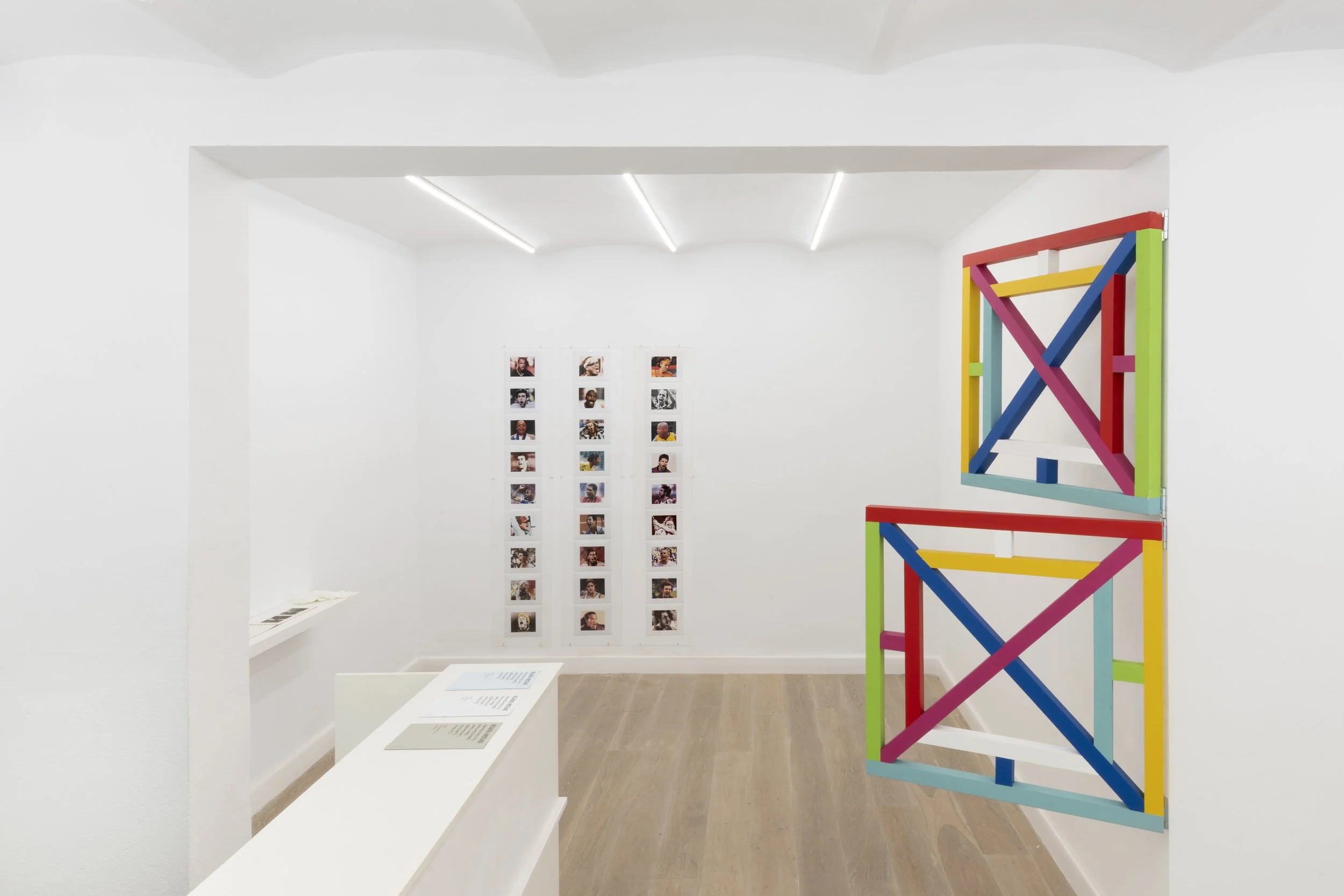
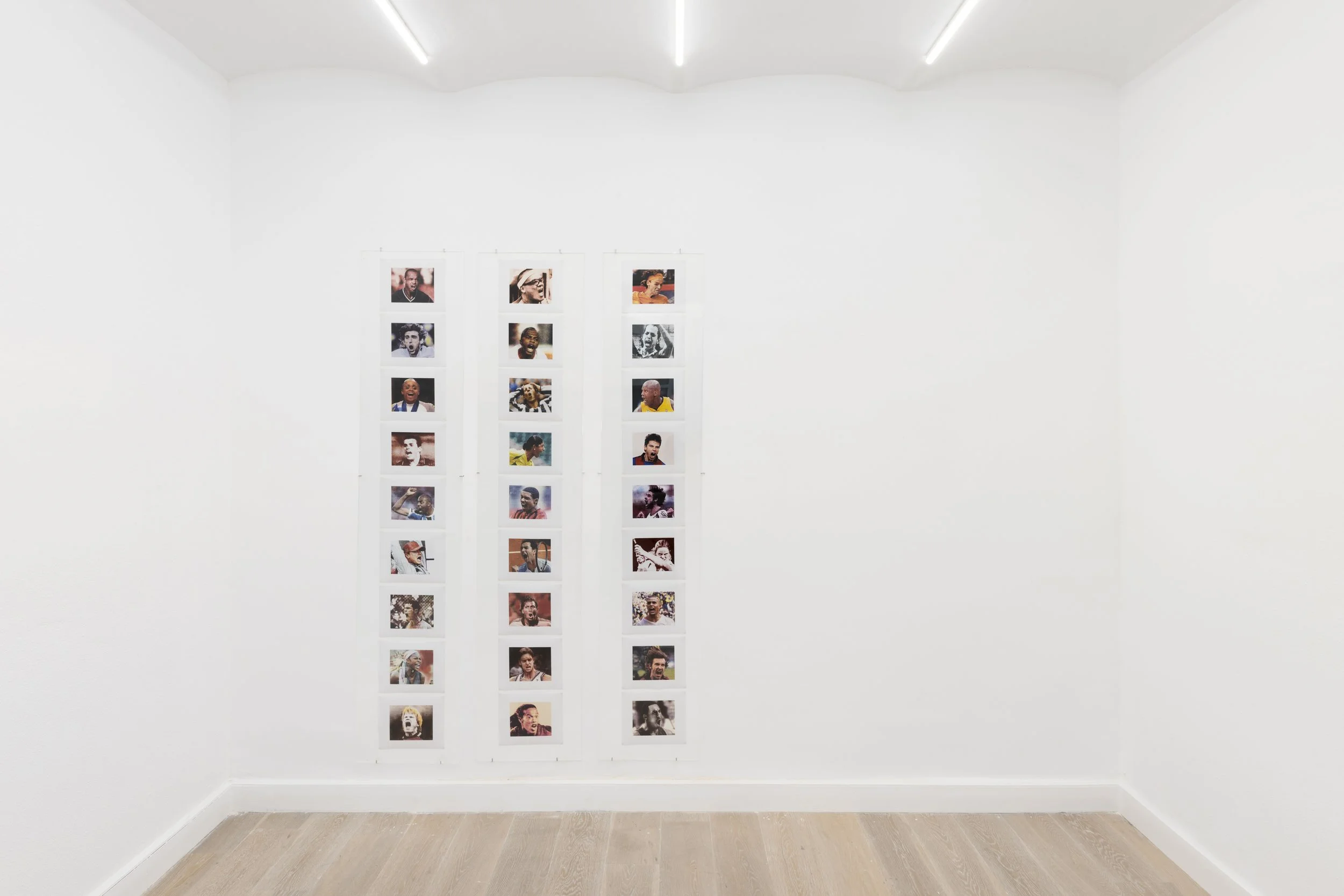
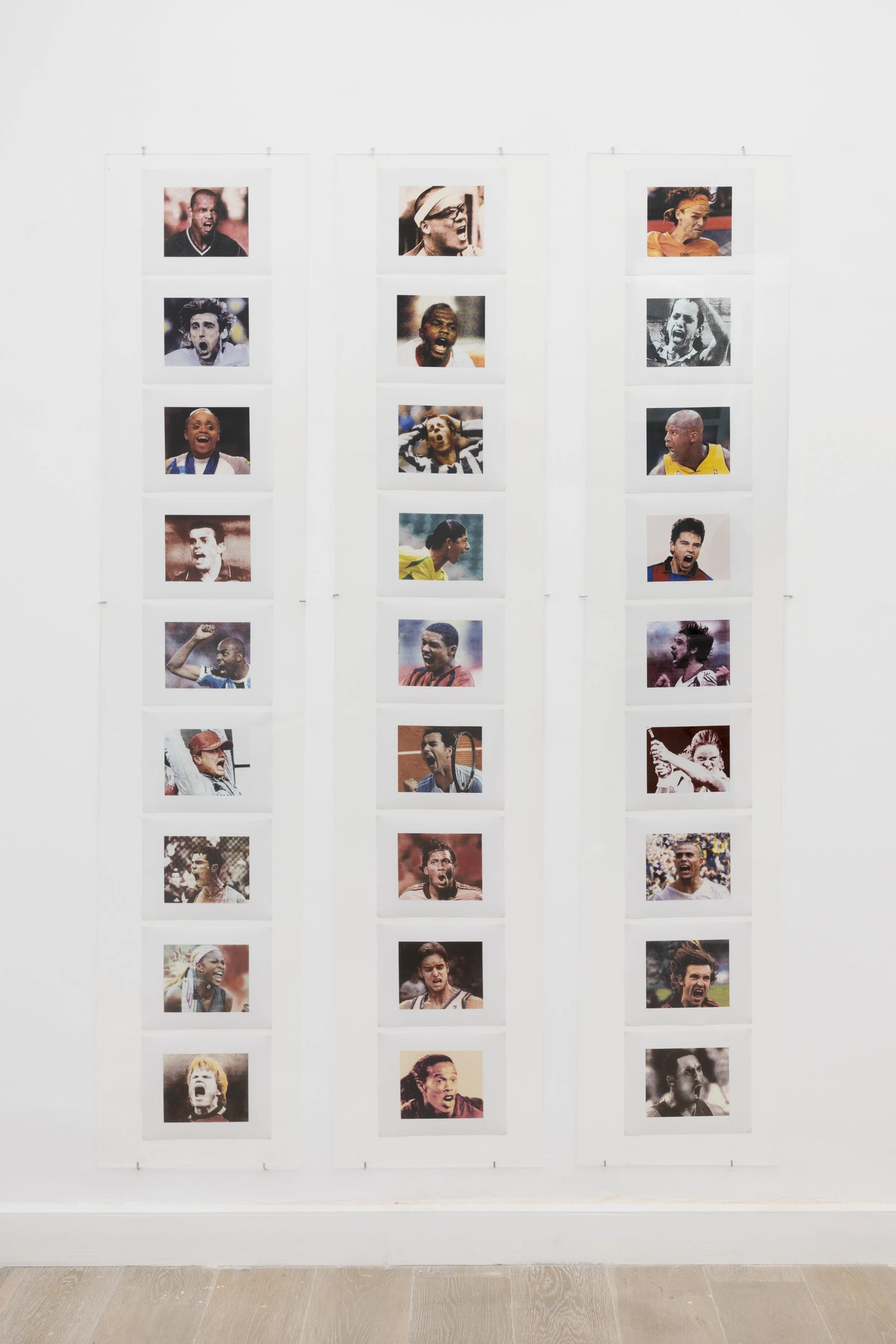
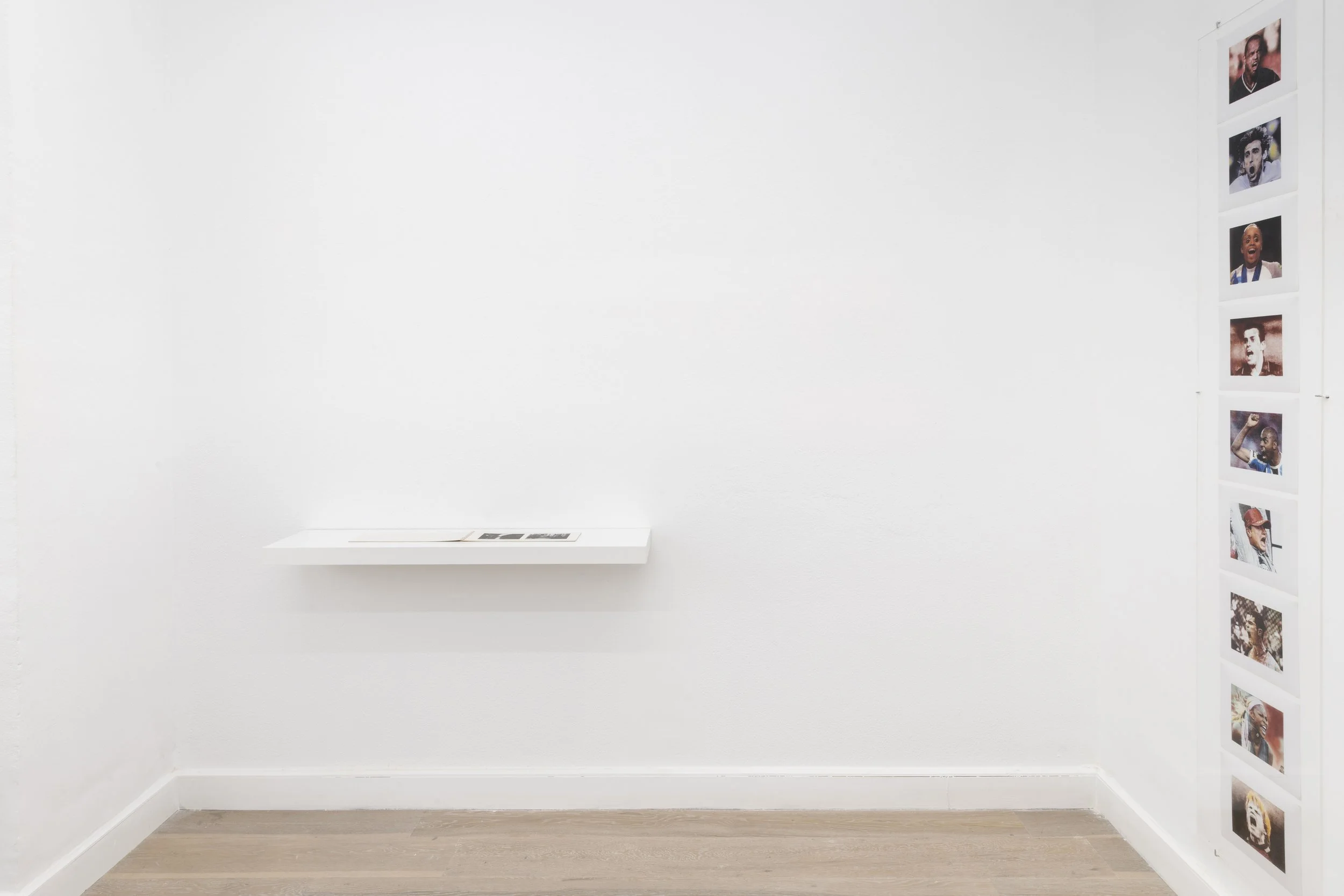
Partiendo del gesto conceptual de repetir elementos para generar una tensión en la escena, Vera Chaves Barcellos (1938, Porto Alegre, Brasil) presenta un libro de artista compuesto por una secuencia de siete láminas fotográficas idénticas. En ellas conviven dos imágenes: el andén de una estación de metro, con sus curvas y luces, y el interior de un vagón, con sus asientos y pasajeros. El único elemento que cambia visiblemente es la cuenta de los días, del primero al séptimo. Nada sucede, nada altera la escena, todo permanece suspendido en una repetición continua. En la notación musical, “Da Capo / D.C.” es una instrucción frecuente en la música barroca que indica al intérprete volver al inicio de la pieza y ejecutarla nuevamente. En esta obra de Chaves Barcellos, sin embargo, la repetición deja de ser una instrucción para convertirse en una forma de medir el tiempo. Cada imagen es idéntica a la anterior, pero la sucesión de los días introduce una diferencia mínima e irreversible. La repetición constituye uno de los procedimientos centrales en la práctica de Chaves Barcellos, estrategia compartida por buena parte de los conceptualistas de las décadas de 1960 y 1970. También de Chaves Barcellos se presenta la serie fotográfica “O Grito”, producida entre 2004 y 2009. La obra consiste en la captura de expresiones faciales extraídas de los medios impresos y televisivos, donde los gritos –de emoción, dolor o alegría– de los deportistas resuenan en silencio en nuestras cabezas.
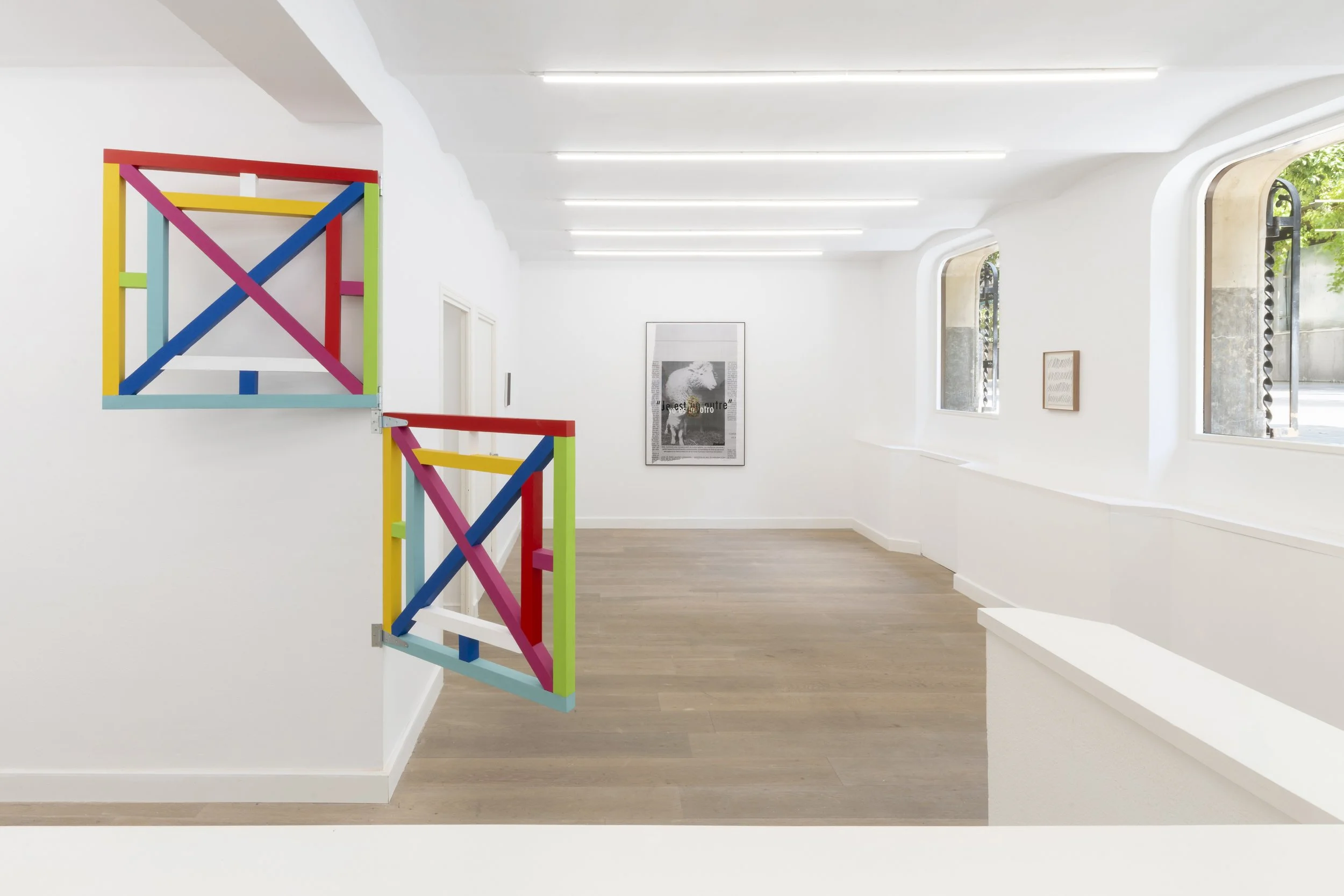
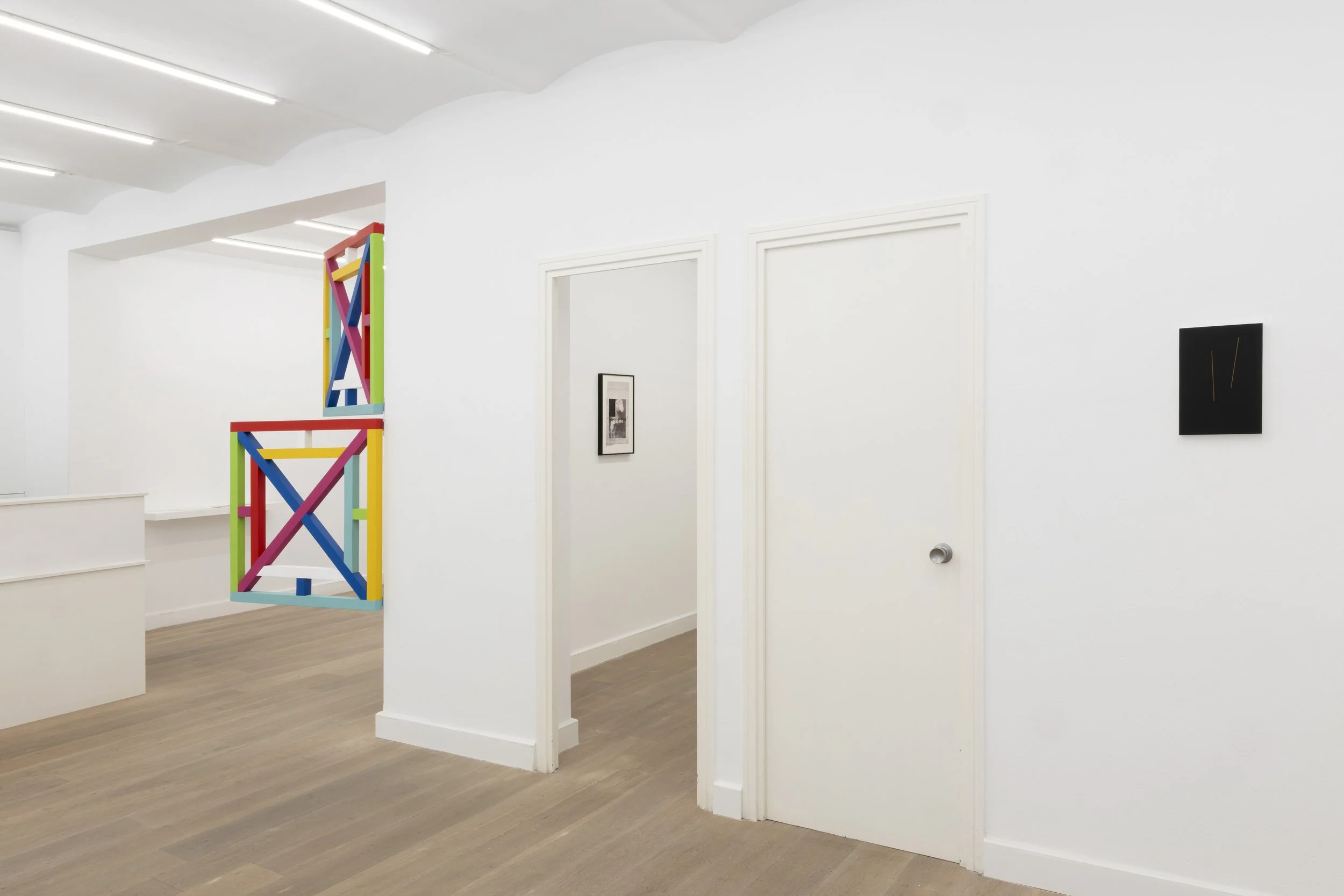
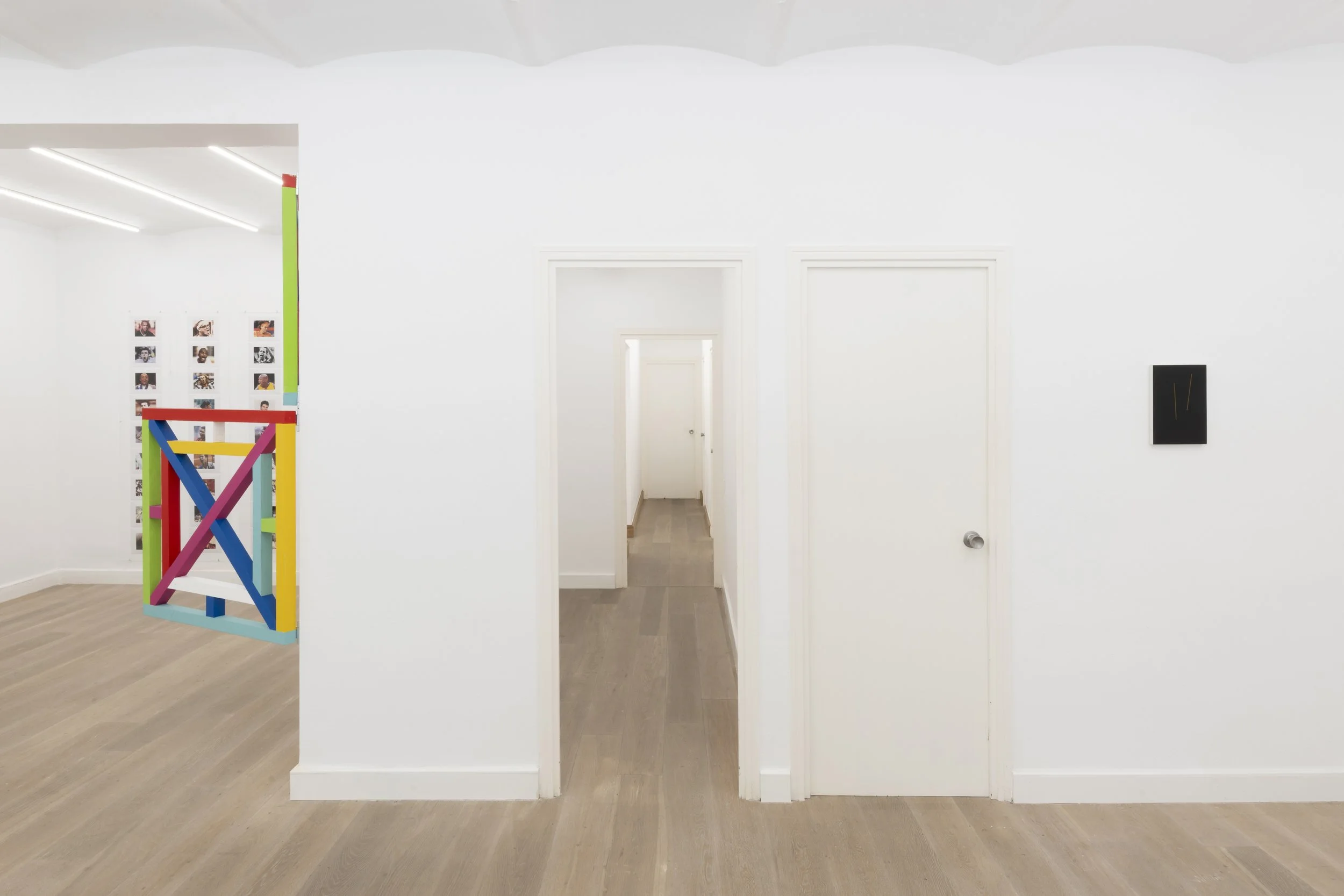
Cisco Merel (1981, Ciudad de Panamá, Panamá) recupera formas arquitectónicas populares para construir una serie de dispositivos domésticos. “Mirador” (2026), concebida inicialmente para su exposición individual en la Kunsthalle Lissabon, se desplaza ahora a Barcelona para ocupar el espacio central de la galería. La pintura-escultura –una ventana que se abre sobre sí misma– está construida en espejo: sus colores se invierten y se enfrentan continuamente. Dos planos se abren por completo hasta borrar la distinción entre interior y exterior. El método constructivo de estos trabajos parte del término panameño “La Chantin”. Como señala el texto de la exposición en la Kunsthalle Lissabon: "El término viajó con la diáspora afroantillana durante la construcción del Canal de Panamá, dando nombre a una arquitectura de urgencia y resistencia: casas de madera elevadas del suelo para responder a la humedad tropical y, sobre todo, concebidas para ser desmontables. Estas estructuras podían desarmarse, trasladarse y crecer según las necesidades de las familias y de las comunidades". En ese contexto, repetir un modelo nunca significa producir una copia. La casa, la ventana o el refugio se expanden, se contraen y se transforman según las condiciones del lugar. La repetición produce variaciones: cada nueva versión incorpora la memoria, las necesidades y las circunstancias de un contexto diferente.
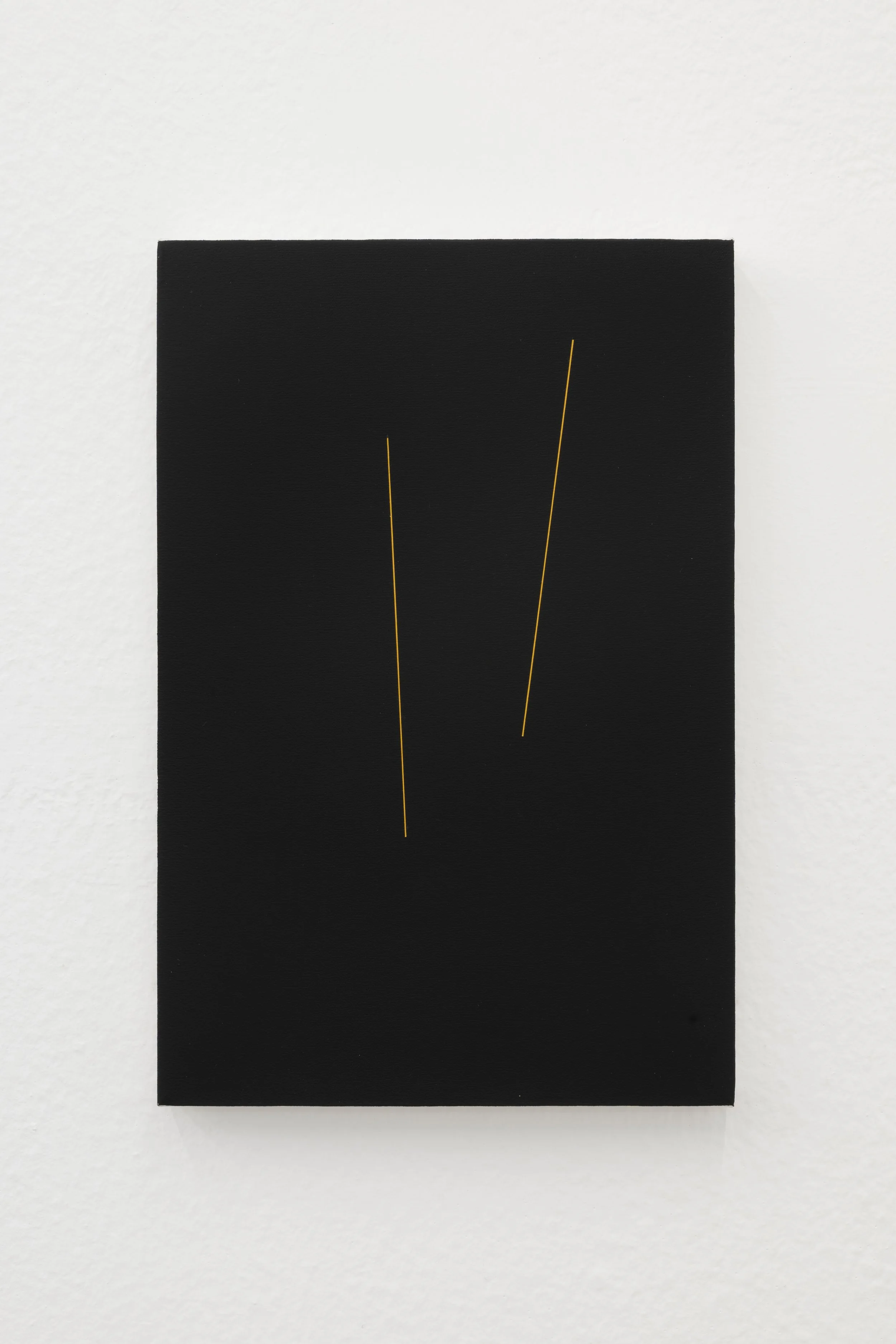
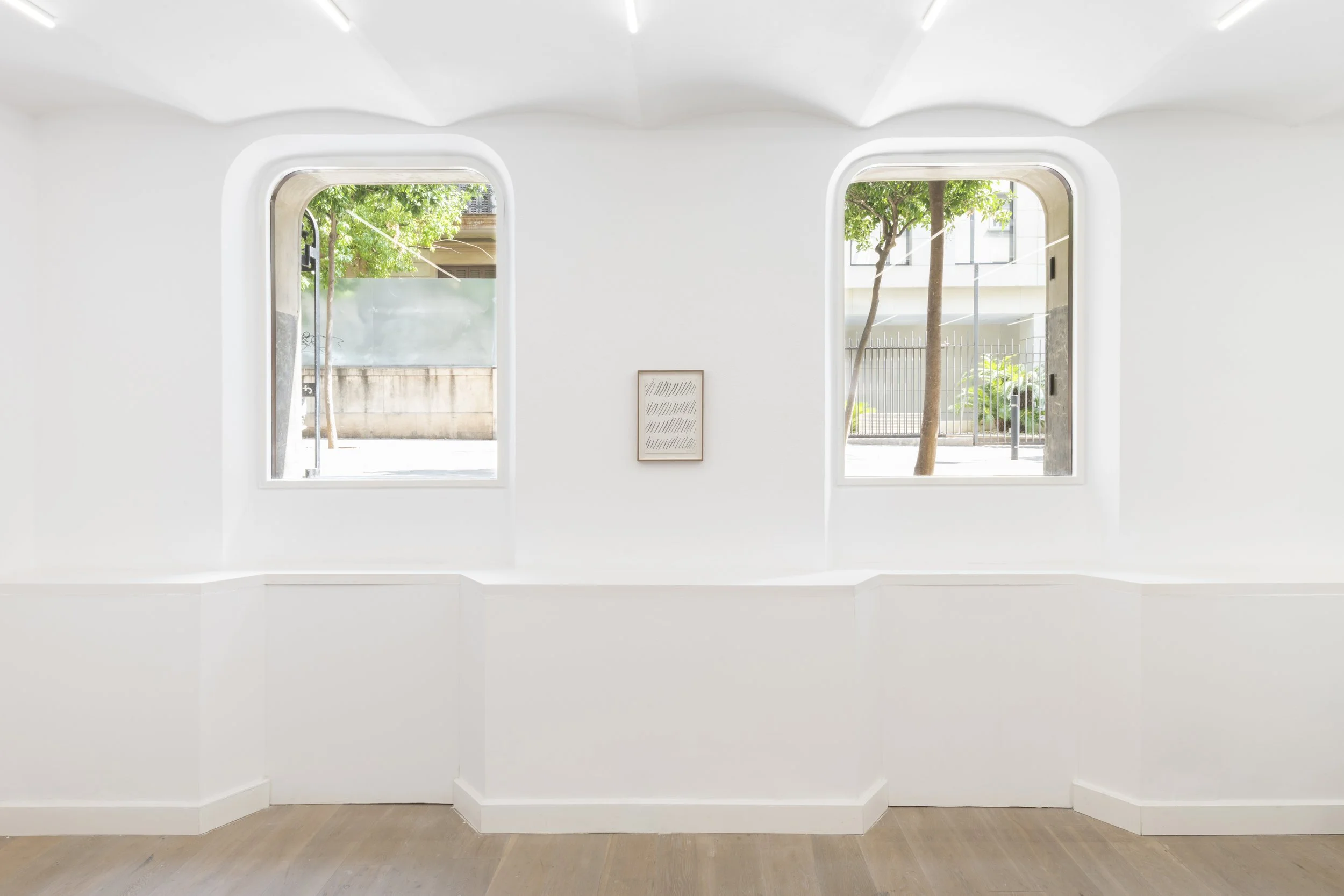
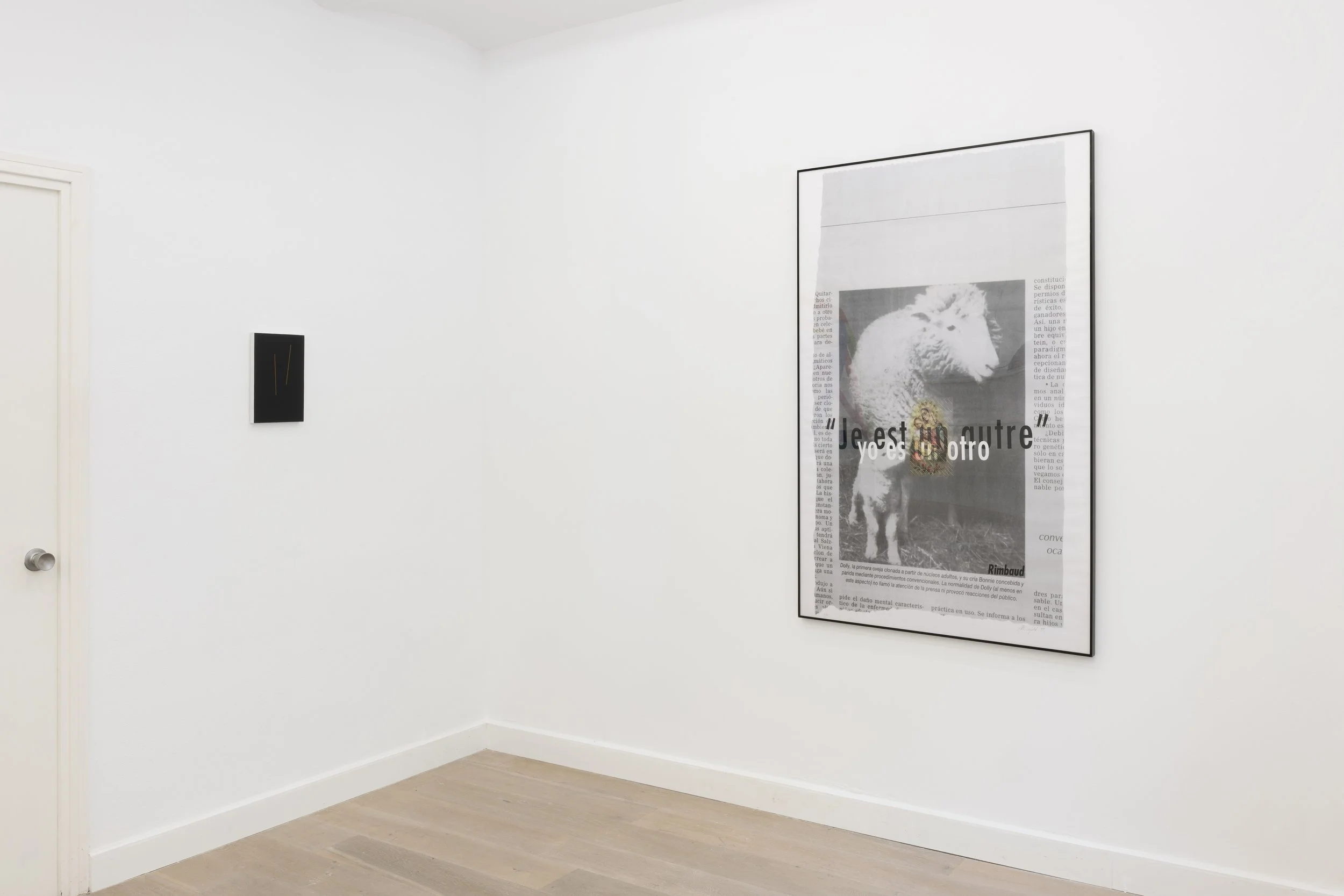
También desde la ocupación imaginaria del espacio se presenta “Sem título (2 barras douradas)” (2022), de Valdirlei Dias Nunes (1969, Bom Sucesso, Brasil). Dos formas doradas se repiten sobre un fondo negro que enfatiza los elementos que atraviesan la escena. Es posible afirmar únicamente con la mirada que ambas barras poseen exactamente la misma dimensión? O será que, al concentrar la atención en una diferencia mínima, comenzamos a percibir variaciones que antes pasaban inadvertidas? A lo largo de más de tres décadas de producción, el artista ha desarrollado un lenguaje marcado por gestos precisos y silenciosos, en el que la geometría y el vacío permanecen en tensión constante. Sus pinturas buscan un delicado equilibrio entre estructuras aparentemente rígidas y la sutileza del gesto. A primera vista, estos elementos se presentan como formas abstractas, pero pronto revelan su verdadera naturaleza –bastidores, cajas, rejas o recipientes. Delicadas configuraciones geométricas ven su ritmo interrumpido por objetos que cortan, caen, emergen o perforan la escena, reorganizando la mirada del espectador. Quizá la repetición dependa menos del objeto que de quien lo observa. Cuanto más tiempo permanecemos frente a dos formas aparentemente iguales, más difícil resulta sostener la idea de una identidad absoluta.
Formalmente semejantes, aunque realizadas de maneras completamente distintas y con 56 años de diferencia, las obras de Dias Nunes y Robert Llimós (1943, Barcelona, España) se aproximan a través del gesto: las líneas diagonales. Mientras Dias Nunes busca la exactitud de las formas, Llimós explora su contrario en "Estudi per Espai Ple III" (1970). Entre 1970 y 1973, Llimós llevó a cabo una serie de investigaciones centradas en la repetición del trazo y la organización geométrica de la superficie. A través de líneas superpuestas y gestos caligráficos reiterados, estas obras reducen el lenguaje visual a sus elementos esenciales. La línea se expande hasta ocupar la totalidad del papel, convirtiéndose en el eje de la composición. Desvinculada de cualquier intención representativa, la imagen se afirma como un ejercicio de ritmo, estructura, gesto y repetición.
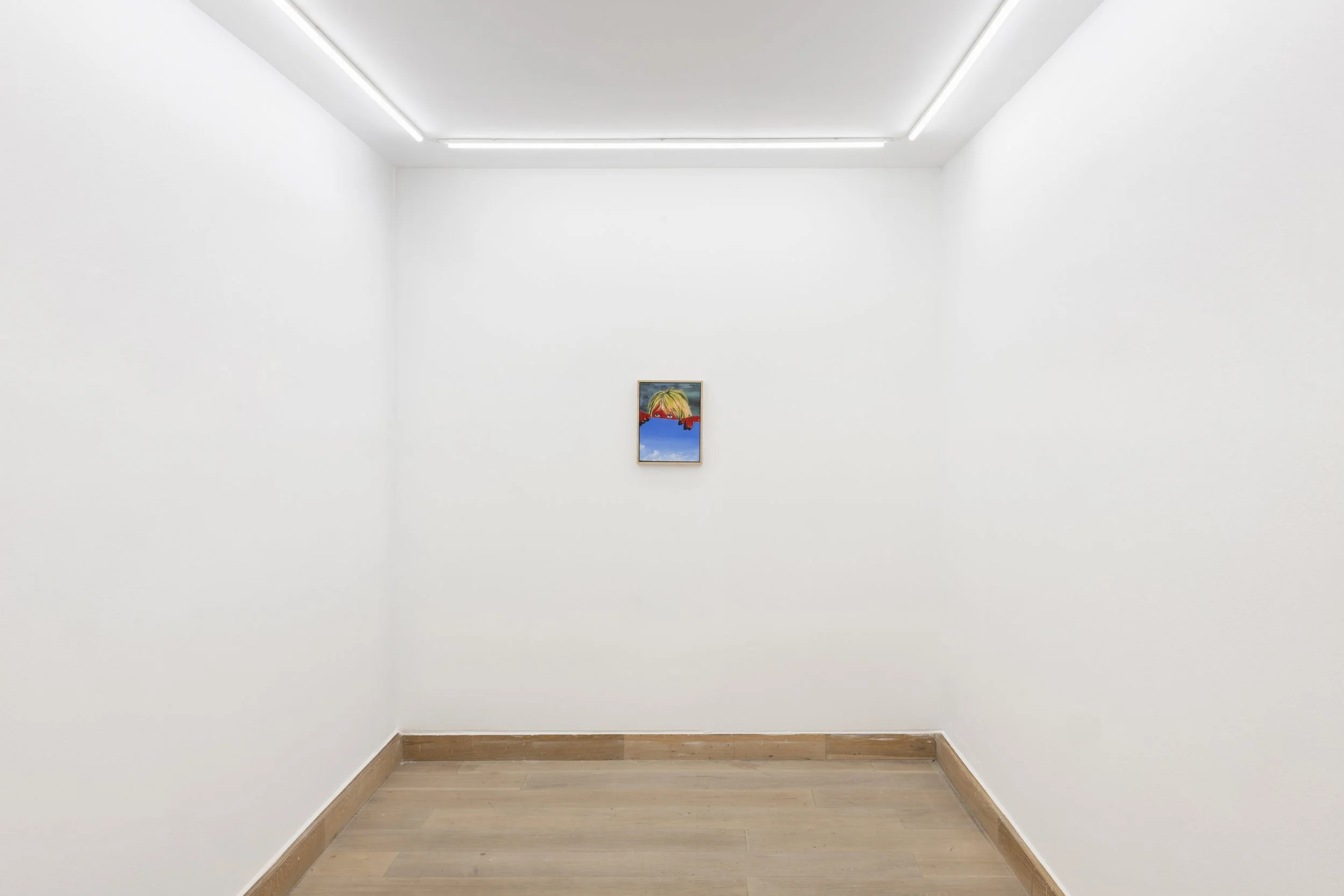
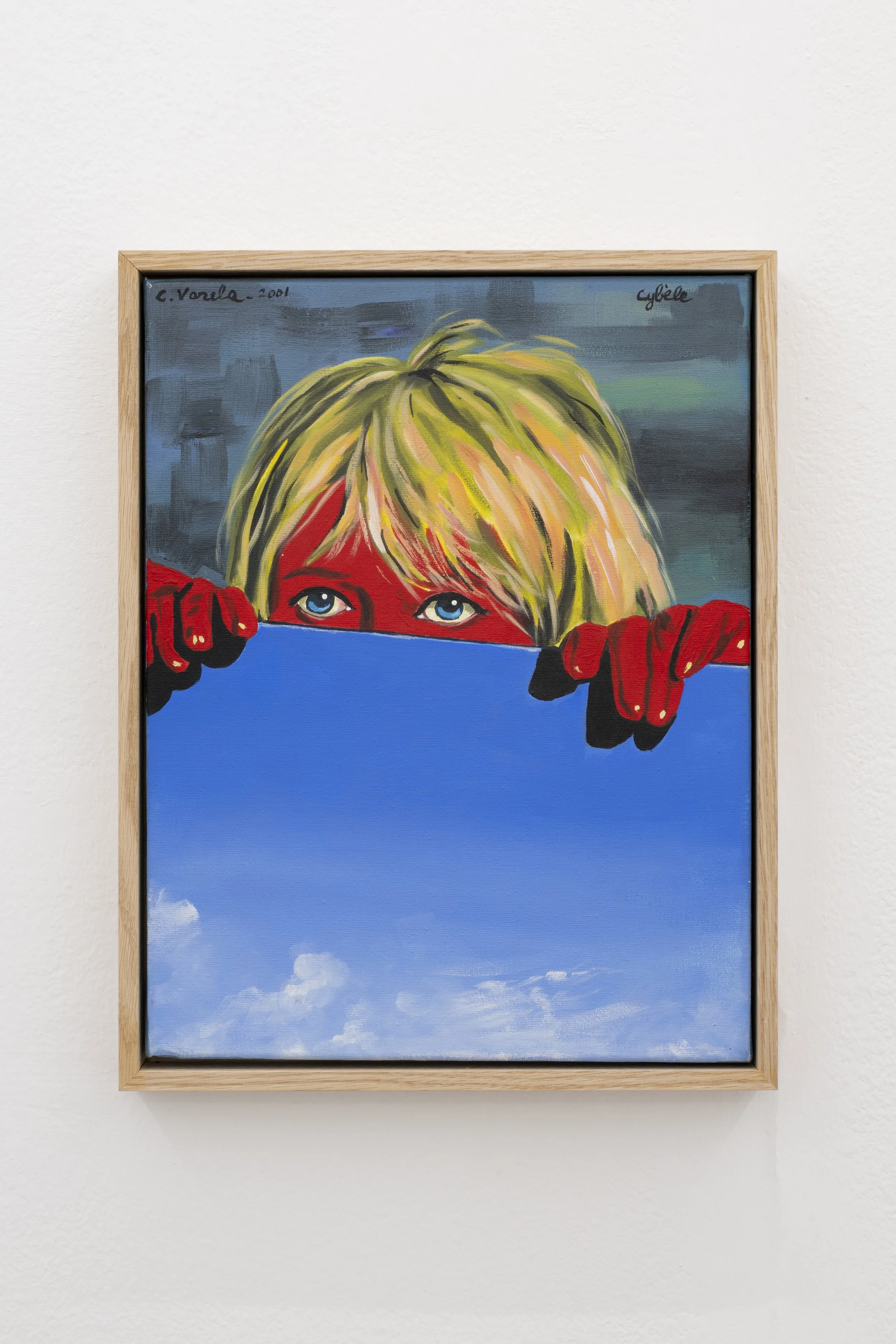
Un personaje extraño nos observa. Permanece al acecho, viendo y siendo visto. Se asoma por detrás de la pintura de un cielo azul. Cybèle Varela (1943, Petrópolis, Brasil) está detrás de la obra, tanto en su condición de artista que ejecuta la pintura como en la de personaje que devuelve nuestra mirada. En “Cybèle” (2001) conviven múltiples dobles: el autorretrato ocupa una mitad de la pintura, mientras la otra mitad reproduce una obra anterior de la propia artista. Realizada dentro de un conjunto de trabajos desarrollados entre 1997 y 2001, la obra forma parte de un momento en el que Varela comienza a representarse en distintas posiciones, oscilando entre la representación de sí misma como individuo y como artista. En pinturas, fotografías y videos aparece frecuentemente con el rostro cubierto por pintura roja o utilizando máscaras, instaurando un juego entre identidad, performance y representación. El autorretrato deja entonces de ser un ejercicio de reconocimiento para convertirse en un espacio de desdoblamiento. El doble ya no refleja una identidad estable; la pone en escena, la desplaza y la vuelve incierta.
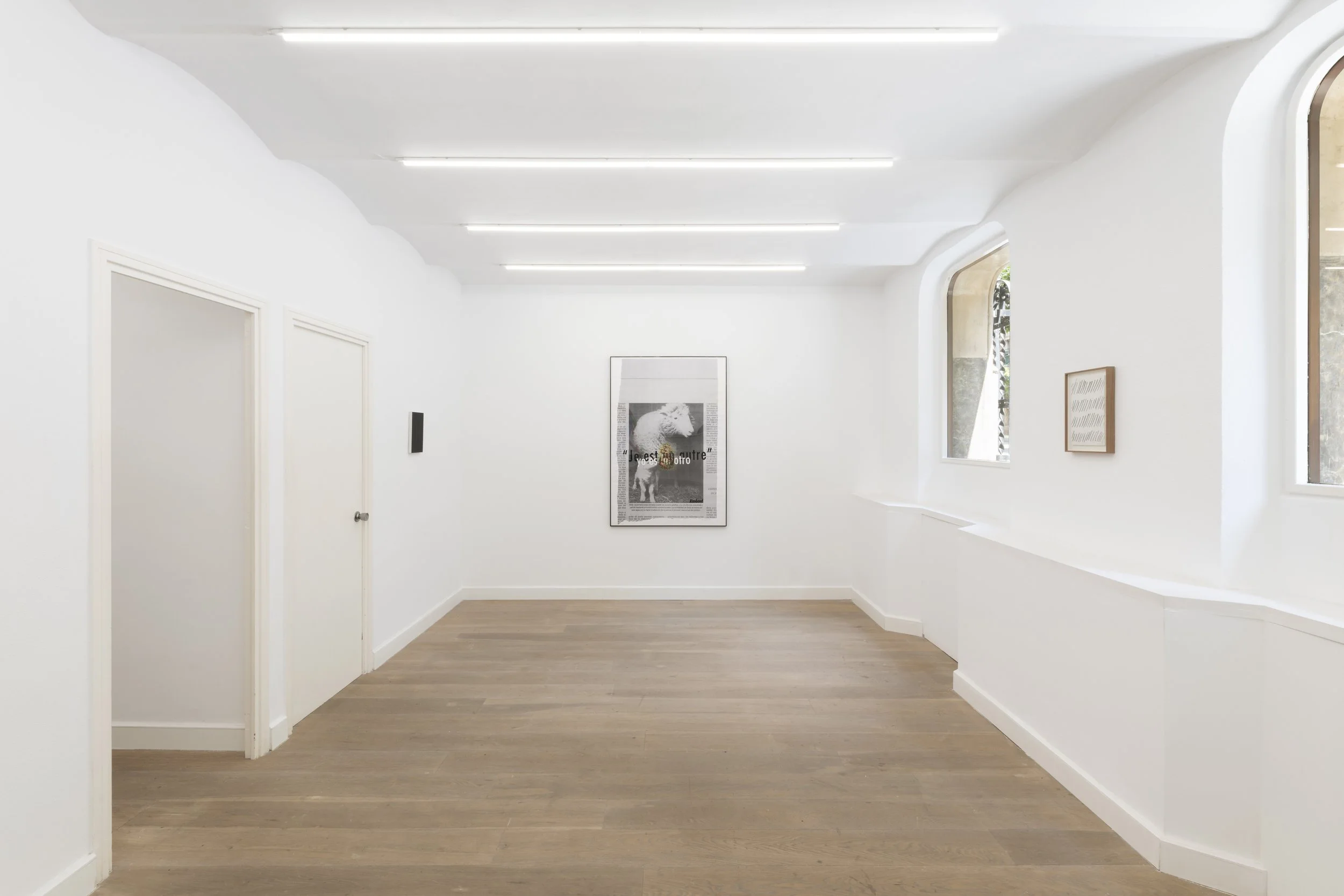
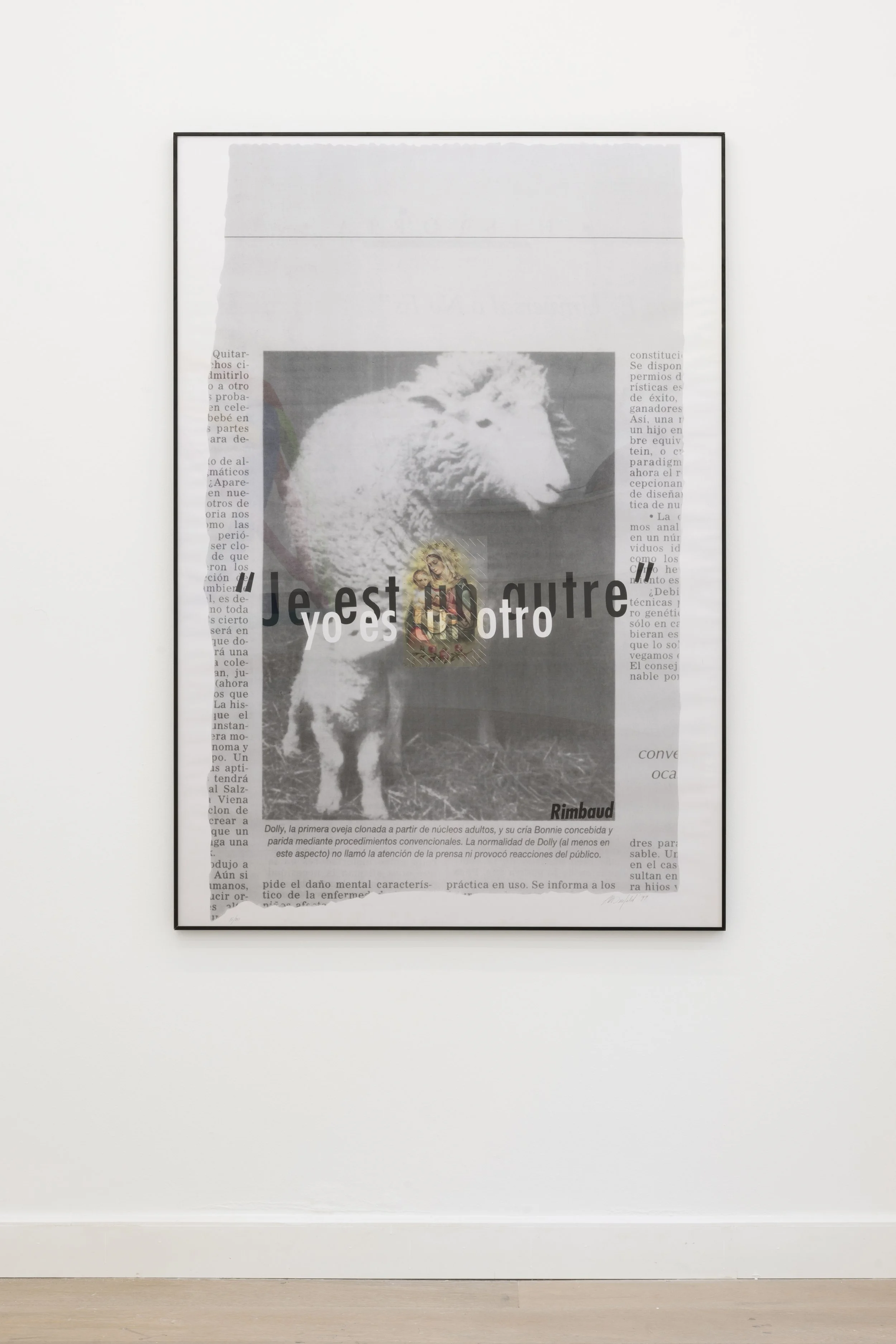
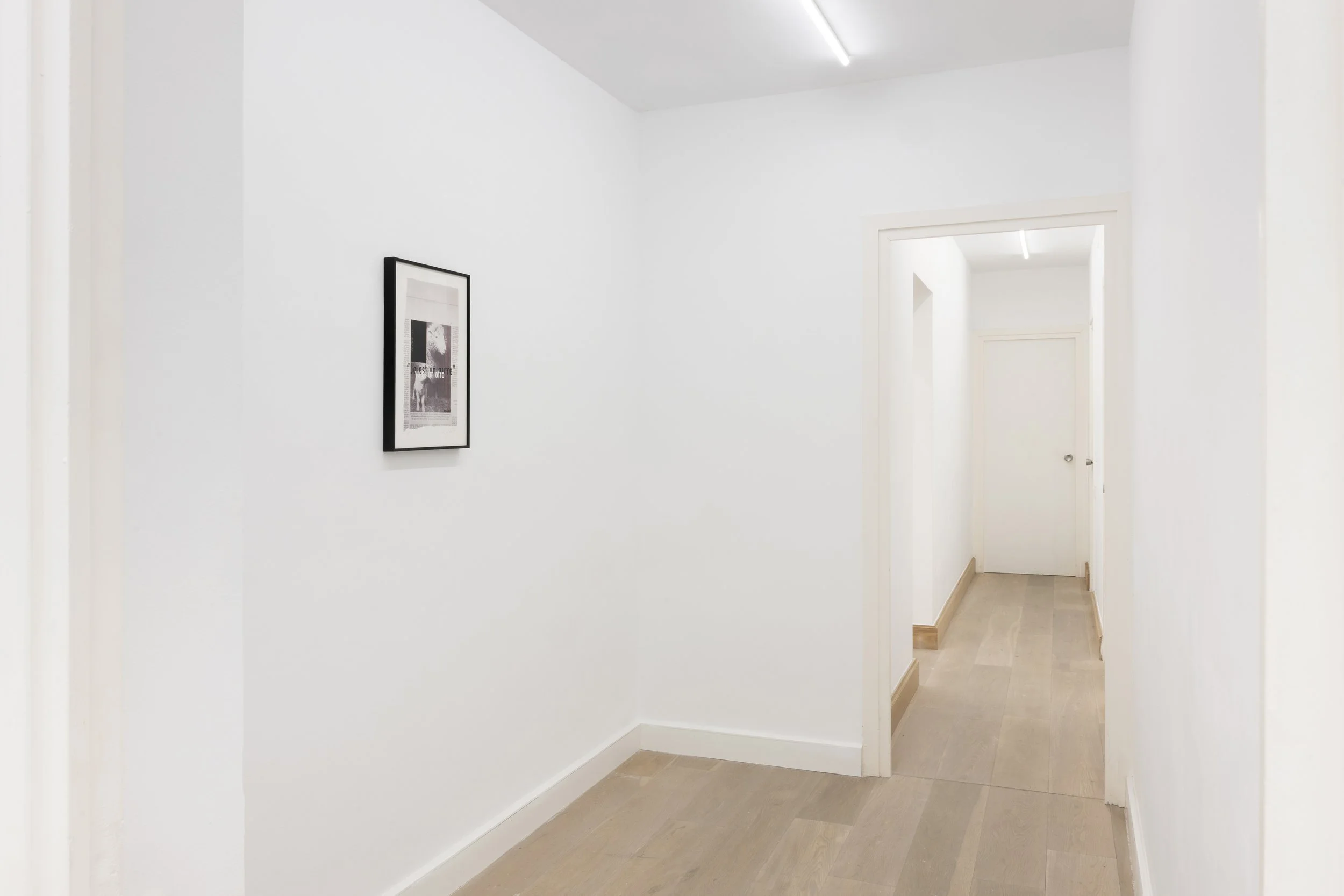
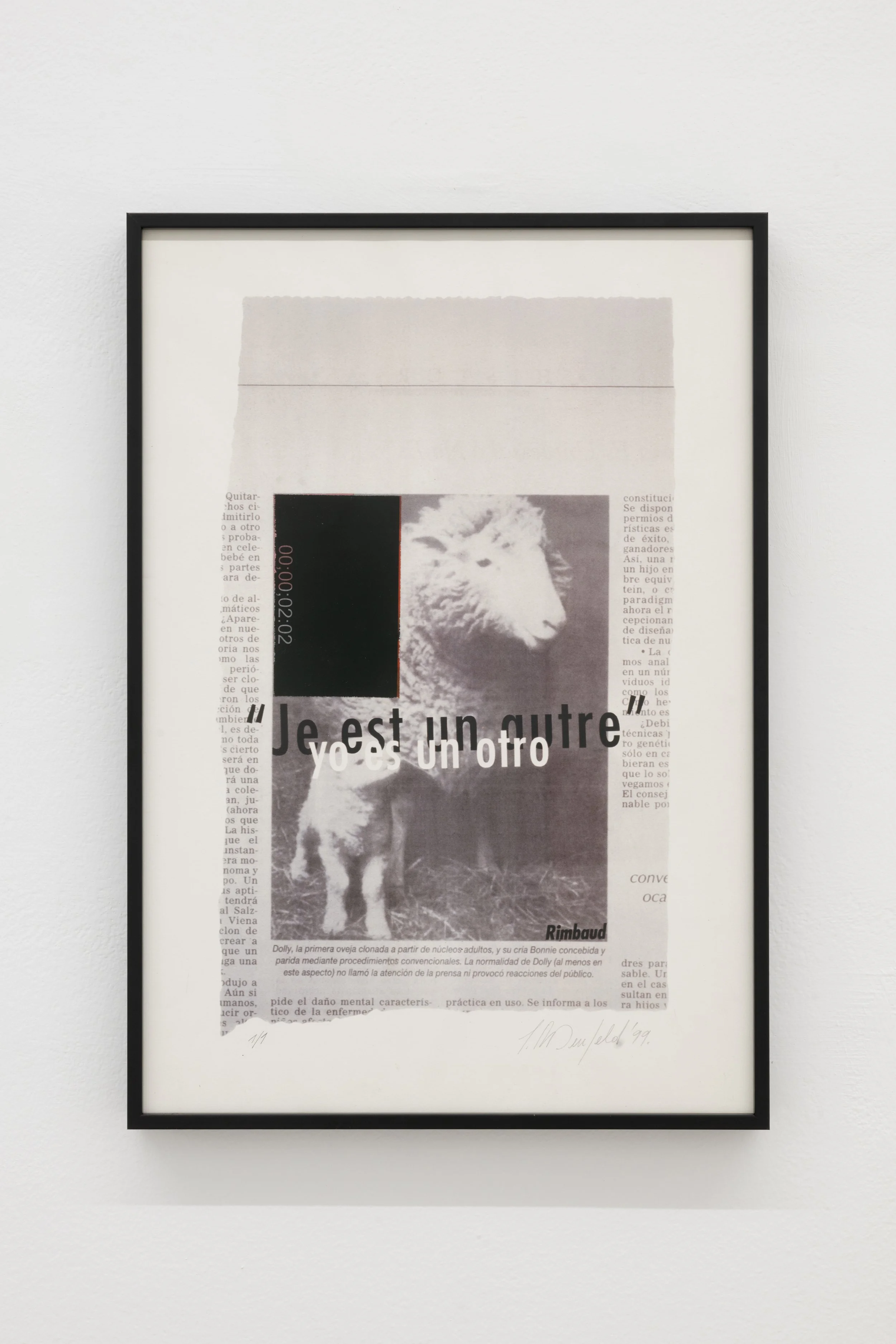
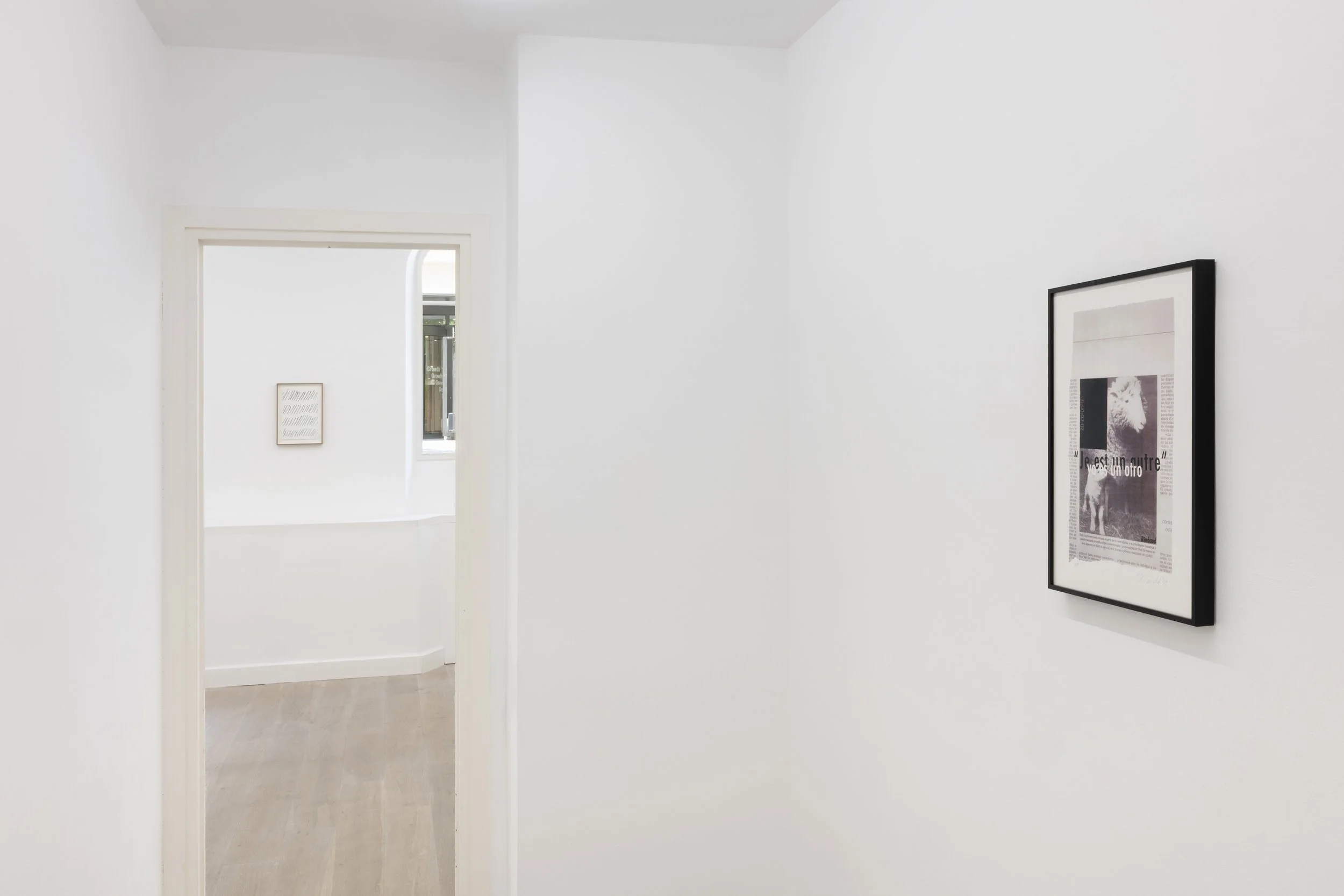
Por último, la exposición reúne dos versiones de “Sin título” (1999), de Lotty Rosenfeld (1943, Santiago, Chile), pertenecientes a una serie poco conocida de la artista. Como gesto curatorial, se optó por presentar dos obras casi idénticas. La serie aborda la reproductibilidad en distintos niveles: toma como punto de partida a la oveja Dolly y a Bonnie, su primera cría, nacida de forma natural un año después de la clonación; se desarrolla mediante la serigrafía, una técnica asociada a la reproducción múltiple; y se apropia de la portada de un periódico, soporte cuya propia naturaleza depende de la circulación masiva de imágenes e información. El caso Dolly fue ampliamente difundido por los medios de comunicación desde finales de la década de 1990, convirtiéndose rápidamente en un símbolo de las posibilidades –y de las inquietudes– asociadas a la clonación. Sin embargo, aunque todos los elementos de la obra apuntan hacia la reproducción, Rosenfeld decide realizar ediciones únicas, interviniendo cada ejemplar con elementos ajenos a la imagen central, como la figura de una santa o números que remiten al contador de una película. Al renunciar a la multiplicación propia de la serigrafía, introduce una interrupción en la lógica reproductiva que atraviesa toda la obra. La secuencia se detiene. La reproducción se suspende. Entre clones, periódicos, serigrafías, ediciones únicas y la célebre frase de Arthur Rimbaud: “Yo es otro”, la obra multiplica a otros niveles la idea de reproductibilidad. El doble deja de ser una copia para adquirir una existencia propia.
Duplicar y repetir
Cisco Merel, Cybèle Varela, Lotty Rosenfeld, Robert Llimós, Valdirlei Dias Nunes and Vera Chaves Barcellos
Opening
July 7 / 11am-7pm
Exhibition
July 7
- September 10, 2026
Zielinsky Barcelona
Zielinsky Barcelona is pleased to present Duplicar y repetir [Duplicate and Repeat], a group exhibition featuring works by Cisco Merel, Cybèle Varela, Lotty Rosenfeld, Robert Llimós, Valdirlei Dias Nunes, and Vera Chaves Barcellos. Repetition, doubling, cloning, and mirroring articulate the exhibition, which spans more than fifty years, from Estudi per Espai Ple III (1970) by Robert Llimós to Mirador (2026) by Cisco Merel. More than a formal reiteration, repetition emerges here as a mechanism capable of producing difference.
Beginning with the conceptual gesture of repeating elements in order to generate tension within the scene, Vera Chaves Barcellos (1938, Porto Alegre, Brazil) presents an artist’s book composed of a sequence of seven identical photographic prints. Two images coexist within them: the platform of a subway station, with its curves and lights, and the interior of a carriage, with its seats and passengers. The only element that visibly changes is the count of the days, from the first to the seventh. Nothing happens, nothing alters the scene; everything remains suspended in continuous repetition.
In musical notation, Da Capo / D.C. is a common instruction in Baroque music directing the performer to return to the beginning of a piece and play it again. In Chaves Barcellos’ work, however, repetition ceases to be an instruction and becomes a way of measuring time. Each image is identical to the previous one, yet the succession of days introduces a minimal and irreversible difference. Repetition constitutes one of the central procedures in Chaves Barcellos’ practice, a strategy shared by many Conceptual artists of the 1960s and 1970s.
Also by Chaves Barcellos, the exhibition includes the photographic series O Grito (The Scream), produced between 2004 and 2009. The work consists of captured facial expressions taken from printed and televised media, where the cries—of excitement, pain, or joy—of athletes resonate silently in our minds.
Cisco Merel (1981, Panama City, Panama) draws on vernacular architectural forms to construct a series of domestic devices. Mirador (2026), originally conceived for his solo exhibition at Kunsthalle Lissabon, is now presented in Barcelona, occupying the central space of the gallery. The painting-sculpture—a window that opens onto itself—is built as a mirror image: its colours are inverted and continuously confront one another. Two planes open completely until the distinction between inside and outside disappears.
The constructive method behind these works stems from the Panamanian term La Chantin. As stated in the exhibition text at Kunsthalle Lissabon: “The term travelled with the Afro-Antillean diaspora during the construction of the Panama Canal, giving its name to an architecture of urgency and resistance: wooden houses raised above the ground to respond to the tropical humidity and, above all, conceived to be dismantled. These structures could be taken apart, relocated, and expanded according to the needs of families and communities”. Within this context, repeating a model never means producing a copy. The house, the window, or the shelter expands, contracts, and transforms according to the conditions of each place. Repetition produces variations: each new version incorporates the memory, the needs, and the circumstances of a different context.
Also engaging with the imaginary occupation of space is Untitled (2 Golden Bars) (2022) by Valdirlei Dias Nunes (1969, Bom Sucesso, Brazil). Two golden forms are repeated against a black background that emphasizes the elements traversing the scene. Can we truly affirm, merely by looking, that both bars have exactly the same dimensions? Or is it that, by focusing our attention on a minimal difference, we begin to perceive variations that had previously gone unnoticed?
Over more than three decades of artistic production, Dias Nunes has developed a language marked by precise and restrained gestures, in which geometry and emptiness remain in constant tension. His paintings seek a delicate balance between seemingly rigid structures and the subtlety of the gesture. At first glance, these elements appear as abstract forms, but they soon reveal their true nature—stretchers, boxes, grilles, or containers. Delicate geometric configurations have their rhythm interrupted by objects that cut across, fall into, emerge from, or pierce the scene, reorganising the viewer’s gaze. Perhaps repetition depends less on the object than on the person observing it. The longer we remain before two seemingly identical forms, the more difficult it becomes to sustain the idea of absolute identity.
Formally similar, although produced in entirely different ways and fifty-six years apart, the works of Dias Nunes and Robert Llimós (1943, Barcelona, Spain) converge through gesture: diagonal lines. While Dias Nunes pursues the precision of form, Llimós explores its opposite in Estudi per Espai Ple III (1970). Between 1970 and 1973, Llimós carried out a series of investigations centred on the repetition of the line and the geometric organisation of the surface. Through superimposed lines and repeated calligraphic gestures, these works reduce visual language to its essential elements. The line expands until it occupies the entire sheet of paper, becoming the axis of the composition. Detached from any representational intention, the image asserts itself as an exercise in rhythm, structure, gesture, and repetition.
A strange figure watches us. It remains on the lookout, seeing and being seen. It peers out from behind a painting of a blue sky. Cybèle Varela (1943, Petrópolis, Brazil) stands behind the work, both as the artist who executes the painting and as the figure returning our gaze. In Cybèle (2001), multiple doubles coexist: the self-portrait occupies one half of the painting, while the other reproduces one of the artist’s earlier works. Created as part of a body of work developed between 1997 and 2001, the painting belongs to a period in which Varela began depicting herself in different positions, oscillating between the representation of herself as an individual and as an artist. In paintings, photographs, and videos, she frequently appears with her face covered in red paint or wearing masks, establishing a play between identity, performance, and representation. The self-portrait thus ceases to be an exercise in self-recognition and becomes a space of doubling. The double no longer reflects a stable identity; it stages it, displaces it, and renders it uncertain.
Finally, the exhibition brings together two versions of Untitled (1999) by Lotty Rosenfeld (1943, Santiago, Chile), belonging to a little-known series by the artist. As a curatorial gesture, two nearly identical works have been brought together. The series addresses reproducibility on different levels: it takes as its point of departure Dolly the sheep and Bonnie, her first naturally conceived offspring, born one year after the cloning; it unfolds through silkscreen, a technique historically associated with multiple reproduction; and it appropriates the front page of a newspaper, a medium whose very nature depends on the mass circulation of images and information.
The case of Dolly was widely disseminated by the media from the late 1990s onwards, quickly becoming a symbol of both the possibilities and the anxieties associated with cloning. Yet, although every element of the work points towards reproduction, Rosenfeld chooses to produce unique editions, intervening in each print with elements external to the central image, such as the figure of a saint or numbers referring to the frame counter of a film. By renouncing the multiplication inherent to silkscreen, she introduces an interruption into the reproductive logic that runs throughout the work. The sequence comes to a halt. Reproduction is suspended. Between clones, newspapers, silkscreens, unique editions, and Arthur Rimbaud’s celebrated phrase, “I is another,” the work multiplies the idea of reproducibility on yet other levels. The double ceases to be a copy and acquires an existence of its own.
Duplicar y repetir
Cisco Merel, Cybèle Varela, Lotty Rosenfeld, Robert Llimós, Valdirlei Dias Nunes i Vera Chaves Barcellos
Inauguració
Juliol 7 / 11h-19h
Exposició
Juliol 7
- Setembre 10, 2026
Zielinsky Barcelona
Zielinsky Barcelona es complau a presentar Duplicar i repetir, una exposició col·lectiva que reuneix obres de Cisco Merel, Cybèle Varela, Lotty Rosenfeld, Robert Llimós, Valdirlei Dias Nunes i Vera Chaves Barcellos. La repetició, el doble, la clonació i el mirall articulen el recorregut expositiu, que abasta més de cinquanta anys, des d’Estudi per Espai Ple III (1970), de Robert Llimós, fins a Mirador (2026), de Cisco Merel. Més que una reiteració formal, la repetició apareix aquí com un mecanisme capaç de produir diferència.
Partint del gest conceptual de repetir elements per generar una tensió dins l’escena, Vera Chaves Barcellos (1938, Porto Alegre, Brasil) presenta un llibre d’artista compost per una seqüència de set làmines fotogràfiques idèntiques. En cadascuna hi conviuen dues imatges: l’andana d’una estació de metro, amb les seves corbes i llums, i l’interior d’un vagó, amb els seus seients i passatgers. L’únic element que canvia de manera visible és el recompte dels dies, del primer al setè. No passa res, res no altera l’escena; tot roman suspès en una repetició contínua.
En la notació musical, Da Capo (D.C.) és una indicació freqüent en la música barroca que assenyala a l’intèrpret que torni a l’inici de la peça i la torni a executar. En aquesta obra de Chaves Barcellos, però, la repetició deixa de ser una instrucció per convertir-se en una manera de mesurar el temps. Cada imatge és idèntica a l’anterior, però la successió dels dies introdueix una diferència mínima i irreversible. La repetició constitueix un dels procediments centrals en la pràctica de Chaves Barcellos, una estratègia compartida per bona part dels artistes conceptuals de les dècades de 1960 i 1970.
També de Chaves Barcellos es presenta la sèrie fotogràfica O Grito, produïda entre 2004 i 2009. L’obra consisteix en la captura d’expressions facials extretes dels mitjans impresos i televisius, on els crits —d’emoció, dolor o alegria— dels esportistes ressonen en silenci dins els nostres caps.
Cisco Merel (1981, Ciutat de Panamà, Panamà) recupera formes arquitectòniques populars per construir una sèrie de dispositius domèstics. Mirador (2026), concebuda inicialment per a la seva exposició individual a la Kunsthalle Lissabon, es trasllada ara a Barcelona per ocupar l’espai central de la galeria. La pintura- escultura —una finestra que s’obre sobre ella mateixa— està construïda en mirall: els seus colors s’inverteixen i s’enfronten contínuament. Dos plans s’obren completament fins a esborrar la distinció entre interior i exterior. El mètode constructiu d’aquestes obres parteix del terme panameny La Chantin. Tal com assenyala el text de l’exposició a la Kunsthalle Lissabon:
“El terme va viatjar amb la diàspora afroantillana durant la construcció del Canal de Panamà, donant nom a una arquitectura d’urgència i resistència: cases de fusta elevades del terra per respondre a la humitat tropical i, sobretot, concebudes per poder ser desmuntades. Aquestes estructures es podien desmuntar, traslladar i ampliar segons les necessitats de les famílies i de les comunitats.”
En aquest context, repetir un model no significa mai produir una còpia. La casa, la finestra o el refugi s’expandeixen, es contrauen i es transformen segons les condicions del lloc. La repetició produeix variacions: cada nova versió incorpora la memòria, les necessitats i les circumstàncies d’un context diferent.
També des de l’ocupació imaginària de l’espai es presenta Sense títol (2 barres daurades) (2022), de Valdirlei Dias Nunes (1969, Bom Sucesso, Brasil). Dues formes daurades es repeteixen sobre un fons negre que emfatitza els elements que travessen l’escena. És possible afirmar només amb la mirada que ambdues barres tenen exactament la mateixa dimensió? O potser, quan concentrem l’atenció en una diferència mínima, comencem a percebre variacions que abans passaven desapercebudes? Al llarg de més de tres dècades de producció, l’artista ha desenvolupat un llenguatge marcat per gestos precisos i silenciosos, en què la geometria i el buit romanen en tensió constant. Les seves pintures busquen un equilibri delicat entre estructures aparentment rígides i la subtilesa del gest. A primera vista, aquests elements es presenten com a formes abstractes, però aviat revelen la seva veritable naturalesa —bastidors, caixes, reixes o recipients. Delicades configuracions geomètriques veuen interromput el seu ritme per objectes que tallen, cauen, emergeixen o perforen l’escena, reorganitzant la mirada de l’espectador. Potser la repetició depèn menys de l’objecte que de qui l’observa. Com més temps romanem davant de dues formes aparentment iguals, més difícil resulta sostenir la idea d’una identitat absoluta.
Formalment semblants, tot i haver estat realitzades de maneres completament diferents i amb cinquanta-sis anys de diferència, les obres de Valdirlei Dias Nunes i Robert Llimós (1943, Barcelona, Espanya) s’apropen a través del gest: les línies diagonals. Mentre que Dias Nunes busca l’exactitud de les formes, Llimós n’explora el contrari a Estudi per Espai Ple III (1970). Entre 1970 i 1973, Llimós va dur a terme una sèrie d’investigacions centrades en la repetició del traç i en l’organització geomètrica de la superfície. Mitjançant línies superposades i gestos cal·ligràfics reiterats, aquestes obres redueixen el llenguatge visual als seus elements essencials. La línia s’expandeix fins a ocupar tota la superfície del paper, convertint-se en l’eix de la composició. Desvinculada de qualsevol intenció representativa, la imatge s’afirma com un exercici de ritme, estructura, gest i repetició.
Un personatge estrany ens observa. Roman a l’aguait, veient i essent vist. Treu el cap per darrere de la pintura d’un cel blau. Cybèle Varela (1943, Petrópolis, Brasil) és al darrere de l’obra, tant en la seva condició d’artista que executa la pintura com en la de personatge que ens retorna la mirada. A Cybèle (2001) conviuen múltiples dobles: l’autoretrat ocupa una meitat de la pintura, mentre que l’altra reprodueix una obra anterior de la mateixa artista. Realitzada dins d’un conjunt de treballs desenvolupats entre 1997 i 2001, l’obra forma part d’un moment en què Varela comença a representar-se en diferents posicions, oscil·lant entre la representació d’ella mateixa com a individu i com a artista. En pintures, fotografies i vídeos apareix sovint amb el rostre cobert de pintura vermella o portant màscares, establint un joc entre identitat, performance i representació. L’autoretrat deixa així de ser un exercici de reconeixement per convertir-se en un espai de desdoblament. El doble ja no reflecteix una identitat estable; la posa en escena, la desplaça i la torna incerta.
Finalment, l’exposició reuneix dues versions de Sense títol (1999), de Lotty Rosenfeld (1943, Santiago, Xile), pertanyents a una sèrie poc coneguda de l’artista. Com a gest curatorial, s’ha optat per presentar dues obres gairebé idèntiques. La sèrie aborda la reproductibilitat en diferents nivells: pren com a punt de partida l’ovella Dolly i la Bonnie, la seva primera cria nascuda de manera natural un any després de la clonació; es desenvolupa mitjançant la serigrafia, una tècnica associada a la reproducció múltiple; i s’apropia de la portada d’un diari, un suport la naturalesa mateixa del qual depèn de la circulació massiva d’imatges i informació.
El cas de la Dolly va ser àmpliament difós pels mitjans de comunicació des de finals de la dècada de 1990, convertint-se ràpidament en un símbol de les possibilitats —i també de les inquietuds— associades a la clonació. Tanmateix, tot i que tots els elements de l’obra apunten cap a la reproducció, Rosenfeld decideix realitzar edicions úniques, intervenint cada exemplar amb elements aliens a la imatge central, com ara la figura d’una santa o números que remeten al comptador d’una pel·lícula. En renunciar a la multiplicació inherent a la serigrafia, introdueix una interrupció en la lògica reproductiva que travessa tota l’obra. La seqüència s’atura. La reproducció queda suspesa.
Entre clons, diaris, serigrafies, edicions úniques i la cèlebre frase d’Arthur Rimbaud, «Jo és un altre», l’obra multiplica, en altres nivells, la idea de reproductibilitat. El doble deixa de ser una còpia per adquirir una existència pròpia.