P-A-P-E-L [P-A-P-E-R]
Paper is present in almost everything: books, photographs, documents, packaging, currency, and countless other everyday objects. We are so used to its presence that we rarely pay attention to the material itself, even though its very properties allow for such a wide range of uses. In many cases, once it has served its purpose, paper is simply discarded.
The exhibition P-A-P-E-L grew out of an interest in this ubiquitous material and the different ways it can be worked with in art. It brings together works by 20 artists who, through distinct practices and techniques, explore the physical properties of paper and the meanings it acquires in different contexts.
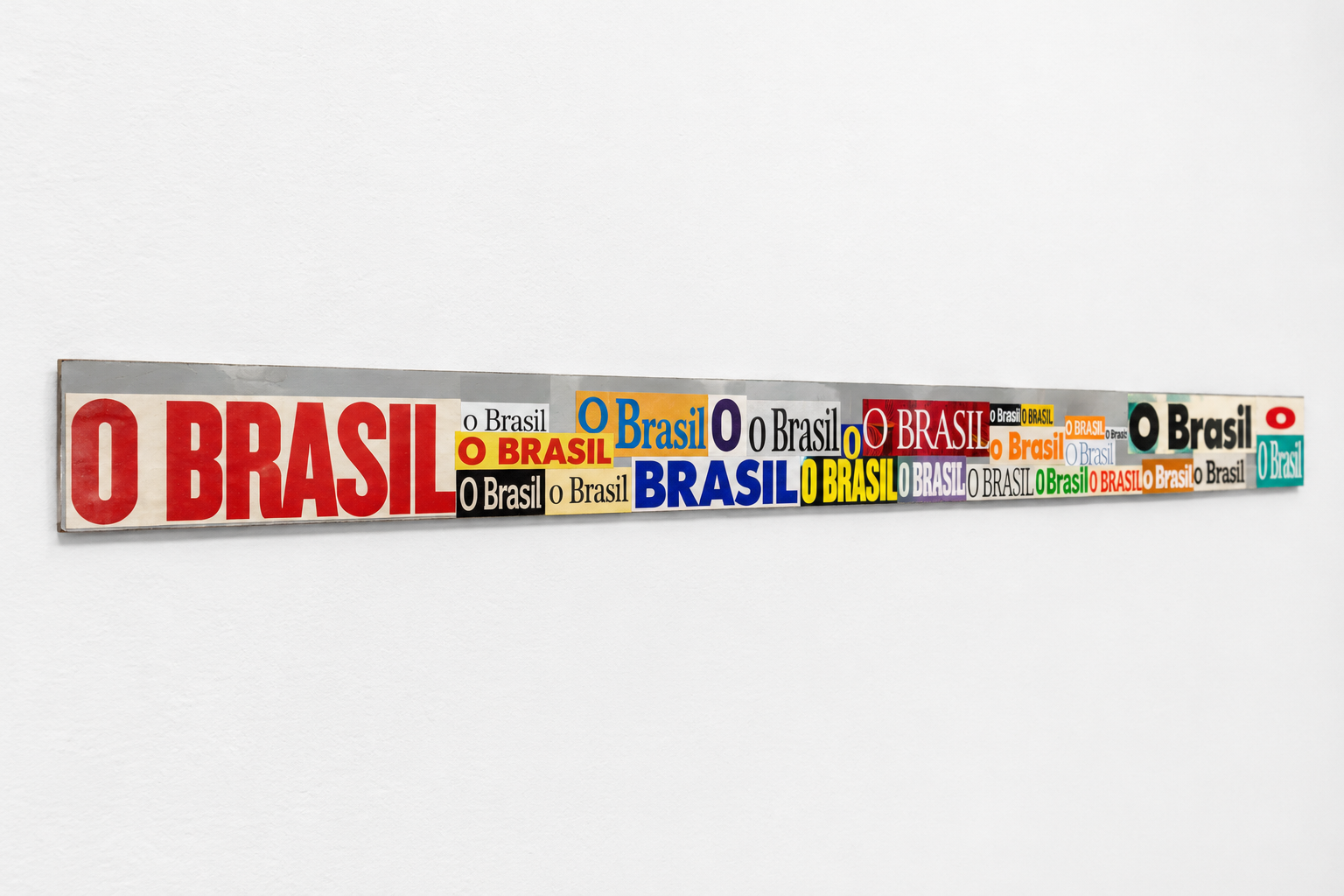
In some works, paper serves as a surface for drawing, painting, or printing. In others, it becomes the raw material from which forms and volumes are constructed. Cardboard, recycled paper, photographic paper, banknotes, and pages from publications are twisted, torn, glued, printed on, painted, folded, or scratched. Although all the works take paper as their starting point, the results vary considerably. In some cases, the origin of the material remains apparent; in others, it becomes difficult to recognise.
Yet paper also carries meanings and values that do not necessarily derive from its physical properties. A banknote represents economic value; a photograph can preserve a memory or serve as a document; and packaging loses its usefulness once opened. These meanings do not disappear when paper becomes part of a work of art. Often, it is these very meanings, as much as the possibilities for physical transformation, that interest the artists.
Paper occupies a fundamental place in the history of art. For centuries, it has been a primary medium for recording, studying, and reproducing images, contributing to the production and dissemination of knowledge across different fields. At the same time, artists have never confined its use to that of mere support. They have torn, folded, accumulated, stitched, destroyed, and reconstructed paper, exploring qualities such as fragility, flexibility, texture, and even structural strength. Beyond serving as a surface for images, paper has also become an object and the very substance of the artwork itself.
P-A-P-E-L makes no attempt to establish a sense of unity among the works beyond the material that brings them together. The focus is on how each artist engages with this material and how works of such different kinds emerge from something so familiar. A blank sheet of paper, a photograph, a banknote, and a piece of cardboard differ in value, purpose, and meaning in ways that have little to do with the material from which they are made.
Perhaps this is precisely one of the qualities of paper that the exhibition seeks to explore: its capacity to hold great value or almost none at all, serving equally well for the things we are about to discard and those we wish to preserve.