Rodrigo Bivar | Ficção
Inauguração
17 de outubro 2026
14h-18h
Exposição
17 de outubro –
18 de novembro, 2026
Zielinsky São Paulo
Duas ficções
por Ana Roman
Em As Margens da Ficção (2017)¹, o filósofo Jacques Rancière propõe pensar a ficção como uma "estrutura de racionalidade", um modo de organizar coisas e acontecimentos para que eles possam ser percebidos e compreendidos. A palavra ficção, para ele, designa o trabalho de escolher o que merece ser contado, pôr os acontecimentos numa ordem e estabelecer relações de causa entre eles. As margens do título são as bordas em que a ficção encontra o que parecia estar fora dela. Uma delas é a das ciências sociais, que tomaram emprestado da ficção o modo de encadear causas e efeitos, de maneira que também um estudo de sociologia decide quais dados importam e como eles se ligam. Outra é a da literatura moderna, que trouxe para o centro o que antes ficava na beirada: os acontecimentos triviais, as pessoas comuns, o instante sem importância em que uma vida inteira pode se revelar.
Extrapolando esse pensamento para o campo das artes visuais, poderíamos dizer que toda pintura, figurativa ou abstrata, pode ser também uma ficção. Em qualquer uma delas há escolhas, uma ordem e relações entre elementos, sejam figuras reconhecíveis, sejam cores, formas e gestos, e nas duas se organizam ao mesmo tempo o espaço da representação e o espaço pictórico. No trabalho de Rodrigo Bivar, figuração e abstração convivem há anos, sem que uma tenha substituído a outra, e a mostra Ficção traz as duas para o mesmo espaço.
Com esse título, é impossível não lembrar o livro Ficções (1944)², de Jorge Luis Borges, em que, diferentemente da perspectiva de Rancière, a ficção é lida como invenção e chega ao ponto de fabricar um planeta inteiro. Em "Tlön, Uqbar, Orbis Tertius", conto publicado pela primeira vez em 1940 e escolhido para abrir o volume, o narrador descobre, junto com o amigo Adolfo Bioy Casares, o verbete de um país que não consta de nenhum mapa, e mais tarde encontra um tomo avulso da enciclopédia de Tlön, redigida ao longo de gerações por uma sociedade secreta de intelectuais. Tlön tem geografia, história e idiomas próprios. Nas línguas do seu hemisfério norte não há substantivos, e as coisas se formam pelo acúmulo de adjetivos: em vez de lua, diz-se aéreo-claro sobre escuro-redondo, ou qualquer outra combinação. A literatura de lá está cheia de objetos sem correspondência no mundo real, que surgem ou se desfazem conforme o poema pede. As pinturas de Bivar têm algo desse planeta. Cada uma tem a autonomia de um pequeno mundo, com leis próprias, em que cores e formas se relacionam segundo uma lógica que só vale ali.
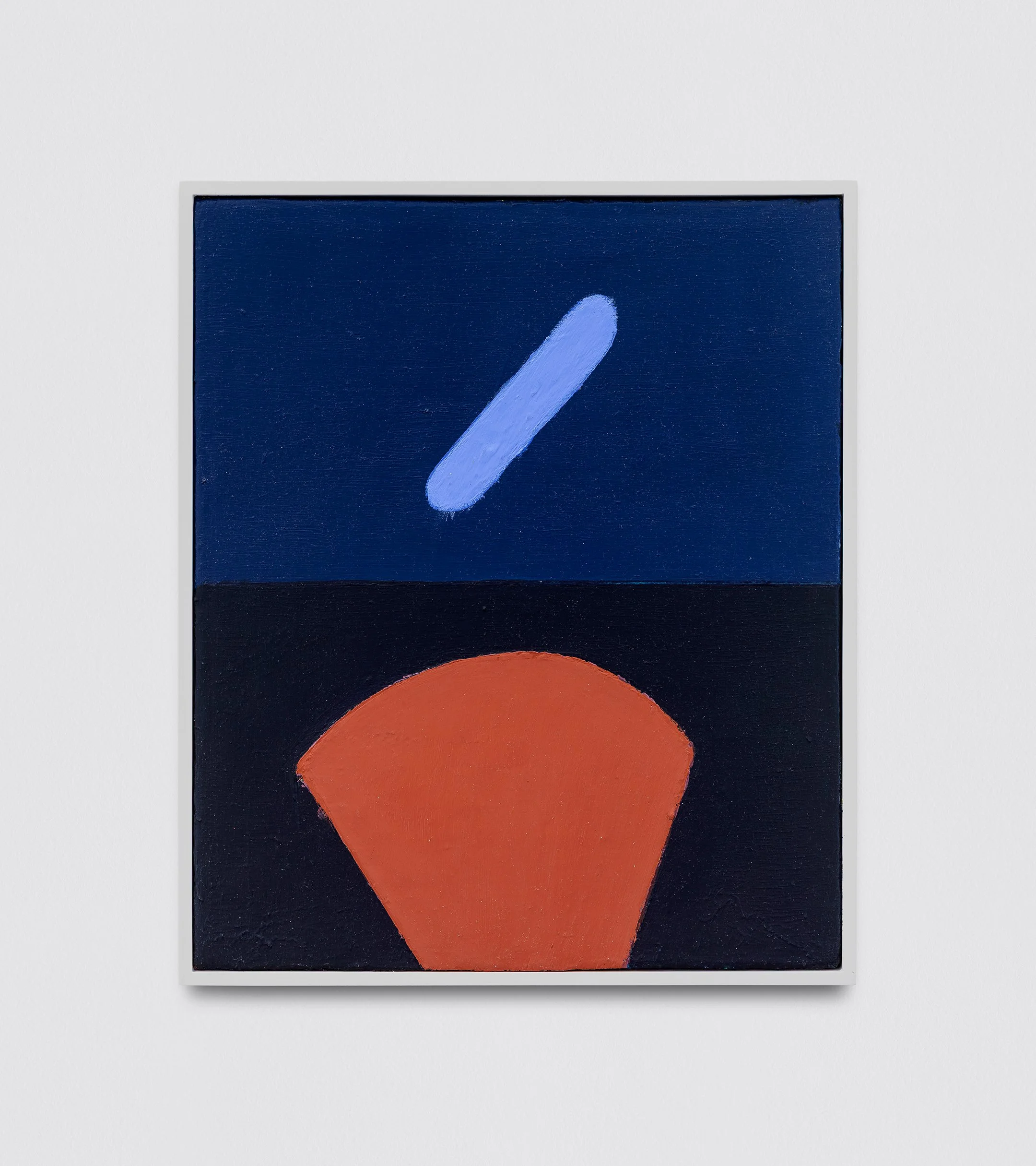
Durante cerca de dez anos, a pintura figurativa de Bivar partiu de fotografias que ele fazia do cotidiano, e a imagem chegava à tela praticamente resolvida na foto. Por volta de 2015, sem deixar a figuração de lado, ele começou a trabalhar também numa abstração geométrica de planos e faixas de cor, que foi ficando mais rigorosa e mais econômica. A geometria funcionou como uma inflexão. Bivar não queria, no entanto, se tornar um pintor geométrico, e aos poucos formas orgânicas começaram a se insinuar entre os planos retos, até se tornarem o assunto principal. A maior parte das obras aqui reunidas vem desse percurso.
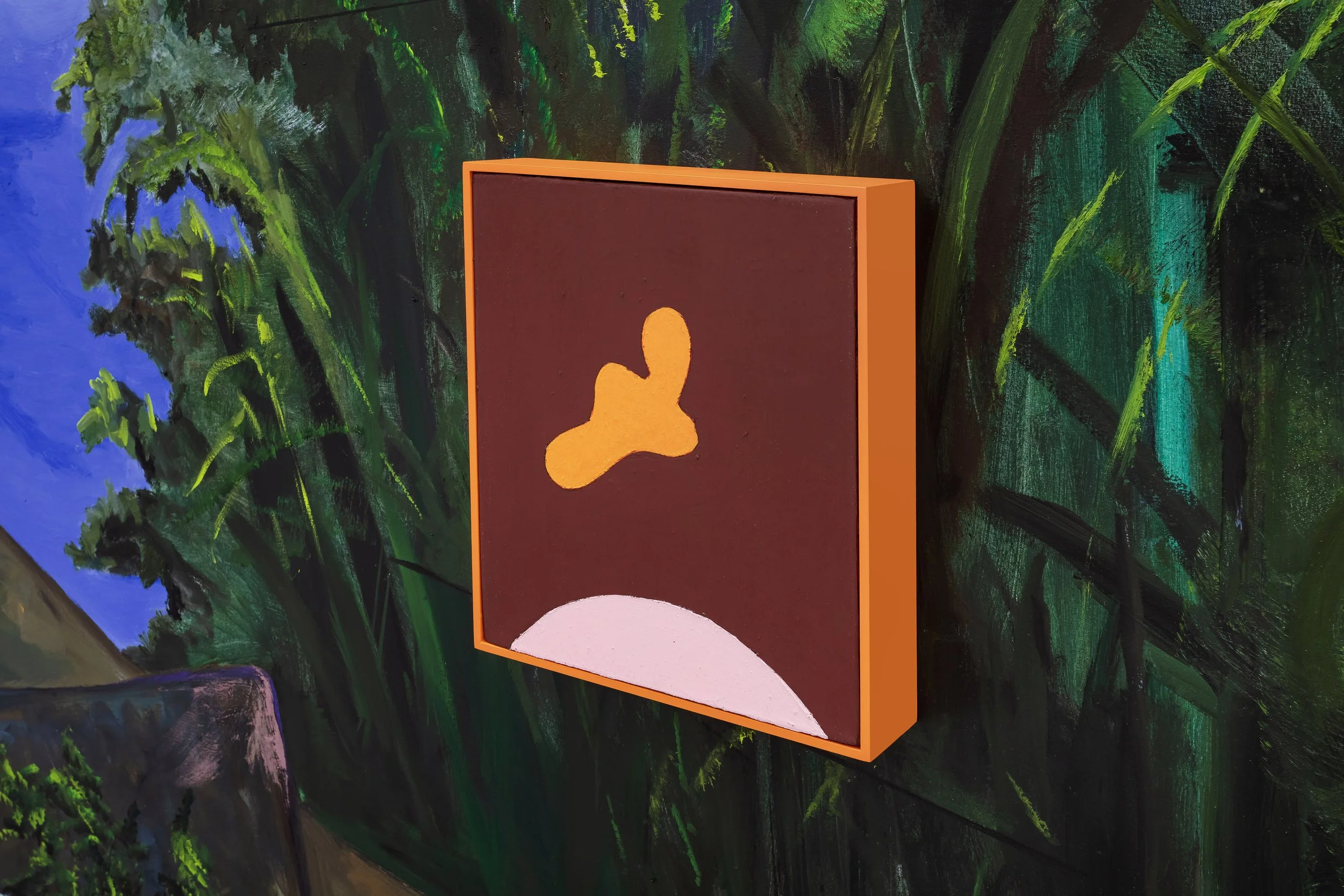
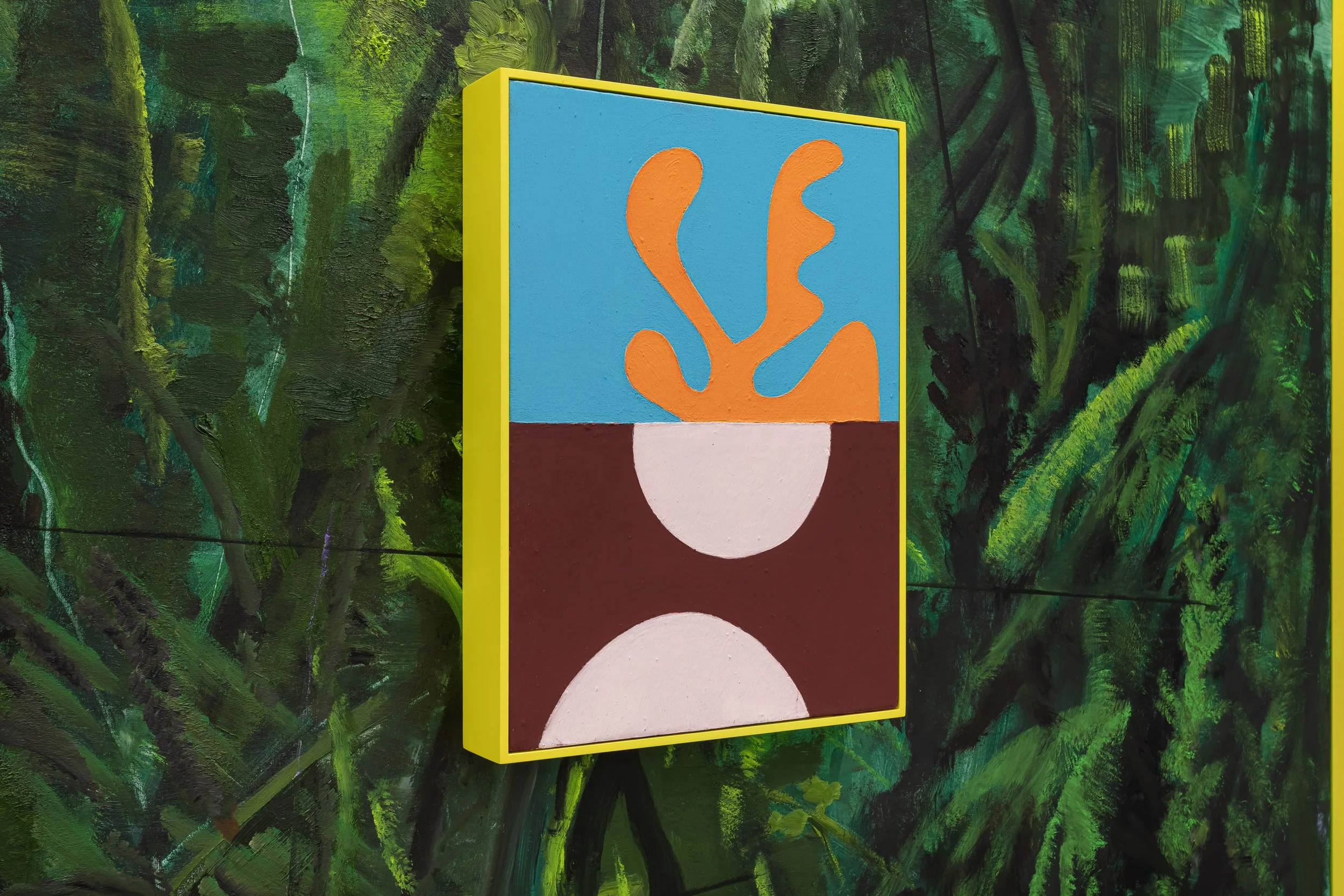
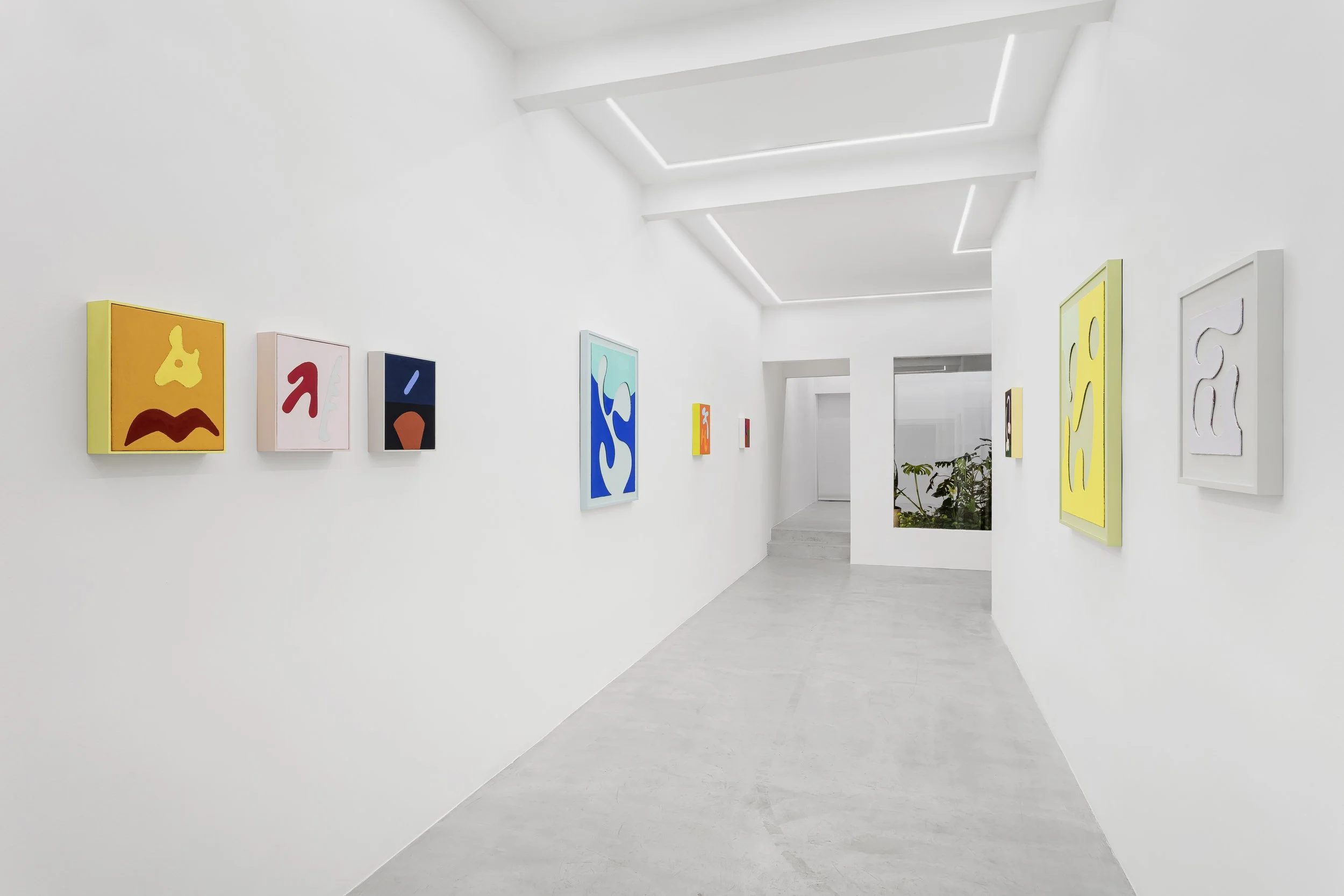
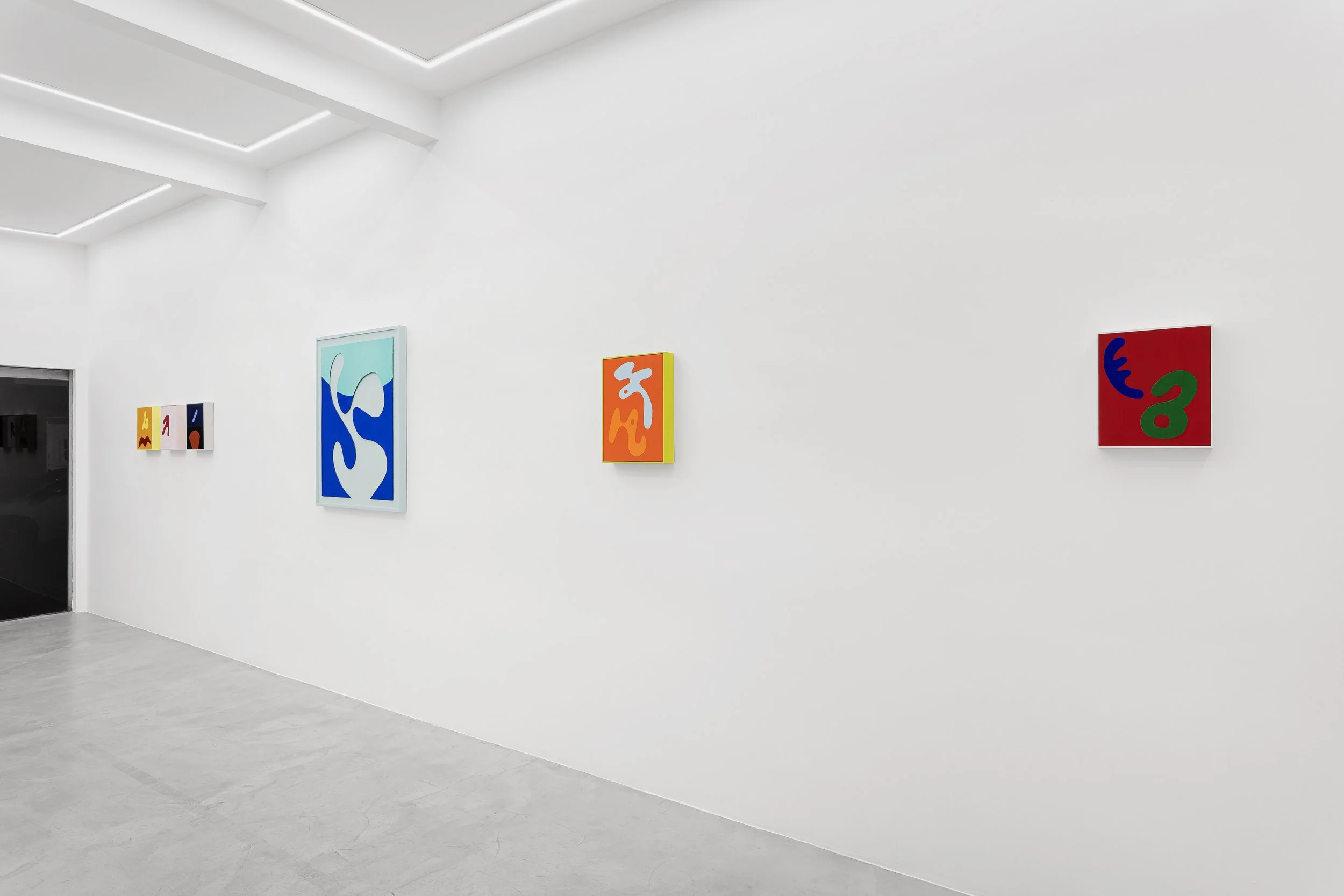
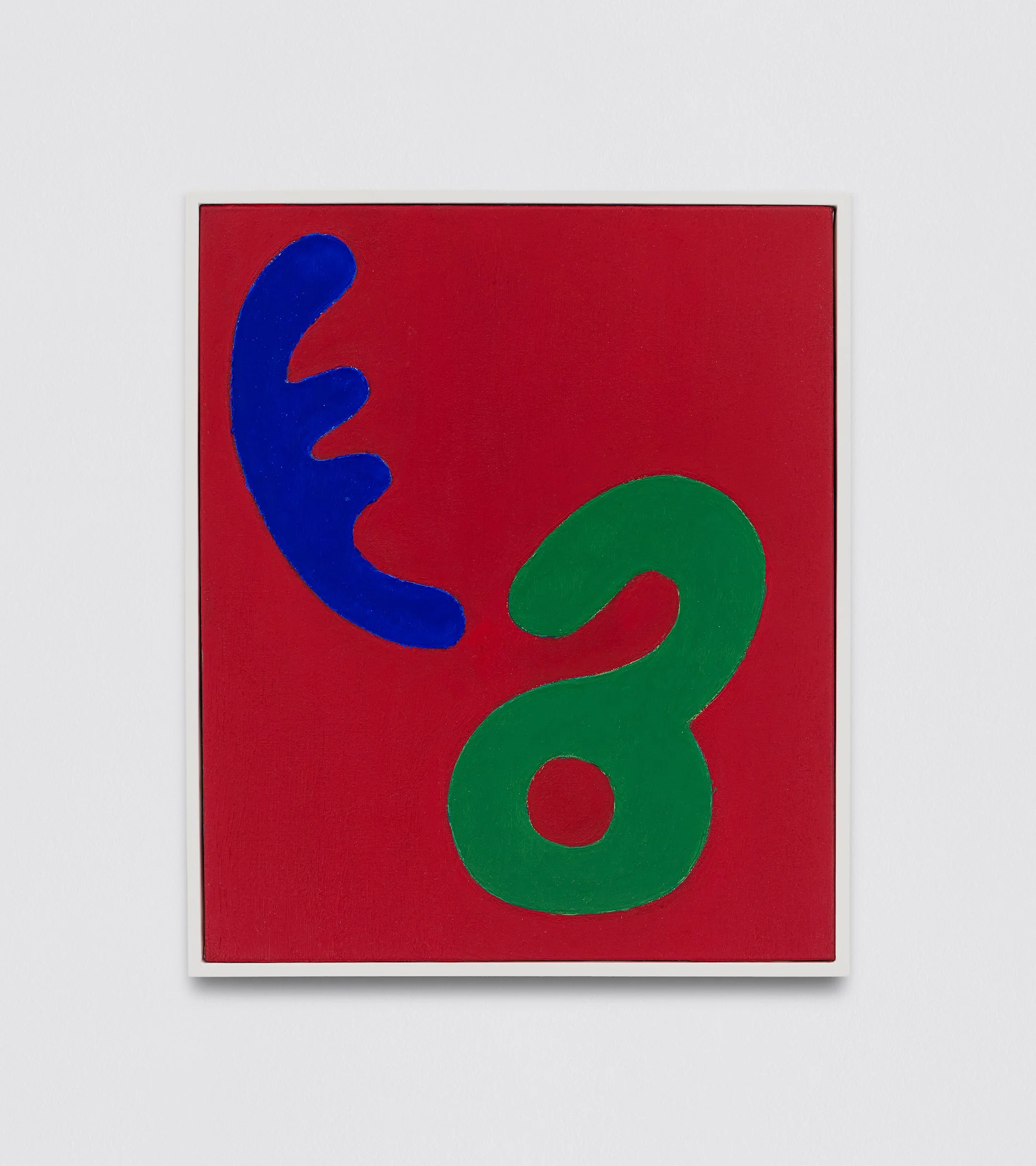
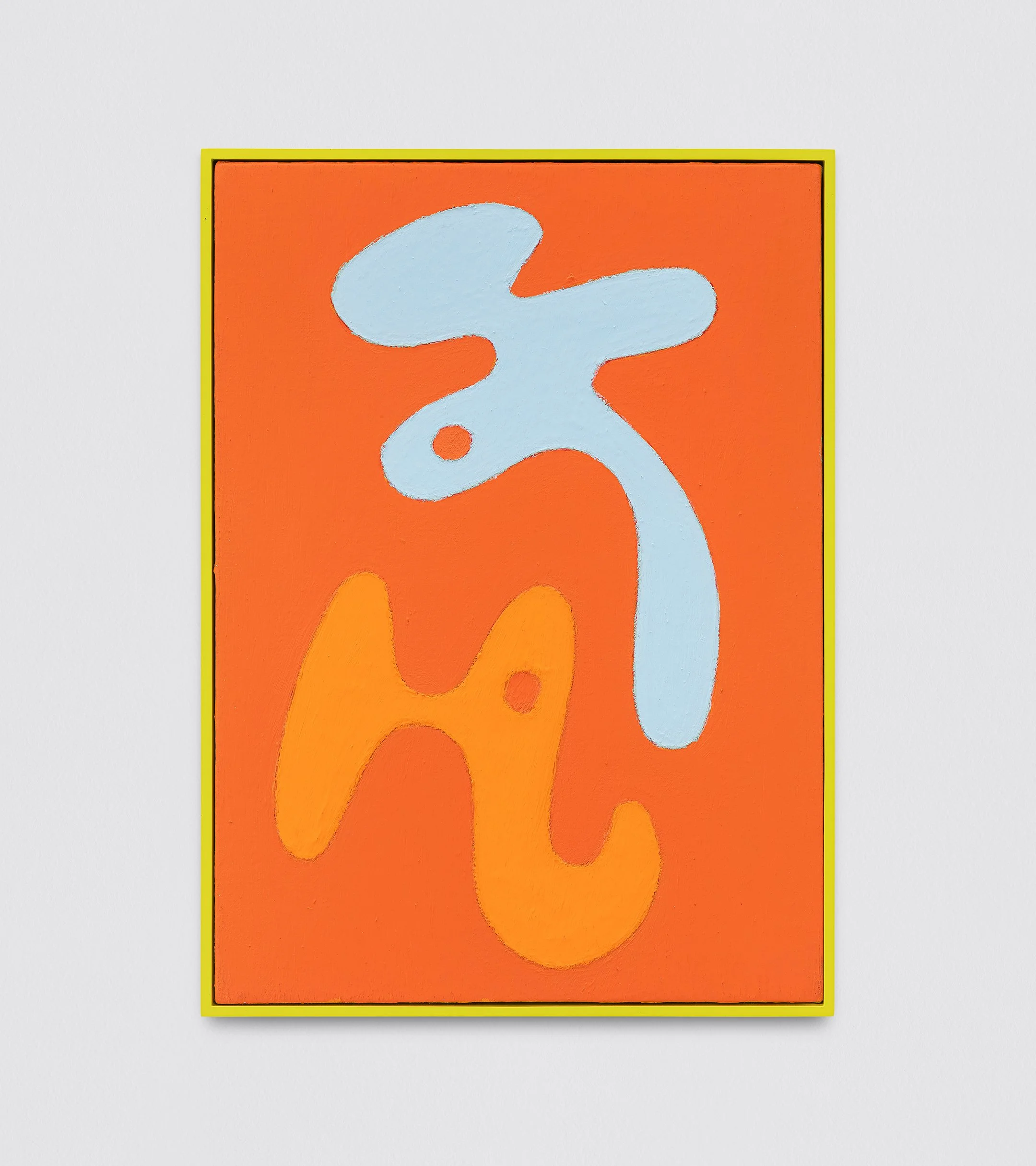
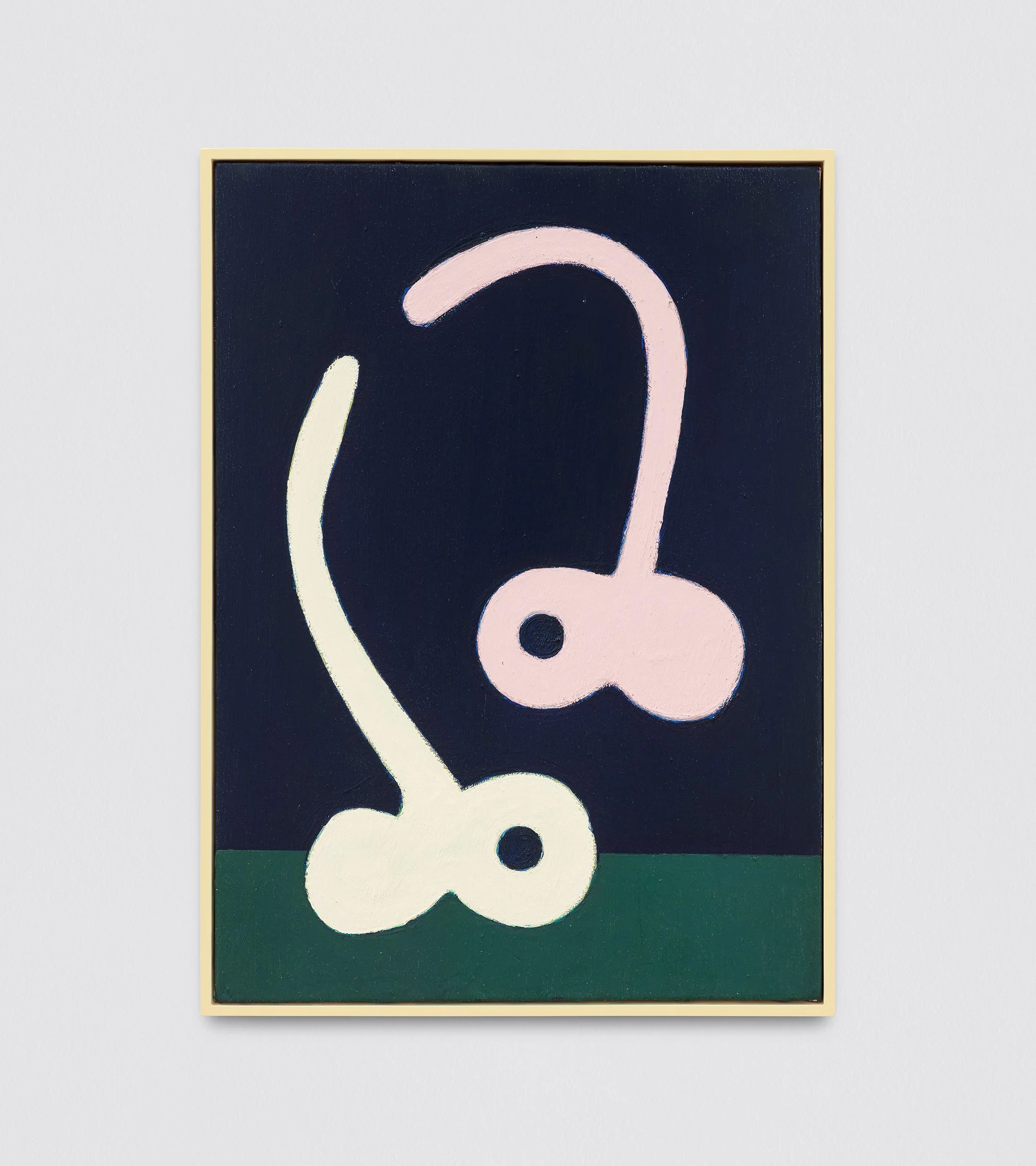
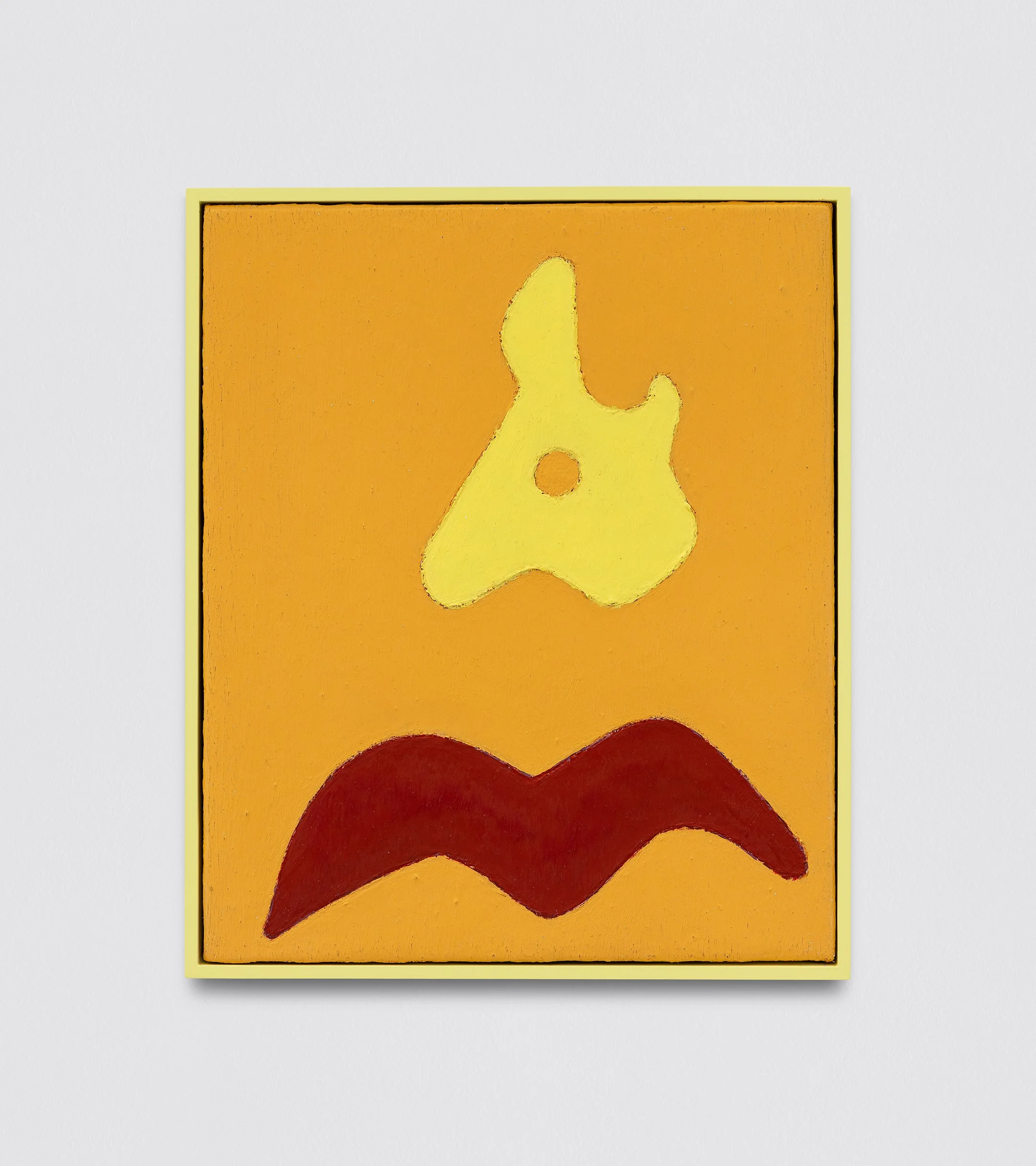
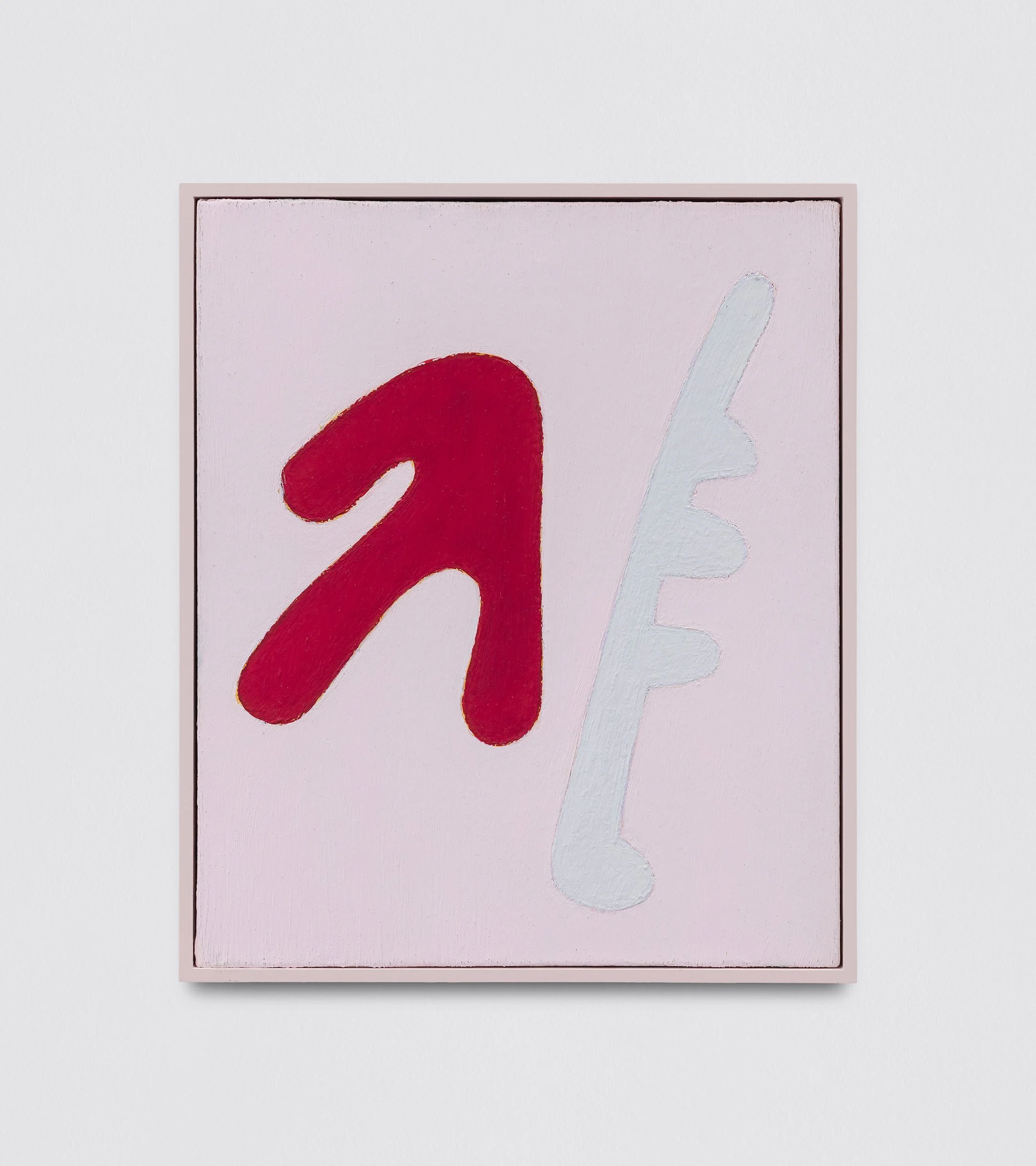
Em pequenas pinturas, o artista desenha as formas, cobre, apaga e escava até que o contorno fique marcado como se tivesse sido cortado. Passa longos períodos sobrepondo tons, e, como contou à escritora Laura Liuzzi³, chega um momento em que tem certeza de que o quadro está pronto, algo que compara a encontrar a palavra certa num poema. Tentar adivinhar o que ficou escondido sob a última camada seria, nas palavras dele, uma arqueologia inútil. O resultado tem algo de primário e embrionário, como um organismo em formação. Diante dessas pinturas, a situação lembra a de uma criança que ainda não aprendeu a ler e copia as letras de uma página como quem desenha, atenta às curvas e às hastes antes de qualquer sentido. Algumas das formas, com seus braços e dobras, parecem mesmo pertencer a um alfabeto desconhecido, tal que o olhar reconhece por um instante um personagem numa forma que logo volta a ser só forma. Os títulos acabam por nos puxar nessa direção: Divino, Zanga, Bigode Rosa e Susto dão às figurinhas um estado de ânimo, um atributo ou um traço de rosto, quase um temperamento, e chegam depois, como apelidos. Há humor nesses seres⁴, que se inclinam e se esticam no meio da tela, e há também algo de dança, como se cada um tivesse sido flagrado no meio de um passo.
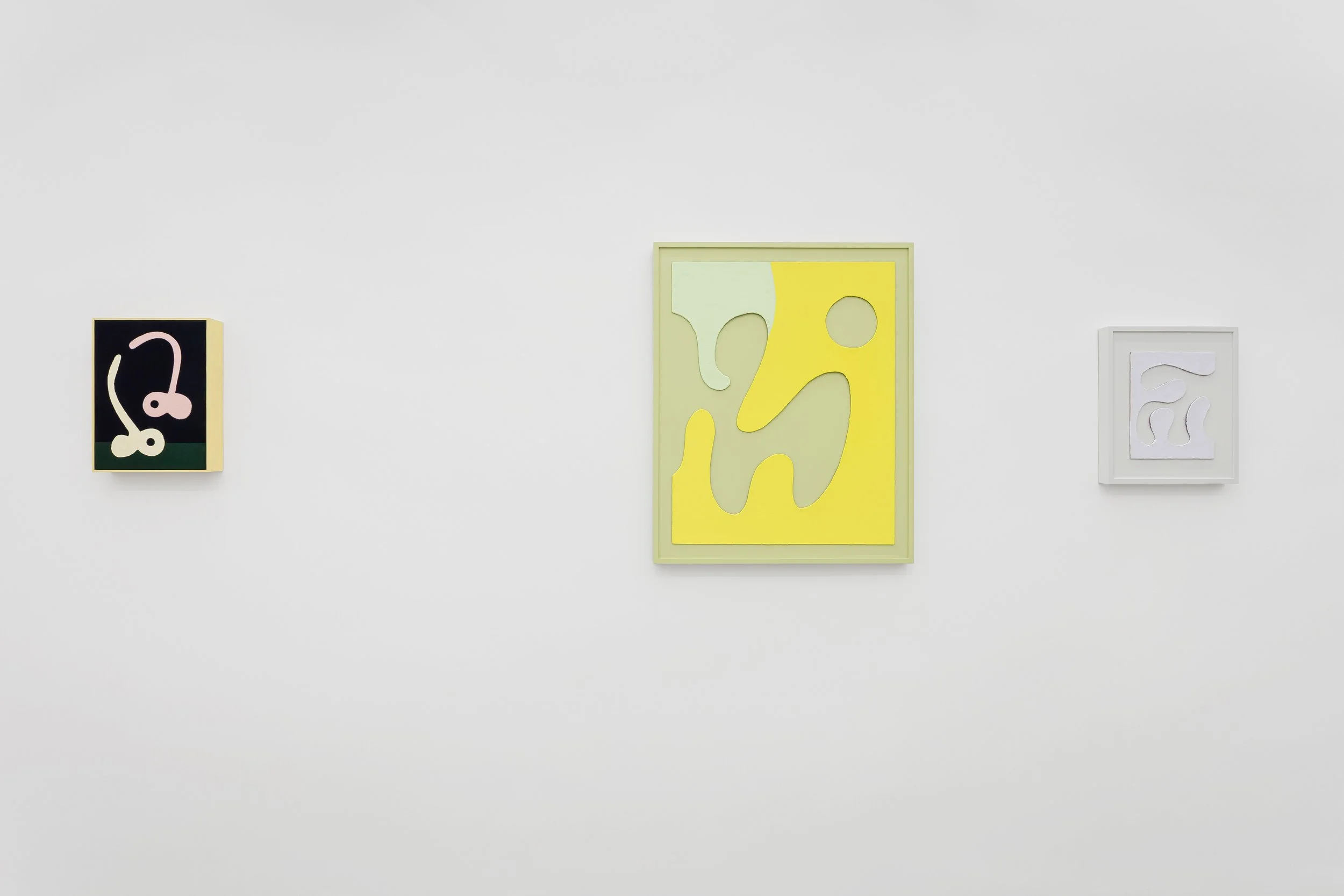
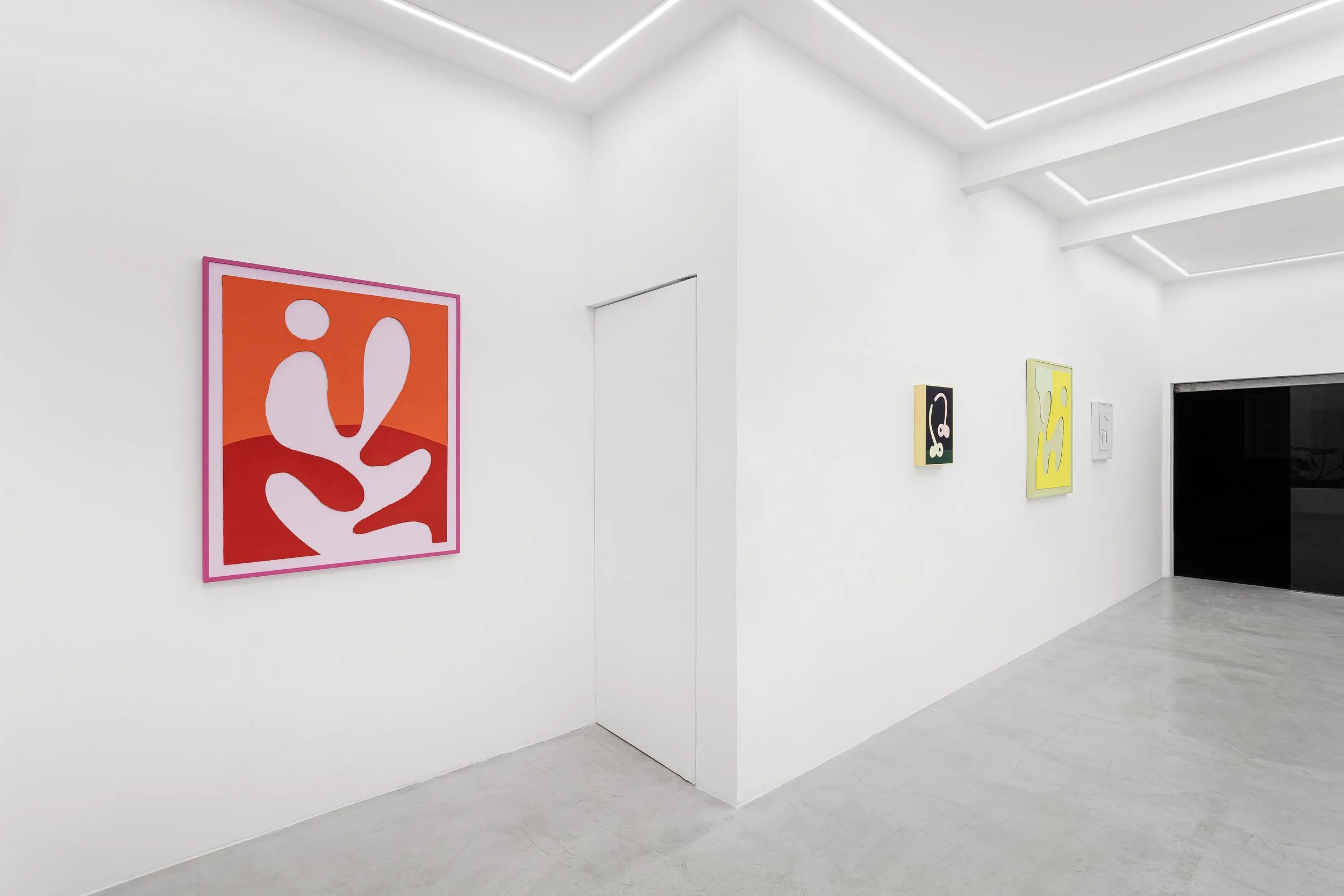
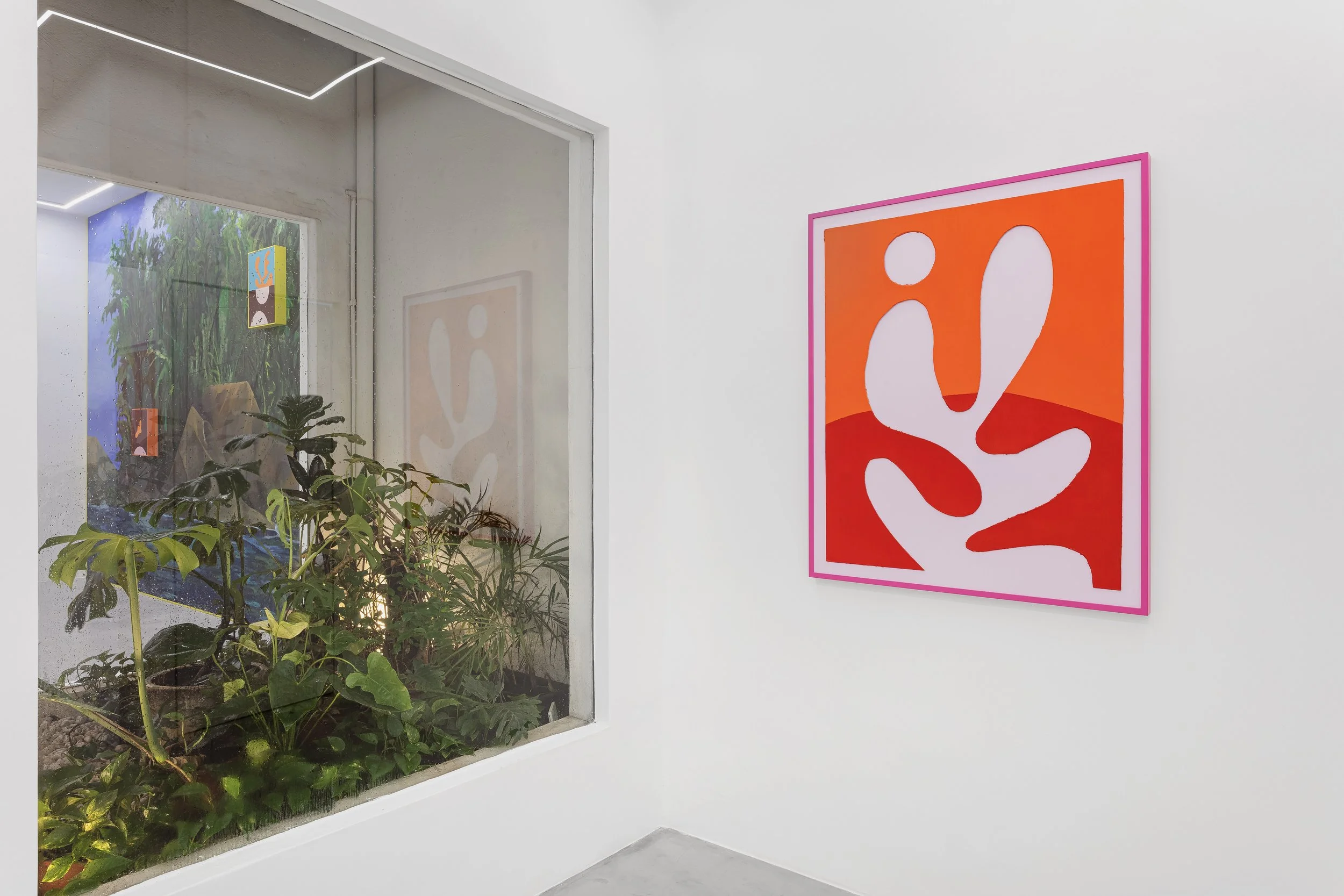
Já a série Alegrias ou Perturbações do Contorno anuncia no próprio título onde está seu interesse. Mas de que contorno se trata? Do limite da forma recortada, da borda do papel pintado ou da moldura que separa a obra da parede? De certo modo, de todos eles. Bivar recorta folhas de papel Paraná, pinta as placas e, depois de secas, as emoldura. Fundo e moldura recebem cores industriais, escolhidas criteriosamente entre tintas e acabamentos de catálogo. Pelas aberturas, essas áreas entram na composição e embaralham a hierarquia entre os planos: aquilo que está atrás pode avançar, enquanto a parte pintada recua. Em outras peças, a abertura é percebida simplesmente como vazio. Bivar dedica a esses componentes uma atenção incomum. Partes que normalmente servem apenas para proteger ou arrematar a obra recebem o mesmo cuidado que a pintura, aproximando o quadro de um objeto.
O corte conserva os pequenos desvios da tesoura e do gesto da mão, ao mesmo tempo que revela a espessura do papel. O artista coloca em contato duas materialidades distintas: a pintura feita no ateliê e a área lisa, uniforme, que permaneceu intocada: às vezes, Bivar aproxima os tons; em outras, acentua o contraste entre eles. No primeiro caso, a borda quase desaparece e o desenho se confunde com o plano posterior; no segundo, a separação se torna mais nítida. O título nomeia justamente essa oscilação: há alegria na precisão de um recorte que se fecha e perturbação na irregularidade que denuncia o processo de feitura. Nesses trabalhos, muda também o papel da cor: ela deixa de estar subordinada à descrição de uma coisa reconhecível e passa a valer pelas relações que estabelece, seja misturada na paleta, seja escolhida entre tonalidades padronizadas pelos fabricantes.
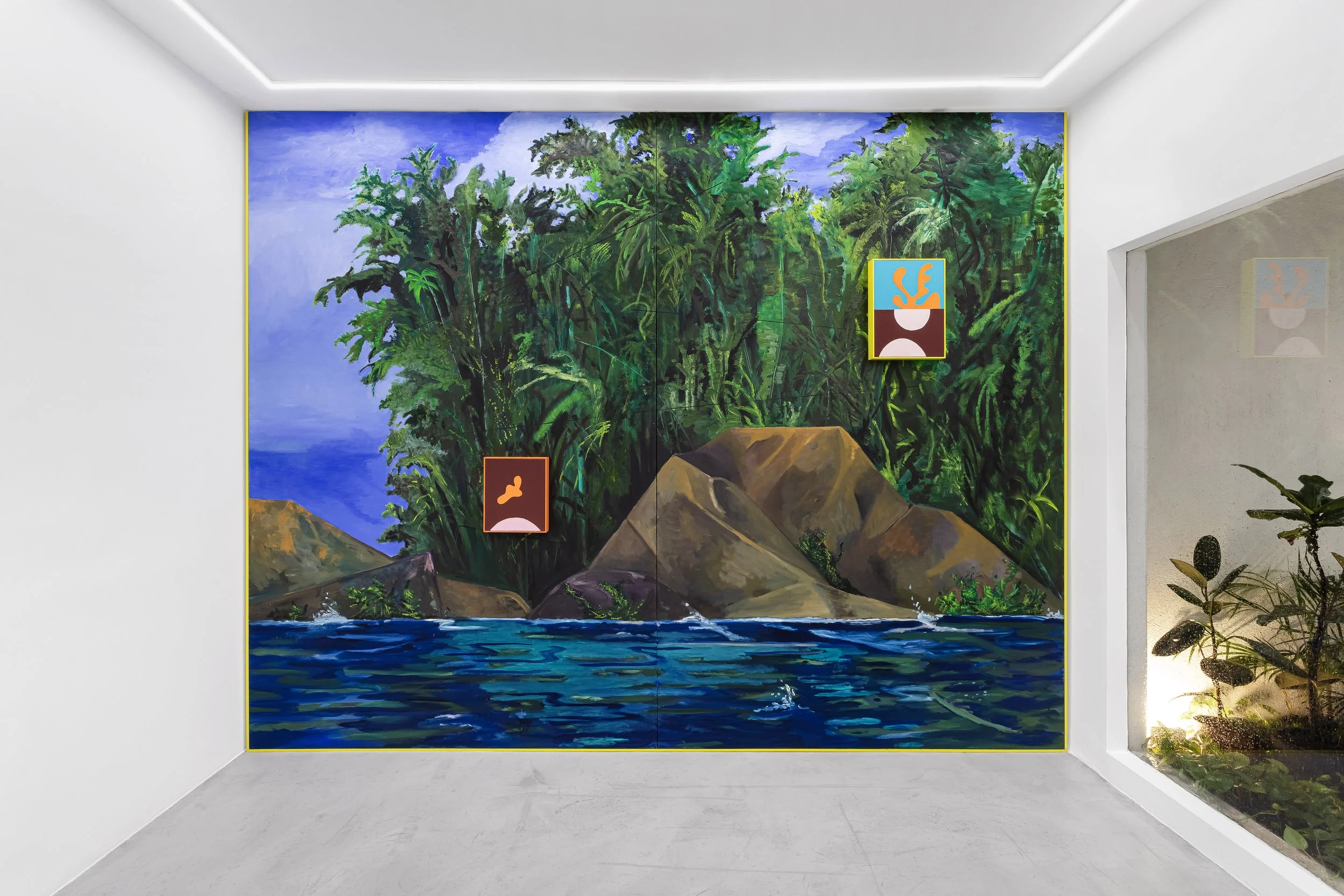
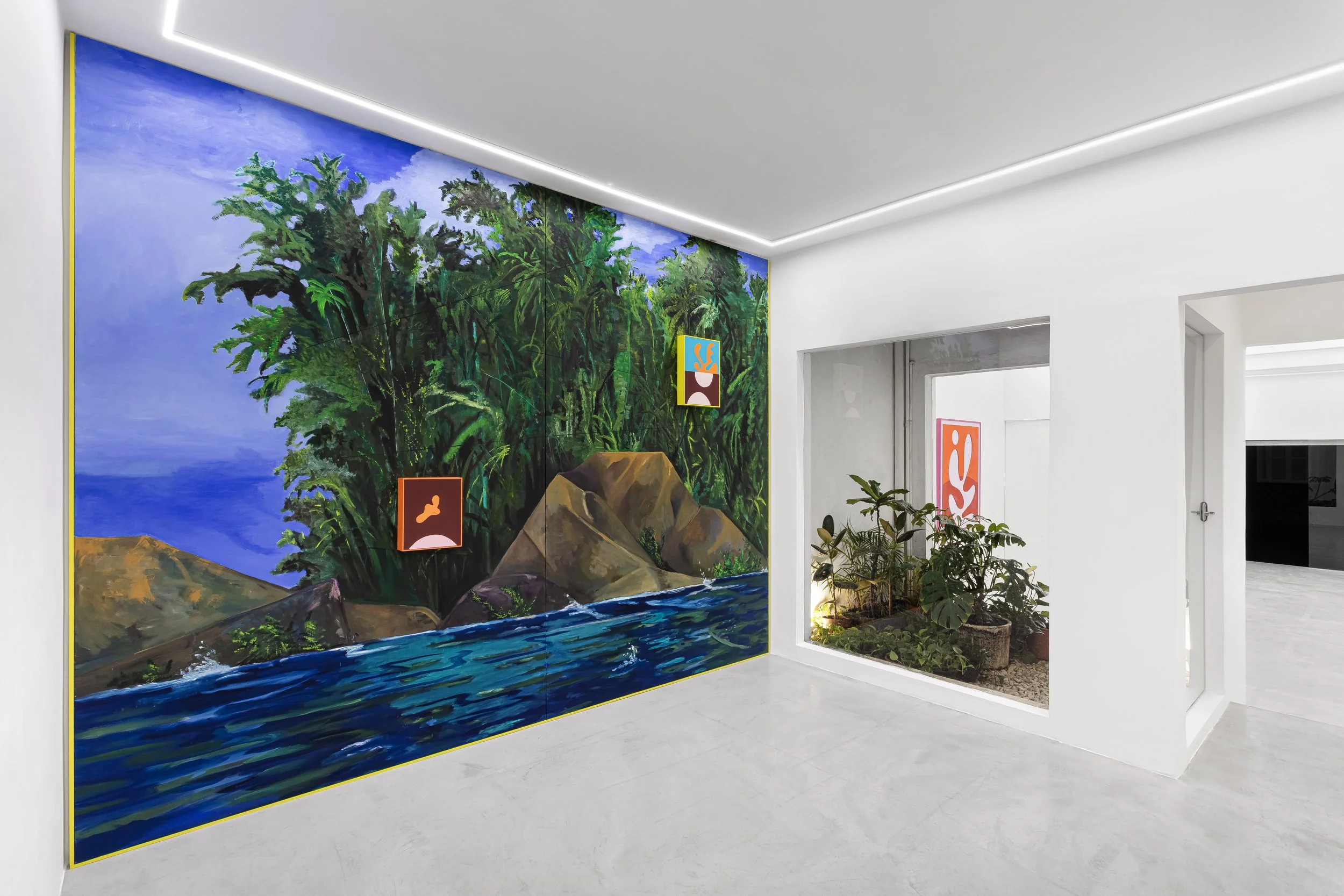
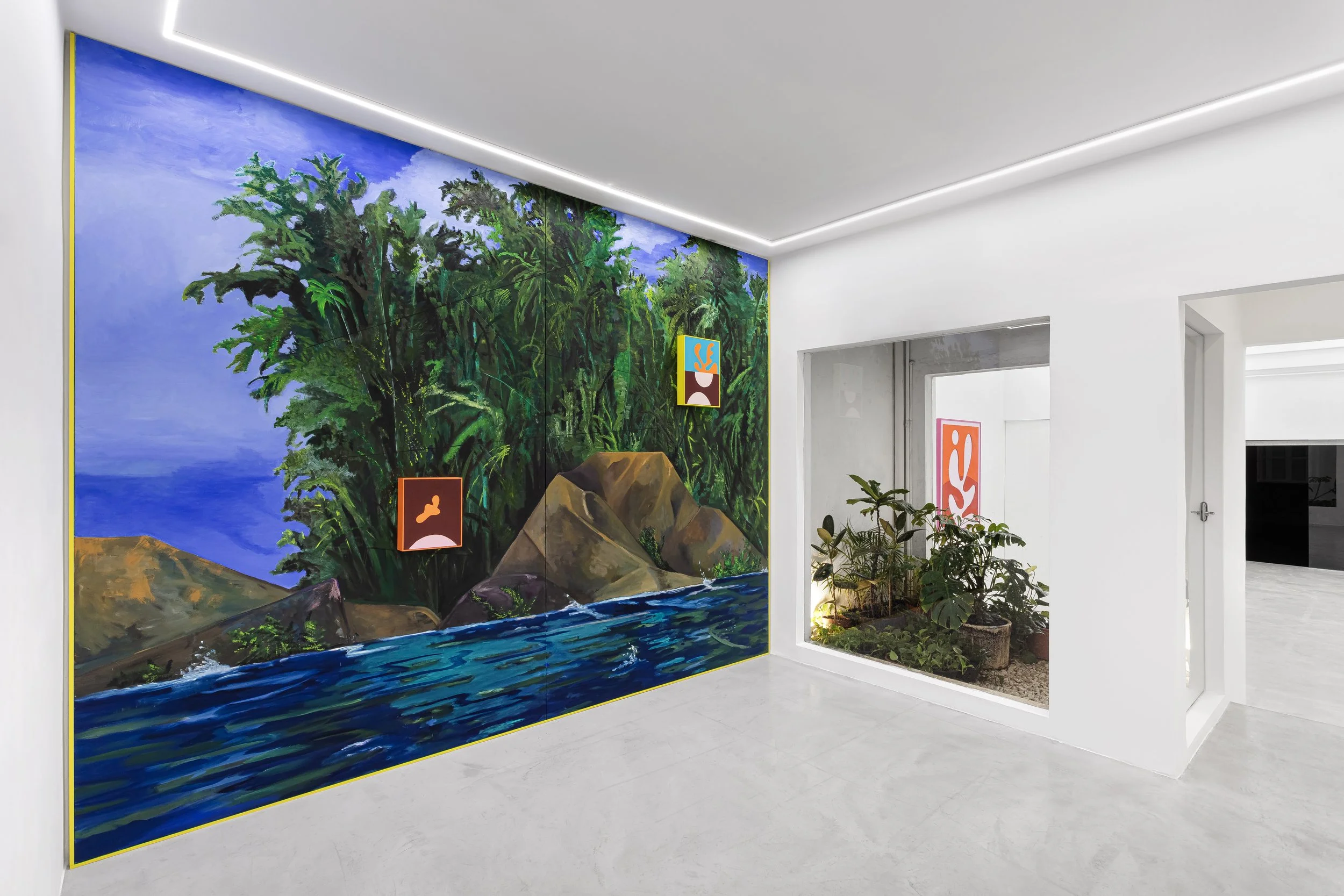
Por fim, o percurso na exposição se encerra com um gesto um pouco inusitado. Numa obra site-specific, concebida para a parede que ocupa, Bivar põe figuração e abstração em contato, lembrando que ambas pertencem à mesma prática. Sobre uma grande mata desenhada em escala arquitetônica, dispõe pequenas telas ocupadas por formas e seres que aparecem em outros momentos de sua produção. As partes parecem vir de lugares diferentes, quase como personagem e cenário produzidos separadamente e combinados apenas depois. Elas não coincidem perfeitamente, e o artista não procura disfarçar essa descontinuidade. A diferença de escala, técnica e suporte integra, assim, a própria composição.
No início deste texto, recorremos a Rancière para pensar a ficção não apenas como invenção de uma história, mas como um modo de criar relações. É o que ocorre aqui. Sem construir propriamente um enredo, Bivar aproxima mata e criaturas, desenho mural e pequenas telas, fazendo coexistir registros distintos sem estabelecer hierarquia entre eles. As emendas permanecem à vista e retomam uma questão que atravessa toda a mostra: a atenção aos limites, aos recortes e às zonas de contato. Diante desse conjunto, já não é tão simples dizer se os seres entraram na paisagem ou se a paisagem passou a fazer parte do mundo inventado por eles. A pergunta pode ser estendida à pintura de Bivar como um todo: entre figuração e abstração, qual das duas acolhe a outra? A resposta talvez importe menos do que aquilo que elas compartilham, o prazer da pintura, que, nos trabalhos do artista, se concentra nos pequenos ajustes entre uma cor e outra, entre uma forma e sua borda. É desse prazer que nascem as duas ficções.
____
¹RANCIÈRE, Jacques. As margens da ficção. Tradução de Fernando Scheibe. São Paulo: Editora 34, 2021.
²BORGES, Jorge Luis. Ficções. Tradução de Carlos Nejar. São Paulo: Companhia das Letras, 2007.
³Texto da exposição individual do artista Gema, na galeria Athena (RJ), em 2020.
⁴Neste texto, chamamos essas formas de seres porque seus contornos se deixam identificar com mais facilidade do que os de uma mancha ou de um plano de cor, e às vezes lembram um corpo. Elas continuam, no entanto, no campo da forma e da abstração, e é nesse sentido que o termo é usado aqui.
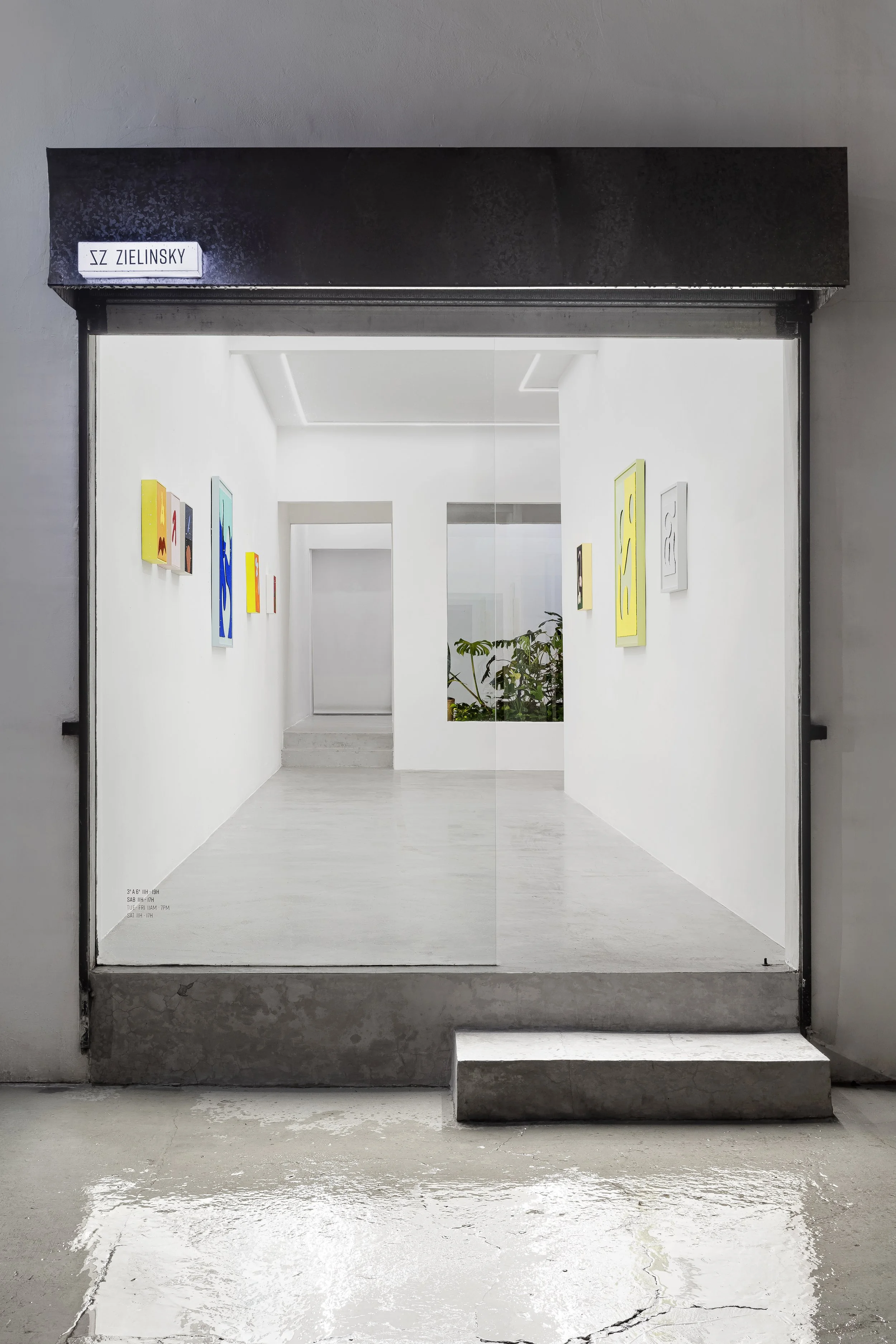
Rodrigo Bivar | Ficção
Opening
October 17, 2026
2-6pm
Exhibition
October 17 –
November 18, 2026
Zielinsky São Paulo
Two Fictions
by Ana Roman
In The Edges of Fiction (2017)¹, philosopher Jacques Rancière proposes that we think of fiction as a “structure of rationality”: a way of arranging things and events so that they can be perceived and understood. For Rancière, fiction names the work of deciding what deserves to be told, placing events in a certain order, and establishing causal relationships between them. The “edges” of the title are the boundaries where fiction encounters what had seemed to lie outside it. One such boundary is that of the social sciences, which borrowed from fiction its way of linking causes and effects: a sociological study, too, decides which data matter and how they relate to one another. Another is that of modern literature, which brought to the center what had previously remained at the margins: ordinary events, ordinary people, the seemingly insignificant moment in which an entire life may reveal itself.
Extending this line of thought to the visual arts, we might say that every painting, whether figurative or abstract, can also be a fiction. Each entails choices, an ordering, and relationships among elements—whether recognizable figures or colors, forms, and gestures—and each organizes both the space of representation and the pictorial space itself. Figuration and abstraction have coexisted in Rodrigo Bivar’s work for years, without one ever replacing the other, and the exhibition Fiction brings the two together within the same space.
The title inevitably calls to mind Jorge Luis Borges’s Fictions (1944)², where, unlike in Rancière’s account, fiction takes the form of invention and goes so far as to fabricate an entire planet. In “Tlön, Uqbar, Orbis Tertius,” first published in 1940 and chosen to open the volume, the narrator, together with his friend Adolfo Bioy Casares, discovers an encyclopedia entry for a country that appears on no map. Later, he comes across a stray volume from the encyclopedia of Tlön, compiled over generations by a secret society of intellectuals. Tlön has its own geography, history, and languages. In the languages of its northern hemisphere, there are no nouns; things are formed through accumulations of adjectives. Instead of “moon,” one might say airy-bright above dark-round, or any number of other combinations. Its literature is filled with objects that have no counterpart in the real world, appearing or dissolving according to the demands of the poem. There is something of this planet in Bivar’s paintings. Each possesses the autonomy of a small world governed by its own laws, in which colors and forms relate to one another according to a logic that holds only within its boundaries.
For roughly ten years, Bivar’s figurative painting took as its point of departure photographs he made of everyday life; by the time the image reached the canvas, it had largely been resolved in the photograph itself. Around 2015, without abandoning figuration, he also began developing a geometric abstraction structured around planes and bands of color, which gradually became more rigorous and economical. Geometry marked a turning point. Bivar did not, however, want to become a geometric painter, and organic forms slowly began to insinuate themselves among the straight-edged planes until they became the primary subject. Most of the works gathered here emerge from this trajectory.
In his small paintings, the artist draws forms, covers them over, erases, and excavates until their contours become pronounced, as though they had been cut into the surface. He spends long periods layering tones until, as he told the writer Laura Liuzzi³, there comes a moment when he knows with certainty that the painting is finished—a sensation he compares to finding the right word in a poem. To try to guess what lies hidden beneath the final layer would be, in his words, a pointless archaeology. The resulting forms have something primal and embryonic about them, like organisms still in the process of becoming. Looking at these paintings brings to mind a child who has not yet learned to read and copies letters from a page as though drawing them, attentive to curves and stems before meaning takes hold. Some of the forms, with their arms and folds, seem to belong to an unknown alphabet: for an instant, the eye recognizes a character, only for it to become pure form again. The titles pull us further in this direction. Turma da Manhã (Morning Crew), O Beijo (The Kiss), Zonzo (Dizzy) and Cacho (Bunch) give these little figures a mood, an attribute, or a facial feature—almost a temperament—and arrive afterward, like nicknames. There is humor in these beings⁴, leaning and stretching across the canvas, and there is also something of dance, as though each had been caught in the middle of a step.
The series Alegrias ou Perturbações do Contorno (Joys or Disturbances of the Contour), meanwhile, announces its concern in its very title. But which contour is at stake? The edge of the cut-out form, the boundary of the painted paper, or the frame that separates the work from the wall? In a sense, all of them. Bivar cuts sheets of Paraná board, paints the resulting shapes, and, once they are dry, frames them. Both the background and the frame are finished in industrial colors, carefully selected from manufacturers’ catalogs of paints and finishes. Through the openings, these areas enter into the composition and unsettle the hierarchy among its planes: what lies behind may advance, while the painted section recedes. In other works, the opening is perceived simply as a void. Bivar devotes unusual attention to these components. Elements that would normally serve merely to protect or finish the work are treated with the same care as the painting itself, bringing the picture closer to the status of an object.
The cut preserves the slight deviations of the scissors and the movement of the hand while also exposing the thickness of the paper. The artist brings two distinct materialities into contact: the painting produced in the studio and the smooth, uniform area that has remained untouched. At times Bivar draws their tones closer together; elsewhere he heightens the contrast between them. In the first instance, the edge nearly disappears and the shape merges with the plane behind it; in the second, the separation becomes more pronounced. The title names precisely this oscillation: there is joy in the precision of a cut that closes neatly upon itself, and disturbance in the irregularity that reveals the process of making. In these works, the role of color also changes. No longer subordinated to describing a recognizable thing, color acquires meaning through the relationships it establishes—whether mixed on the palette or selected from standardized hues produced by manufacturers.
Finally, the exhibition concludes with a somewhat unexpected gesture. In a site-specific work conceived for the wall it occupies, Bivar brings figuration and abstraction into direct contact, reminding us that both belong to the same practice. Against a large-scale drawing of dense vegetation extending across the wall, he places small canvases populated by forms and beings that appear elsewhere in his work. The elements seem to come from different places, almost like characters and scenery produced separately and brought together only afterward. They do not align seamlessly, nor does the artist attempt to conceal the discontinuity. Differences of scale, technique, and support thus become part of the composition itself.
At the beginning of this text, we turned to Rancière in order to consider fiction not simply as the invention of a story, but as a way of creating relationships. This is precisely what happens here. Without constructing a narrative as such, Bivar brings vegetation and creatures, wall drawing and small canvases into proximity, allowing distinct registers to coexist without establishing a hierarchy between them. The seams remain visible, returning us to a question that runs throughout the exhibition: an attention to boundaries, cuts, and zones of contact. Faced with this constellation of works, it is no longer so easy to say whether these beings have entered the landscape or whether the landscape itself has become part of the world they have invented. The question might be extended to Bivar’s painting as a whole: between figuration and abstraction, which one makes room for the other? The answer may matter less than what they share—the pleasure of painting, which, in Bivar’s work, resides in the subtle adjustments between one color and another, between a form and its edge. It is from this pleasure that the two fictions emerge.
____
¹RANCIÈRE, Jacques. As margens da ficção. Translated by Fernando Scheibe. São Paulo: Editora 34, 2021.
²BORGES, Jorge Luis. Ficções. Translated by Carlos Nejar. São Paulo: Companhia das Letras, 2007.
³Text written for Gema, the artist’s solo exhibition at Galeria Athena (Rio de Janeiro), 2020.
⁴Throughout this text, we refer to these forms as “beings” because their contours are more readily identifiable than those of a stain or a plane of color, and at times they suggest a body. They nevertheless remain within the realm of form and abstraction, and it is in this sense that the term is used here.