Vera Chaves Barcellos | Não lugares
Inauguração
22 de agosto, 2026
15h-18h
Exposição
22 de agosto –
3 de outubro, 2026
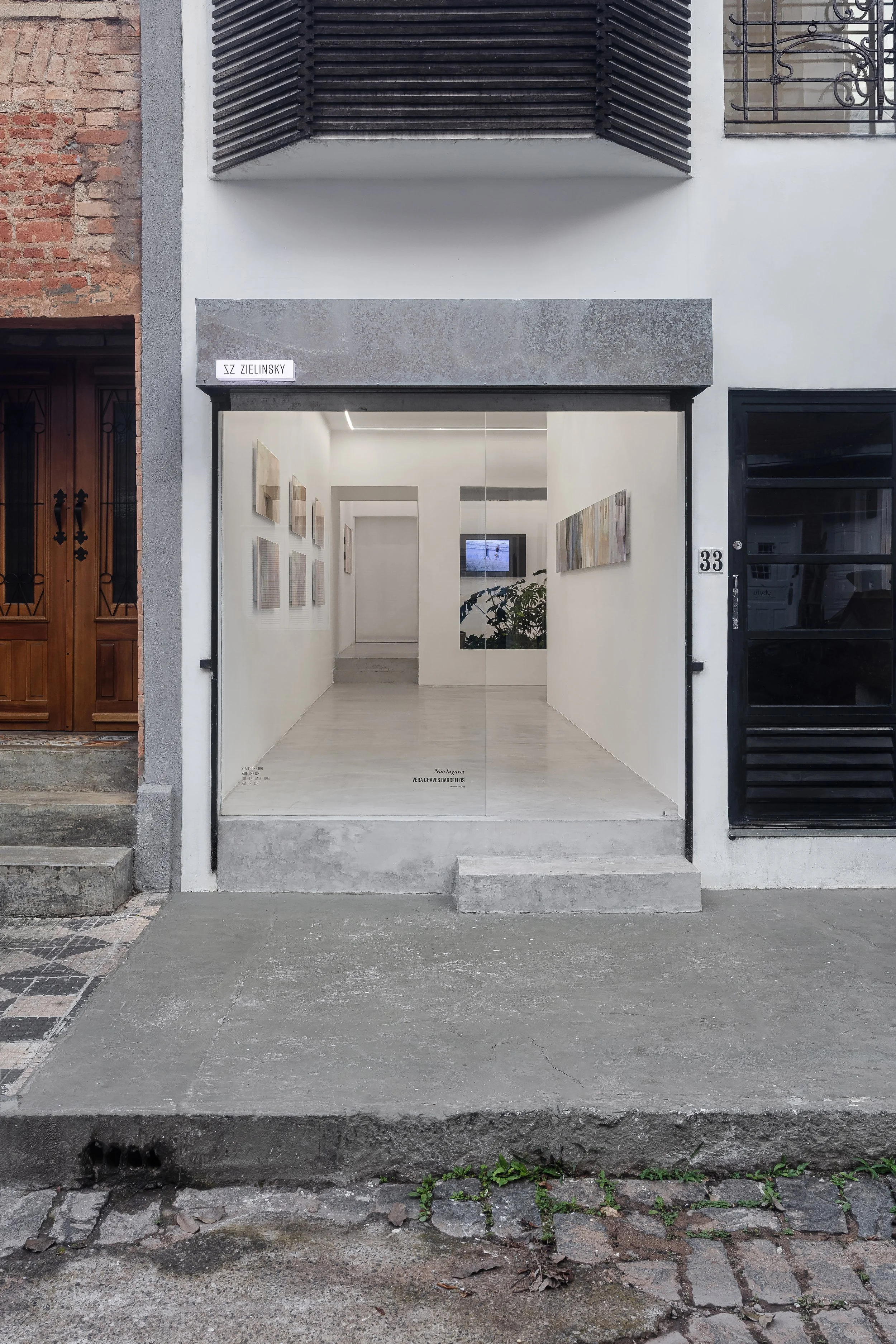
Zielinsky São Paulo
Não-lugares ou o tempo das imagens
por Cristiana Tejo, agosto de 2026
Vivemos rodeados por imagens. Elas atravessam diariamente as telas dos telefones, dos computadores e dos painéis luminosos da cidade, surgindo, desaparecendo e sendo substituídas por outras num fluxo aparentemente inesgotável. Nunca produzimos tantas fotografias, nem elas circularam com tanta velocidade. A aceleração de sua circulação parece reduzir também o tempo de sua permanência, como se sua existência se esgotasse no próprio instante em que aparecem. Mas talvez essa seja apenas uma das histórias que elas podem contar na atualidade. Existe, porém, outra história, menos evidente, que começa quando voltam a ser vistas, muitos anos depois, deslocadas do contexto em que foram produzidas e inesperadamente capazes de estabelecer novas relações e produzir novos sentidos. É essa segunda temporalidade das imagens, feita de deslocamentos, reativações e estados de latência, que Vera Chaves Barcellos investiga há mais de seis décadas. Em sua obra, uma imagem nunca coincide inteiramente com o momento em que foi produzida, pois permanece aberta, aguardando relações que talvez só venham a surgir muito tempo depois.
Desde as primeiras xilogravuras dos anos 1960 e, sobretudo, a partir da incorporação da fotografia em sua produção na década seguinte, Vera compreendeu a imagem como um campo permanente de experimentação. Em suas séries, a fotografia apresenta-se como matéria aberta a operações de aproximação, repetição, inversão, comparação e montagem. A serialidade, presente desde os trabalhos da série Testarte, torna-se um modo de pensar visualmente, já que uma imagem nunca está sozinha, mas existe sempre em relação a outras. Cada novo arranjo modifica aquilo que parecia conhecido e revela relações que permaneciam em estado de latência. A imagem deixa de ser um objeto concluído para tornar-se um campo de possibilidades temporais.
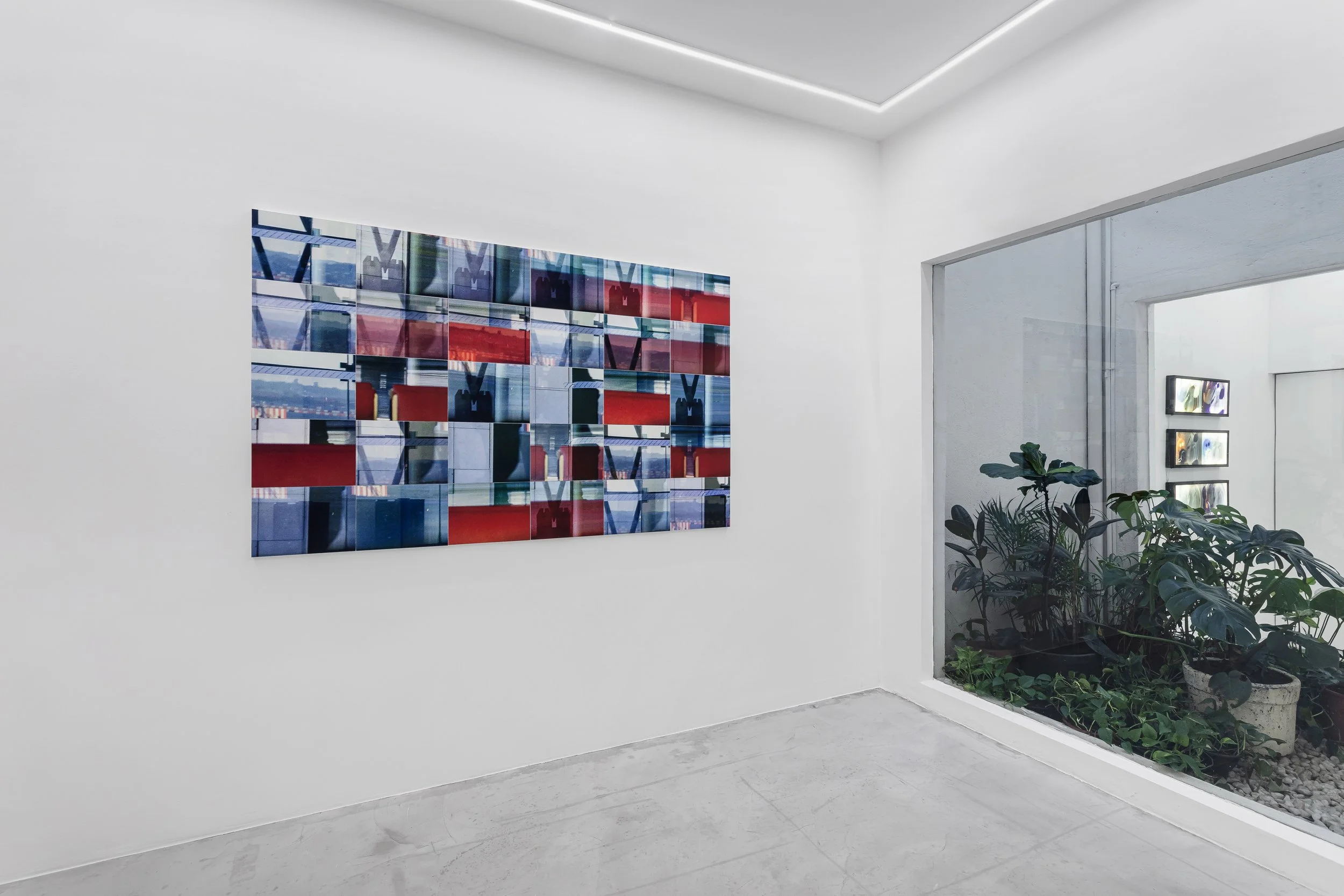
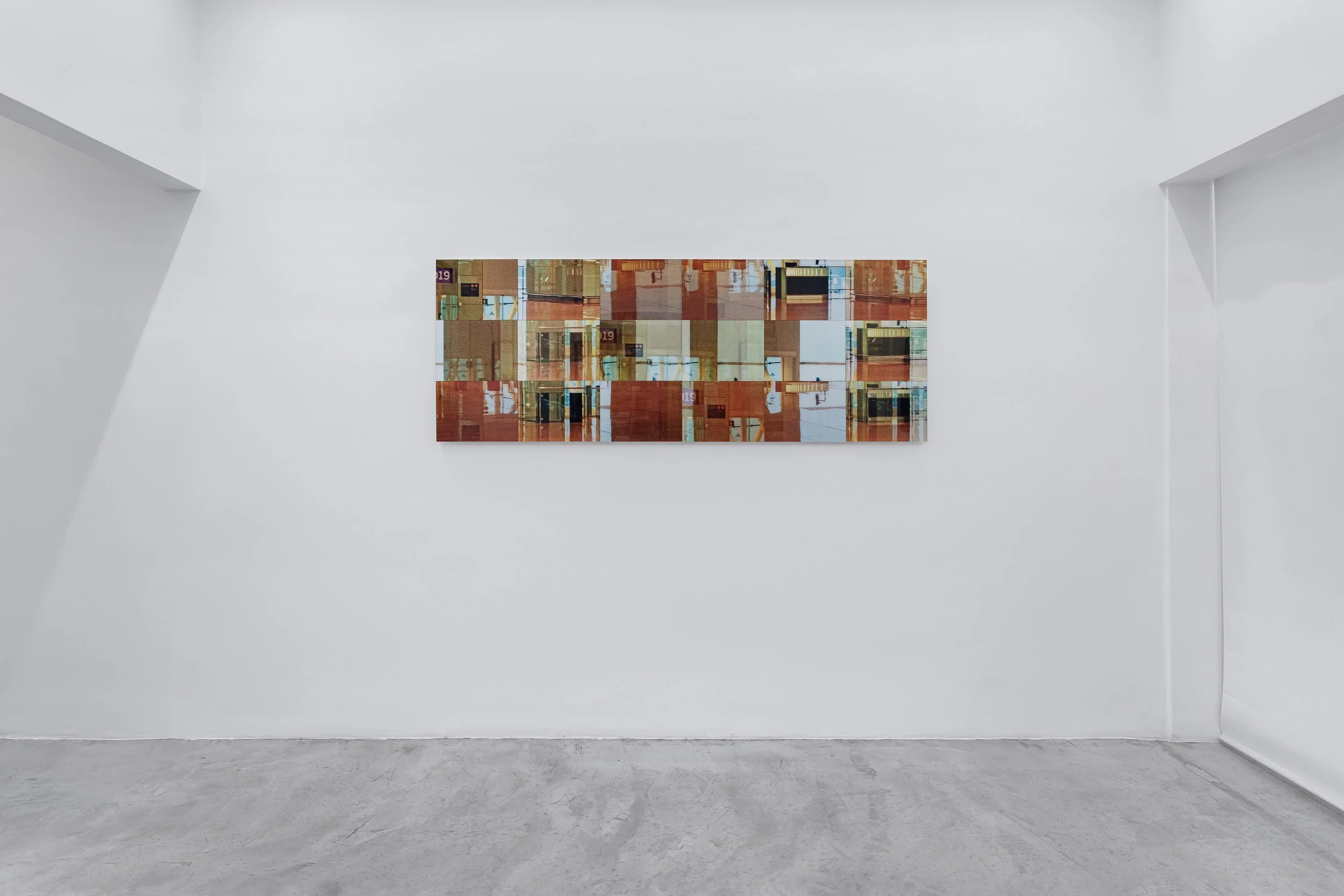
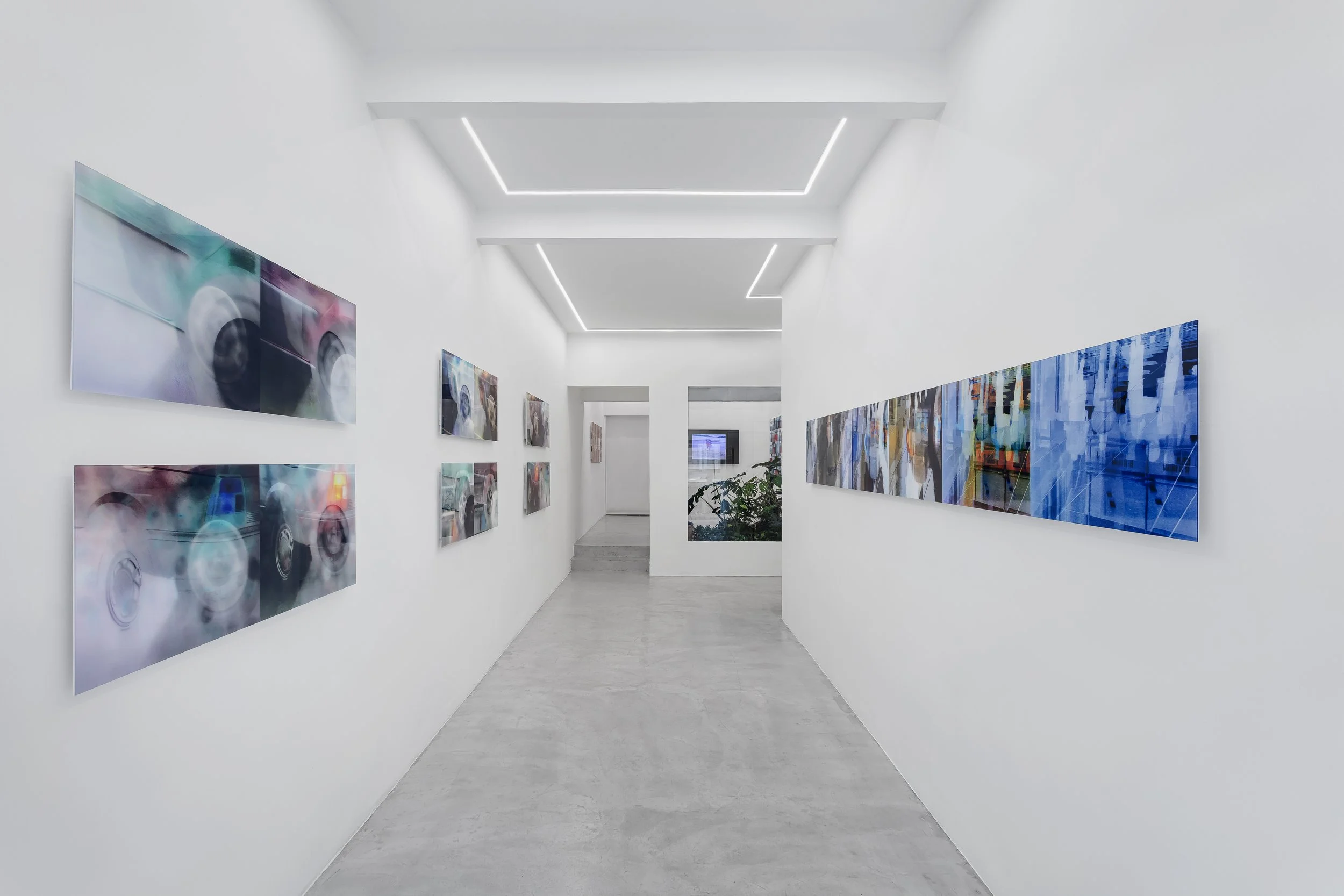
É justamente essa confiança na potência temporal das imagens que constitui Não-lugares. As fotografias reunidas nesta exposição foram produzidas em diferentes momentos da trajetória da artista, em espaços de passagem como aeroportos, praias, estradas ou vias urbanas. São imagens aparentemente banais, registradas ao longo de décadas, que agora reaparecem sob novas configurações. Ao retornar a fotografias produzidas em diferentes momentos de sua trajetória, Vera não revisita simplesmente um arquivo, mas reabre um campo de relações que permanecia latente nas próprias imagens. A montagem torna-se, assim, menos um procedimento formal do que uma operação capaz de ativar potencialidades que o tempo havia preservado sem esgotar. Neste sentido, latência talvez seja a palavra que melhor define esta exposição. Na fotografia, ela designa a imagem invisível que já existe antes da revelação, mas em Vera Chaves Barcellos essa condição ultrapassa o processo fotográfico e torna-se uma forma de compreender a própria vida das imagens. Elas permanecem em suspensão muito depois de terem sido produzidas, conservando relações, aproximações e sentidos que ainda não se manifestaram. O tempo não é apenas aquilo que separa uma fotografia de outra, mas é constitutivo da própria construção da obra. As imagens amadurecem porque permanecem latentes.
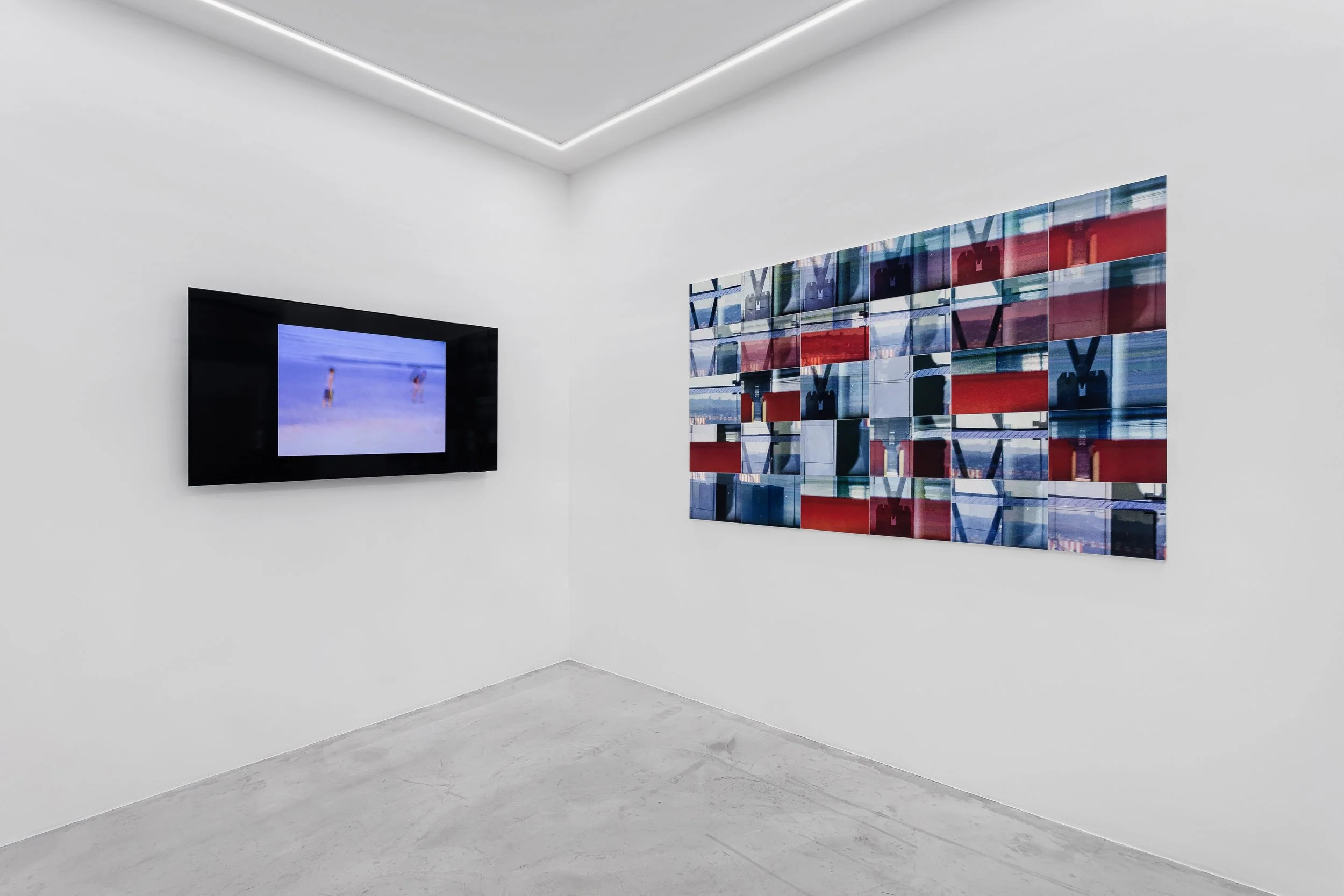
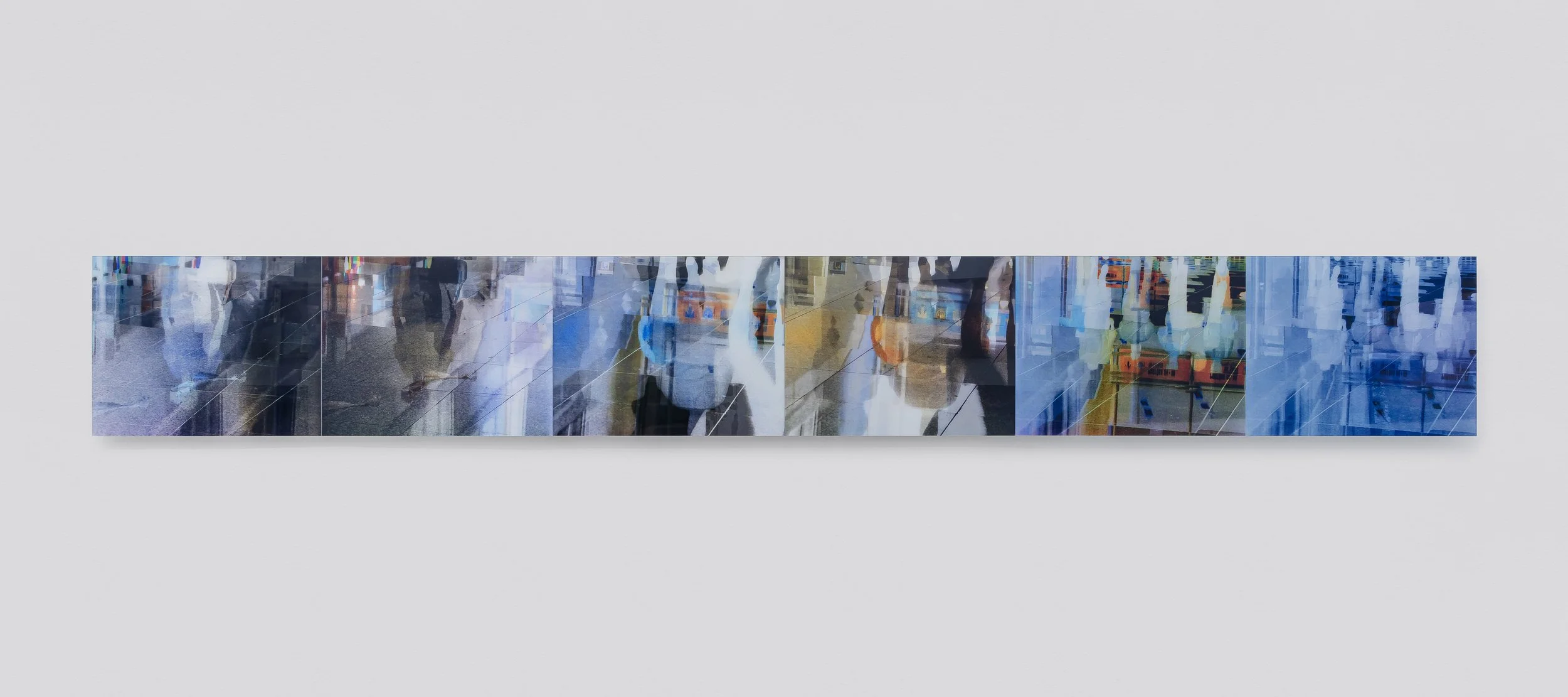
Marc Augé definiu os não-lugares como os espaços paradigmáticos da supermodernidade, tais como aeroportos, hotéis, rodovias e centros comerciais, marcados pela circulação, pelo anonimato e pela transitoriedade. Três décadas depois da publicação de Non-Lieux, entretanto, talvez a própria condição dos não-lugares tenha se transformado. Se antes eram sobretudo as pessoas que viviam em trânsito, hoje também as imagens circulam incessantemente. São copiadas, reenquadradas, filtradas, remixadas e redistribuídas pelas plataformas digitais, desprendendo-se rapidamente do tempo e do lugar em que foram produzidas. Há, portanto, um deslocamento da questão de onde estamos para onde e como as imagens continuam existindo. Ao percorrer esta exposição, torna-se difícil pensar os não-lugares apenas como espaços físicos. Aeroportos, carros em movimento, caminhantes na praia, reflexos, sombras e silhuetas aparecem como situações distintas de uma mesma experiência. Pouco a pouco, o próprio estatuto da imagem passa a ocupar o centro da reflexão. Também ela vive em trânsito, muda de contexto, de suporte e de sentido.
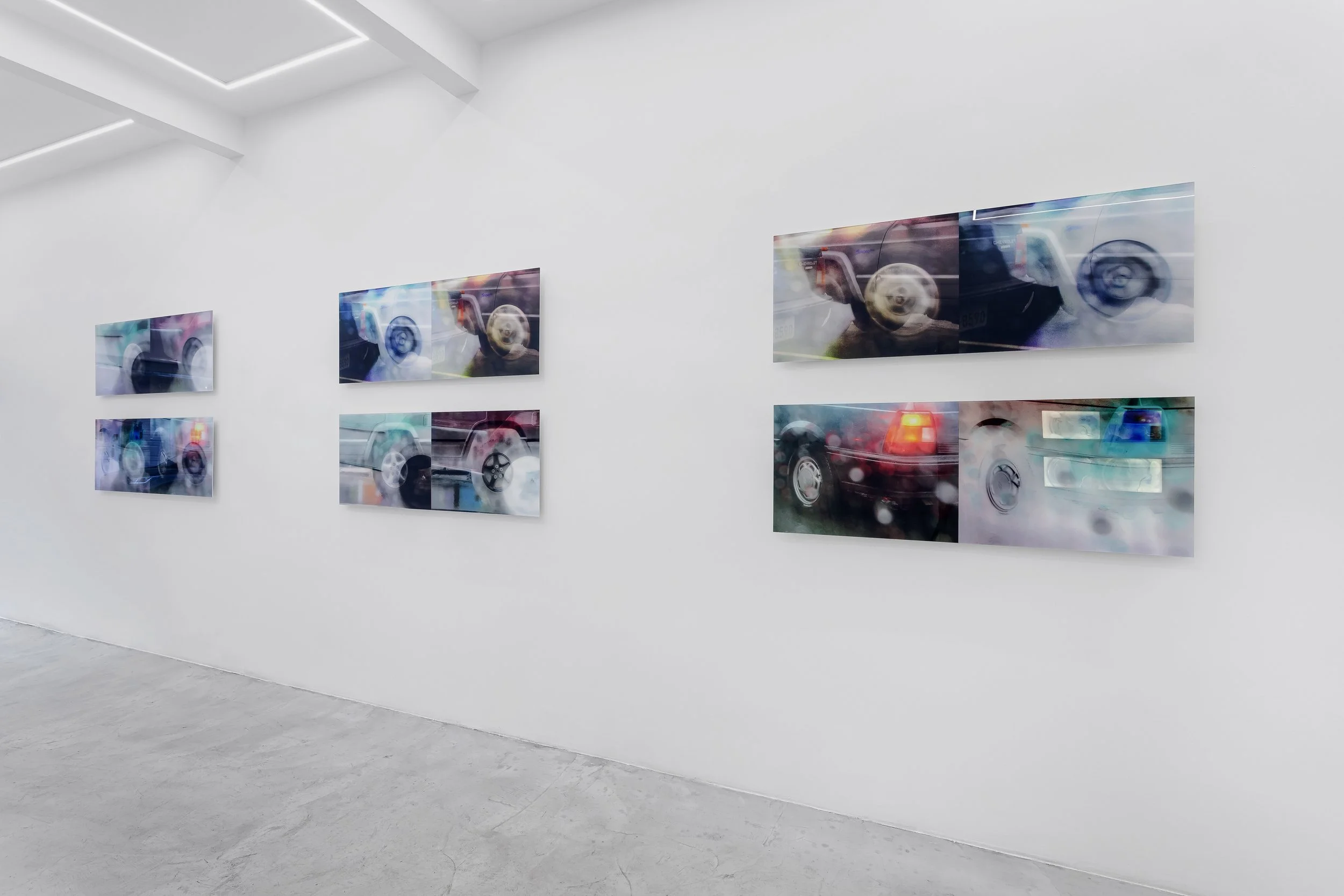
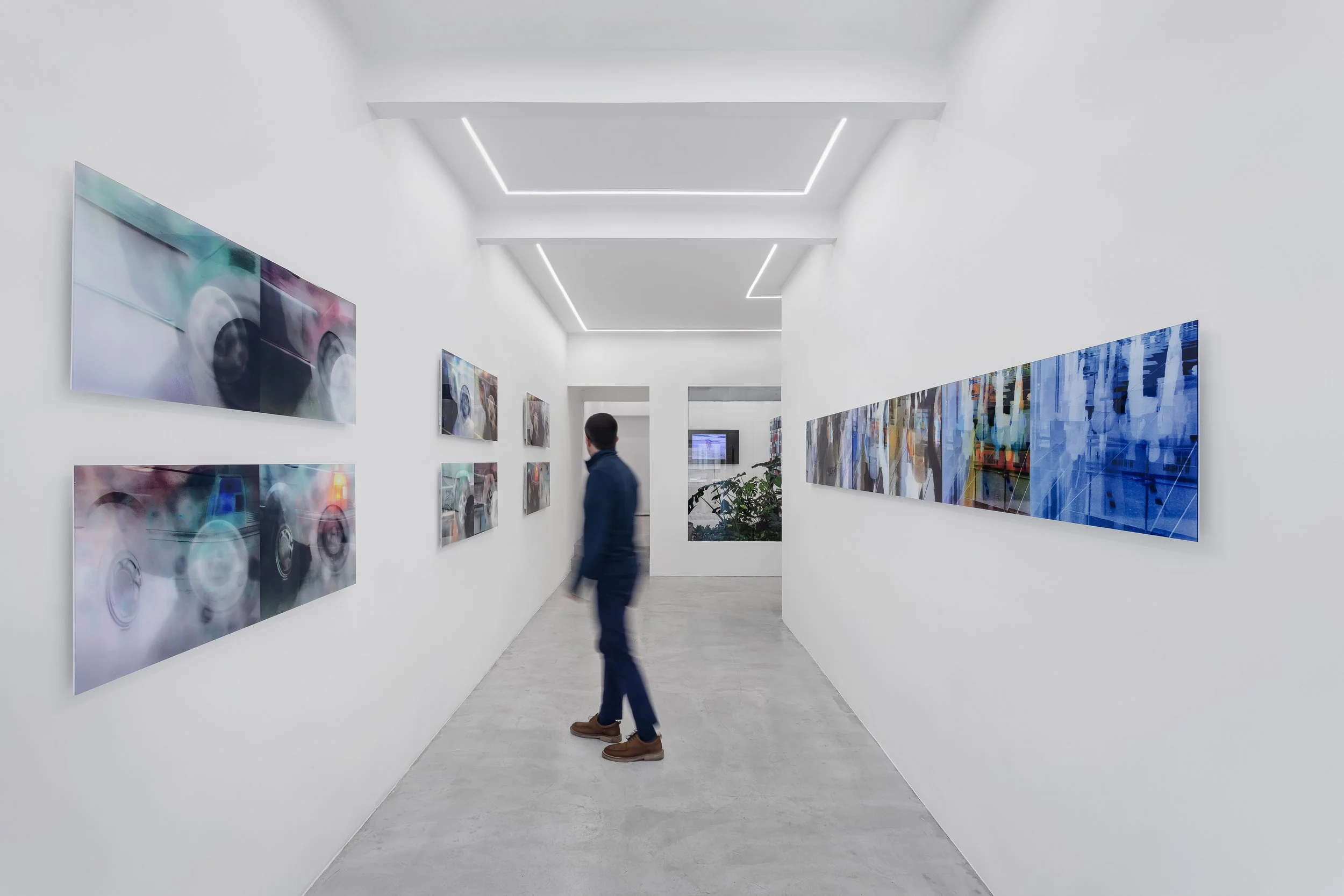
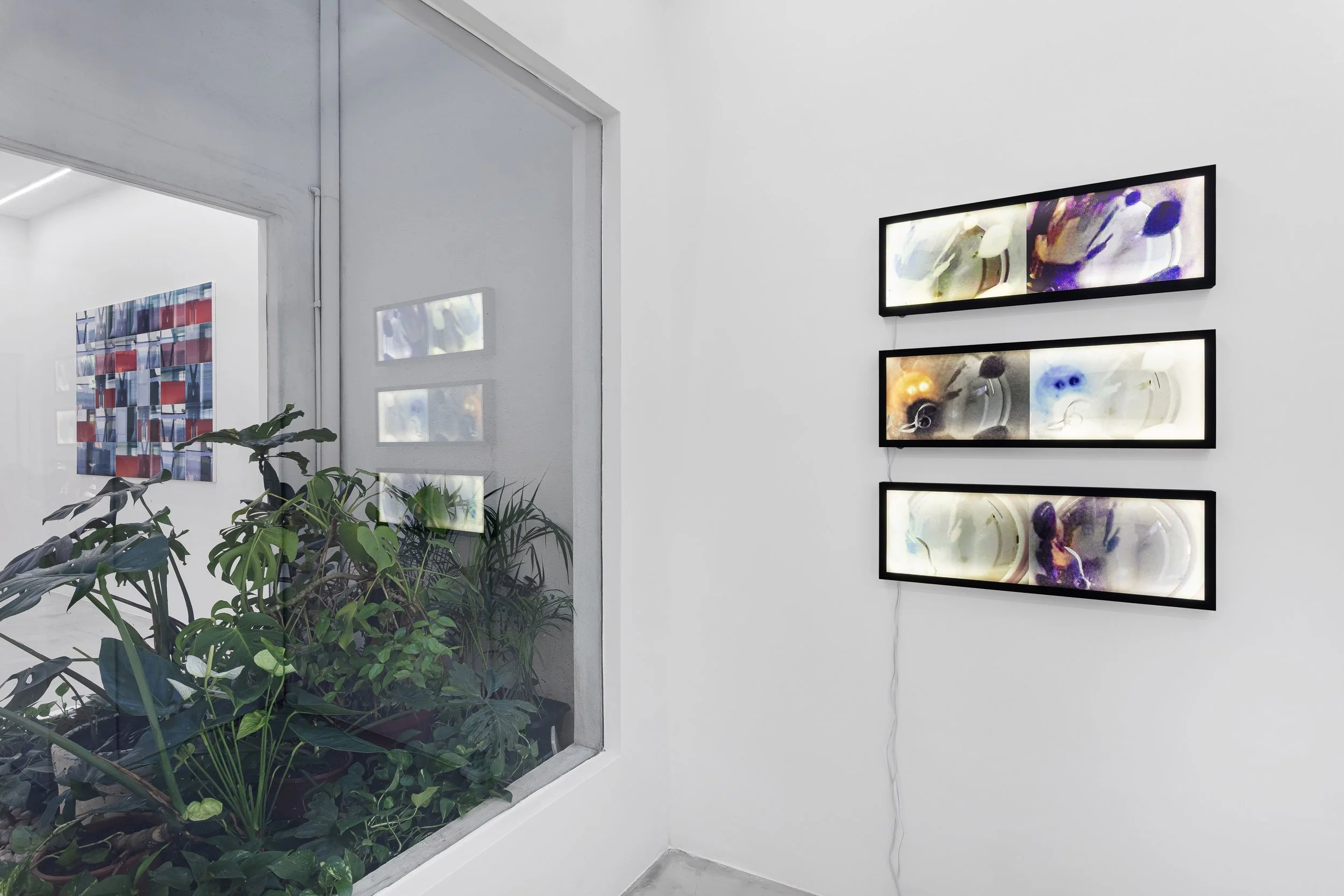
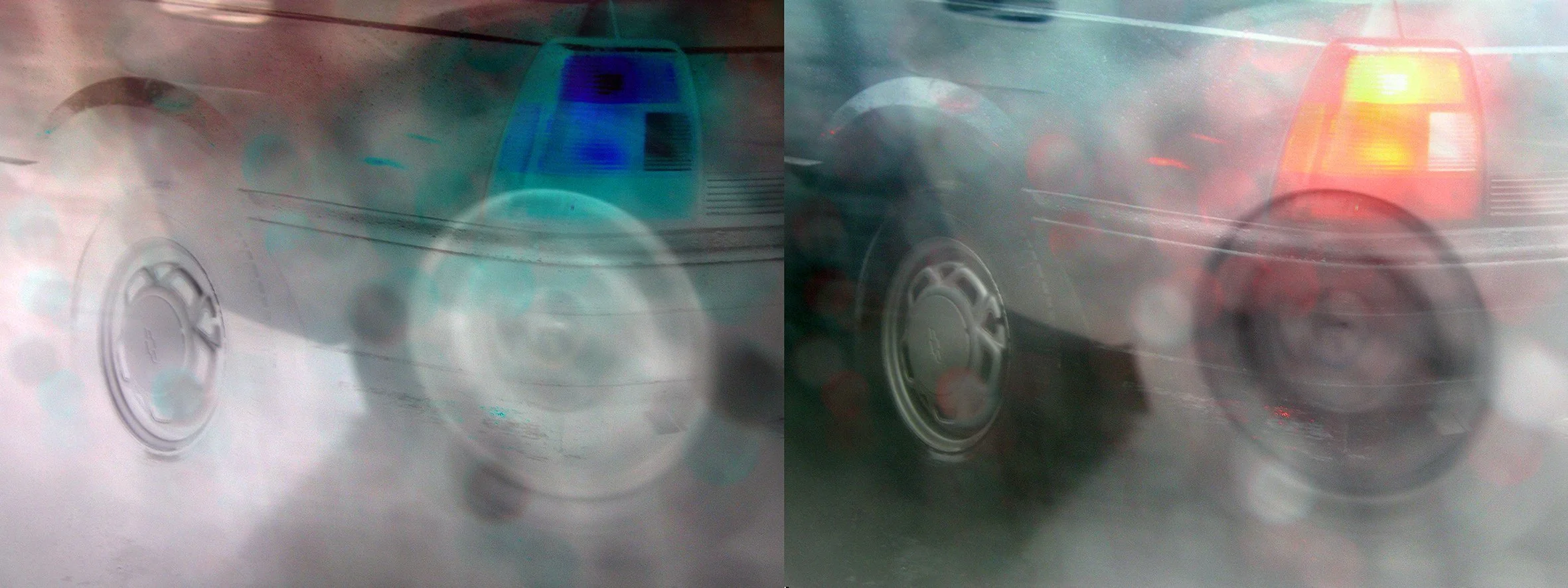
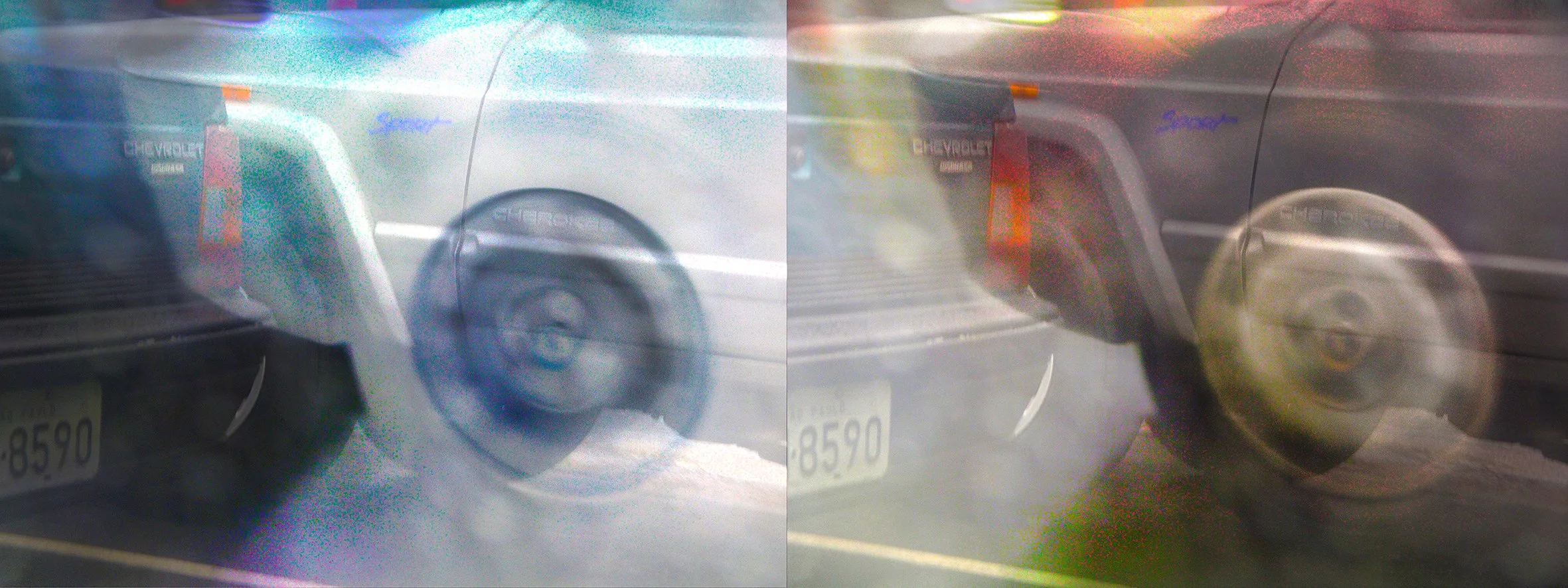
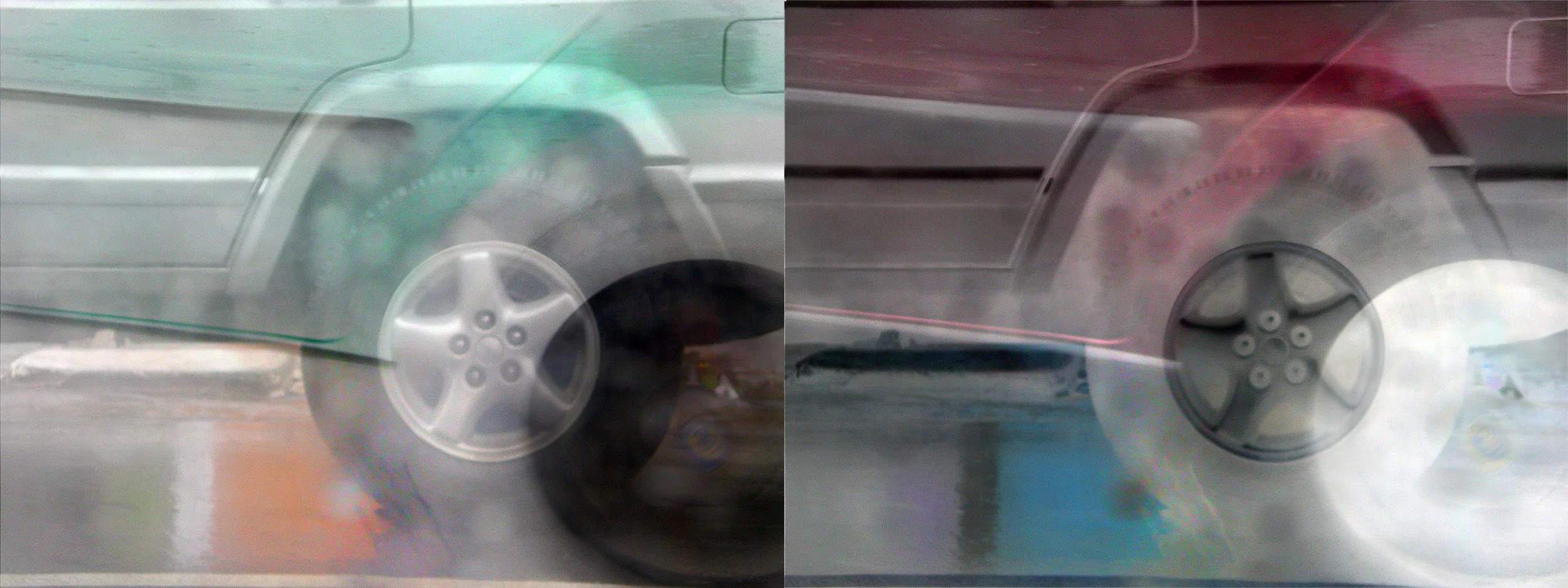
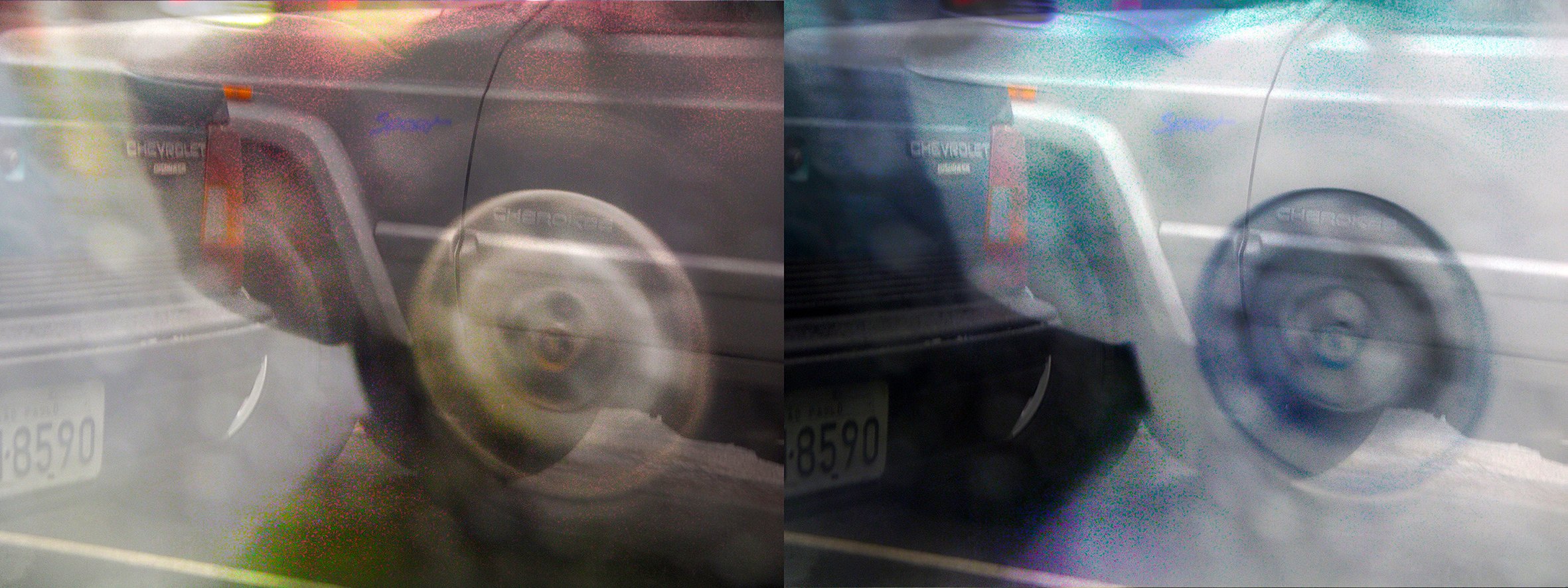
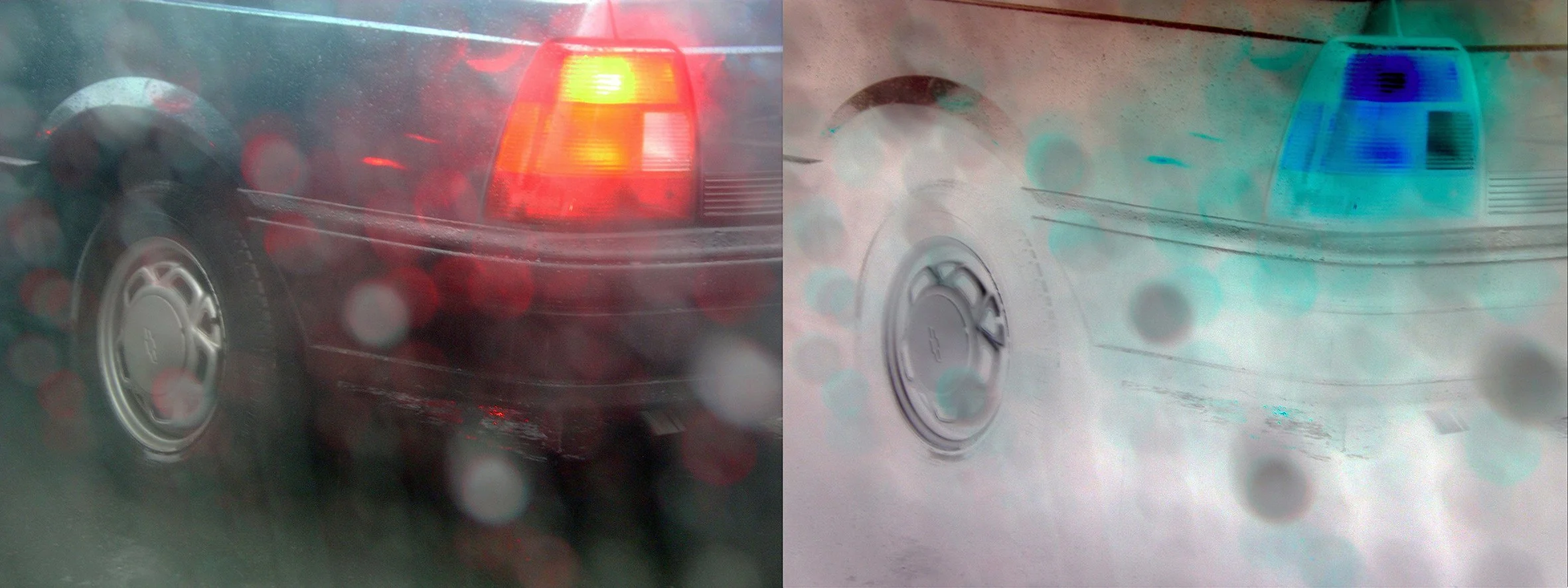
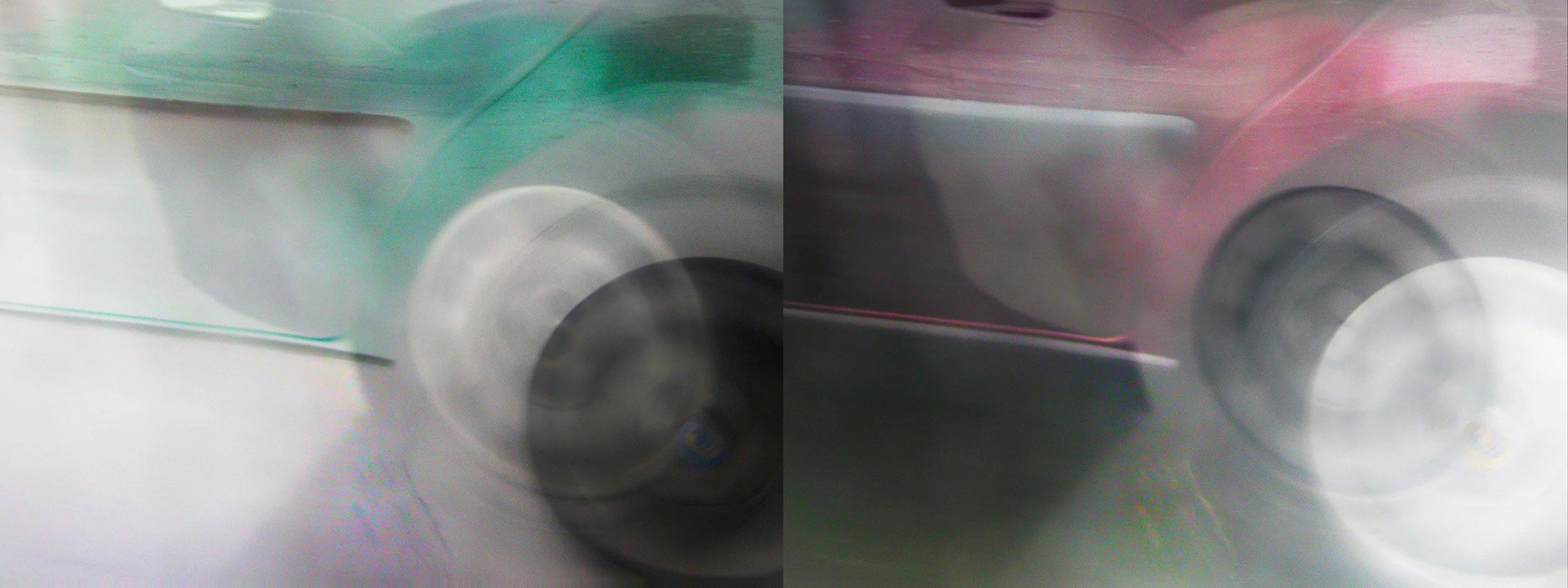
As obras de Não-lugares organizam-se, em sua maioria, em dípticos nos quais uma mesma imagem retorna alterada por discretas transformações de cor, contraste, espelhamento ou enquadramento. À primeira vista, parecem repetições, no entanto, um olhar mais demorado revela diferenças que transformam inteiramente a experiência da imagem. O reconhecimento nunca é imediato. Cada par exige que o olhar oscile continuamente entre semelhança e diferença, permanência e transformação. Mais do que um recurso compositivo, esses dípticos condensam um procedimento que acompanha Vera Chaves Barcellos há décadas. Se antes a comparação se estabelecia entre grandes séries fotográficas, agora ela se concentra entre duas imagens quase idênticas. A repetição deixa de afirmar a igualdade para tornar visível aquilo que só existe como diferença. A montagem não reúne imagens para estabilizar um sentido.
Essa compreensão aproxima a obra de Vera Chaves Barcellos das reflexões de Georges Didi-Huberman sobre a sobrevivência das imagens. Nenhuma imagem pertence exclusivamente ao instante em que foi produzida. Ela permanece disponível para reaparecer, deslocar-se e integrar novas constelações visuais e temporais. Sua história nunca se encerra no momento do registro. Em Vera, porém, essa sobrevivência não assume a forma da nostalgia nem da memória como recuperação do passado. O que retorna não é o acontecimento original, mas aquilo que permanecia em latência na própria imagem e que apenas uma nova montagem torna visível.
Talvez seja justamente isso que Não-lugares nos proponha observar. Em um tempo em que milhões de fotografias desaparecem diariamente na velocidade do scroll infinito, Vera Chaves Barcellos demonstra que uma imagem nunca está definitivamente concluída. Talvez seja essa uma das contribuições mais singulares de sua obra: confiar que uma imagem guarda possibilidades que nem mesmo o instante de sua criação foi capaz de revelar. Num presente marcado pela aceleração e pelo consumo incessante do visível, esta exposição nos lembra que algumas imagens precisam de décadas para dizer tudo aquilo que ainda contêm.
Vera Chaves Barcellos | Não lugares
Opening
August 22, 2026
3-6pm
Exhibition
August 22 –
October 3, 2026
Zielinsky São Paulo
Não-lugares ou o tempo das imagens
[Non places or the time of images]
by Cristiana Tejo, august, 2026
We live surrounded by images. Every day they pass across the screens of phones, computers, and the luminous billboards of the city, appearing, disappearing, and being replaced by other ones in an apparently inexhaustible flow. Never have we produced so many photographs, nor have they circulated with such speed. The acceleration of their circulation also seems to reduce the time of their permanence, as though their existence were exhausted at the very instant they appear. Yet this may be only one of the stories images can tell today. There is another story, less evident, which begins when they are seen again many years later, displaced from the context in which they were produced and unexpectedly capable of establishing new relations and generating new meanings. It is this second temporality of images - shaped by displacements, reactivations, and states of latency that Vera Chaves Barcellos has been investigating for more than six decades. In her work, an image never entirely coincides with the moment in which it was produced, for it remains open, awaiting relations that may emerge only much later.
Since her first woodcuts in the 1960s and, above all, following the incorporation of photography into her practice in the following decade, Vera understood the image as a permanent field of experimentation. Throughout her series, photography presents itself as material open to operations of proximity, repetition, inversion, comparison, and composition. Seriality, present since the works of the Testarte series, became a way of thinking visually, for an image is never alone but always exists in relation to others. Each new arrangement transforms what once seemed familiar and reveals relations that had remained latent. The image ceases to be a finished object and becomes instead a field of temporal possibilities.
It is precisely this confidence in the temporal potential of images that constitutes Não lugares (Non Places). The photographs brought together in this exhibition were produced at different moments throughout the artist’s trajectory, in spaces of transit such as airports, beaches, roads, and urban thoroughfares. They are seemingly ordinary images, recorded over decades, that now reappear in new configurations. By returning to photographs made at different moments in her career, Vera does not simply revisit an archive; rather, she reopens a field of relations that had remained latent within the images themselves. Composition thus becomes less a formal procedure than an operation capable of activating potentialities that time had preserved without exhausting. In this sense, latency may be the word that best defines this exhibition. In photography, it designates the invisible image that already exists before development, but in Vera Chaves Barcellos's work this condition extends beyond the photographic process and becomes a way of understanding the very life of images. They remain suspended long after they have been produced, preserving relations, affinities, and meanings that have yet to manifest themselves. Time is not merely what separates one photograph from another; it is constitutive of the very construction of the work. Images mature because they remain latent.
Marc Augé defined non-places as the paradigmatic spaces of supermodernity-airports, hotels, highways, and shopping centers-marked by circulation, anonymity, and transience. Three decades after the publication of Non-Lieux, however, perhaps the very condition of non-places has changed. If once it was primarily people who lived in transit, today images themselves also circulate incessantly. They are copied, reframed, filtered, remixed, and redistributed through digital platforms, quickly detaching themselves from the time and place in which they were produced. The question has therefore shifted from where we are to where and how images continue to exist. As one moves through this exhibition, it becomes difficult to think of non-places solely as physical spaces. Airports, moving cars, walkers on the beach, reflections, shadows, and silhouettes appear as distinct situations within the same experience. Gradually, the very status of the image itself comes to occupy the center of reflection. Images, too, live in transit, changing context, support, and meaning.
The works in Não lugares (Non Places) are organized predominantly as diptychs in which the same image returns, altered by subtle transformations of color, contrast, mirroring, or framing. At first glance, they appear to be repetitions. Yet a more attentive gaze reveals differences that completely transform the experience of the image. Recognition is never immediate. Each pair requires the eye to oscillate continuously between similarity and difference, permanence and transformation. More than a compositional device, these diptychs condense a procedure that has accompanied Vera Chaves Barcellos for decades. Whereas comparison once took place across large photographic series, it is now concentrated between two nearly identical images. Repetition no longer asserts sameness but instead makes visible what exists only as difference. Composition does not bring images together to stabilize meaning.
This understanding brings Vera Chaves Barcellos’s work close to Georges Didi-Huberman’s reflections on the survival of images. No image belongs exclusively to the instant in which it was produced. It remains available to reappear, to be displaced, and to enter new visual and temporal constellations. Its history never ends at the moment of its recording. In Vera’s work, however, this survival does not take the form of nostalgia, nor of memory as the recovery of the past. What returns is not the original event, but rather what had remained latent within the image itself and which only a new composition can make visible.
Perhaps this is precisely what Não lugares (Non Places) invites us to observe. At a time when millions of photographs disappear every day at the speed of the infinite scroll, Vera Chaves Barcellos demonstrates that an image is never definitively complete. This may well be one of the most singular contributions of her work: the conviction that an image preserves possibilities that not even the moment of its creation was capable of revealing. In a present marked by acceleration and the incessant consumption of the visible, this exhibition reminds us that some images require decades before they can fully express all that they still contain.