
Vilanismo
Guarda-Corpo
Inauguração
8 de novembro, 2025
15h-18h
8 de novembro, 2025 –
17 de janeiro, 2026
Zielinsky São Paulo

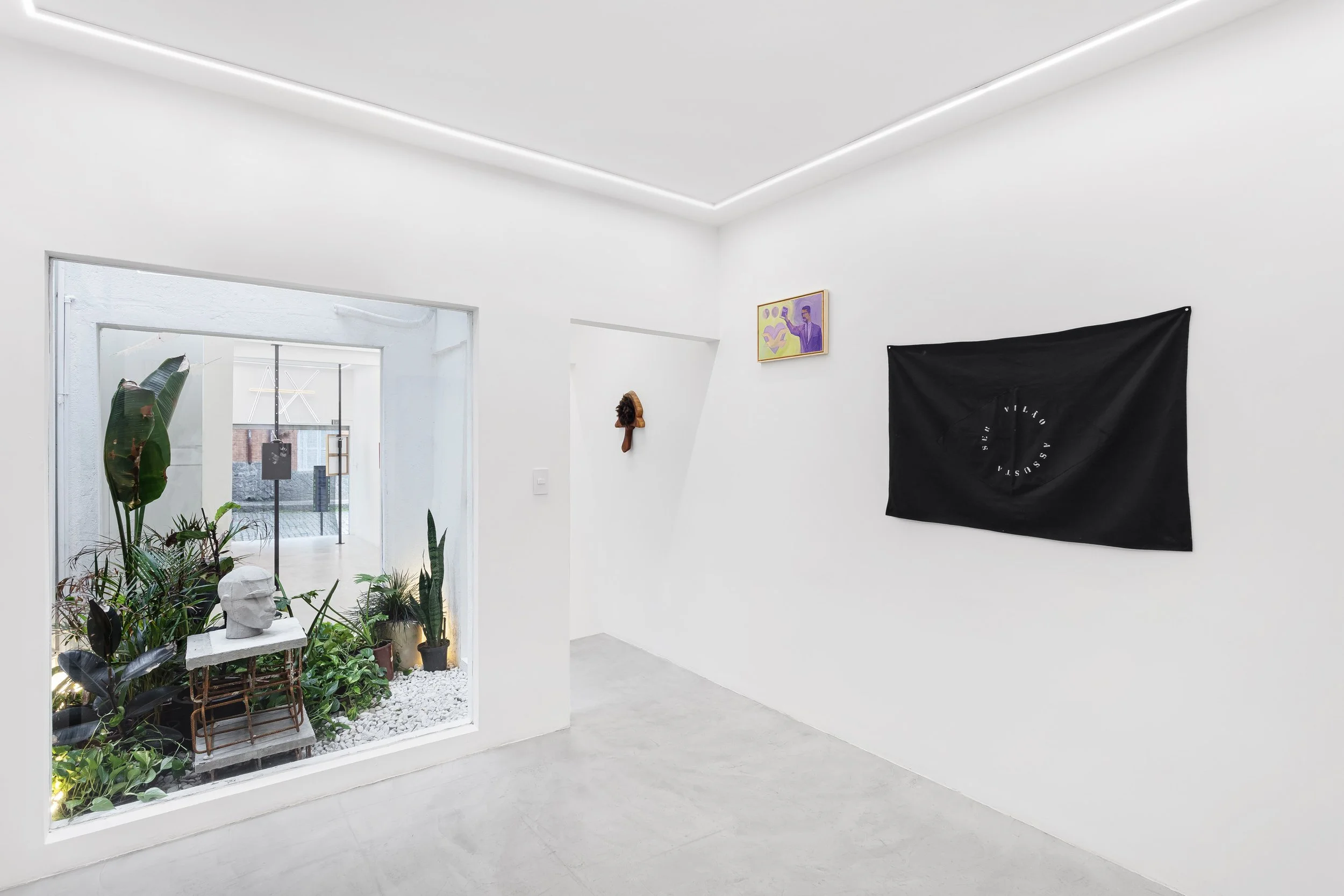
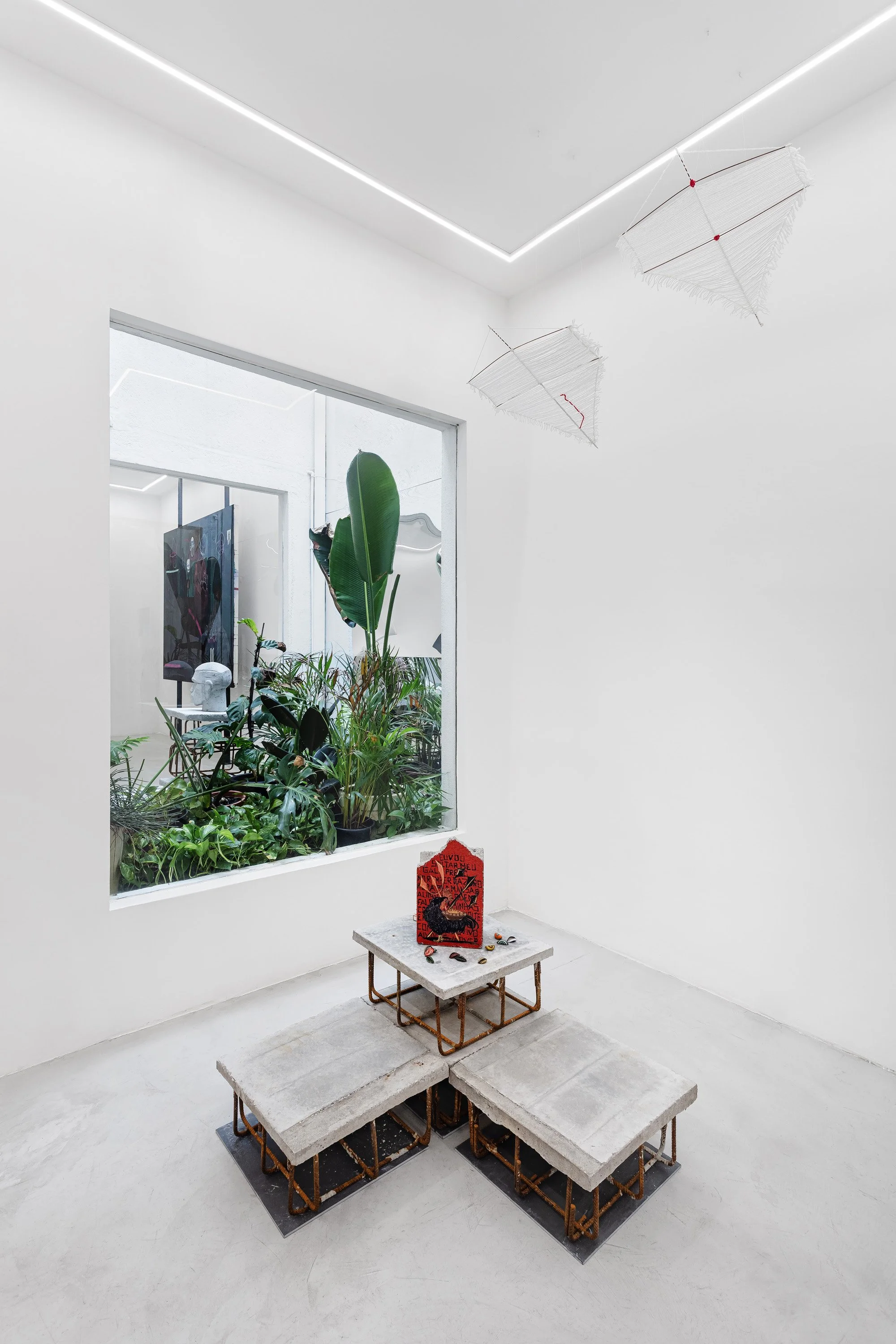
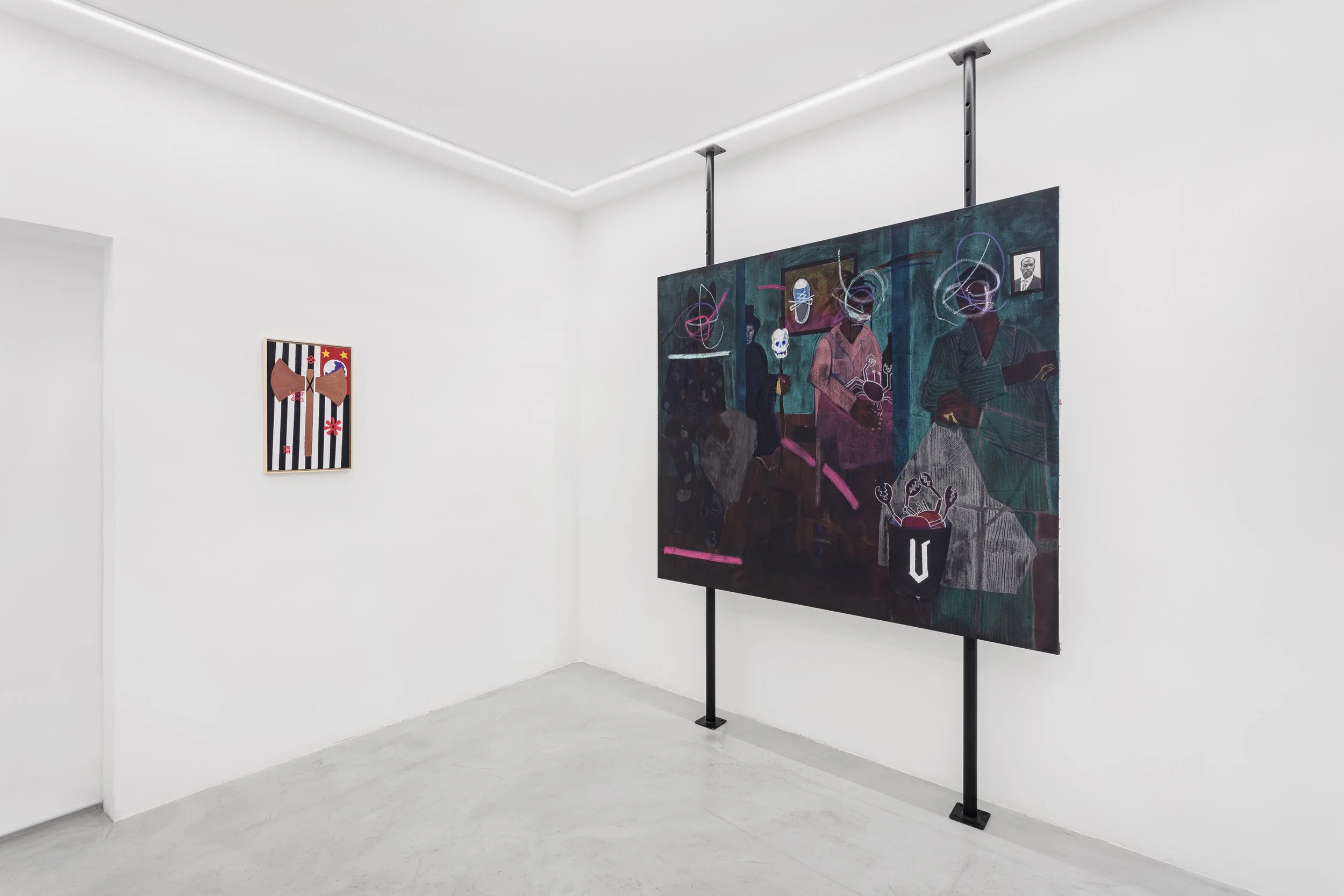
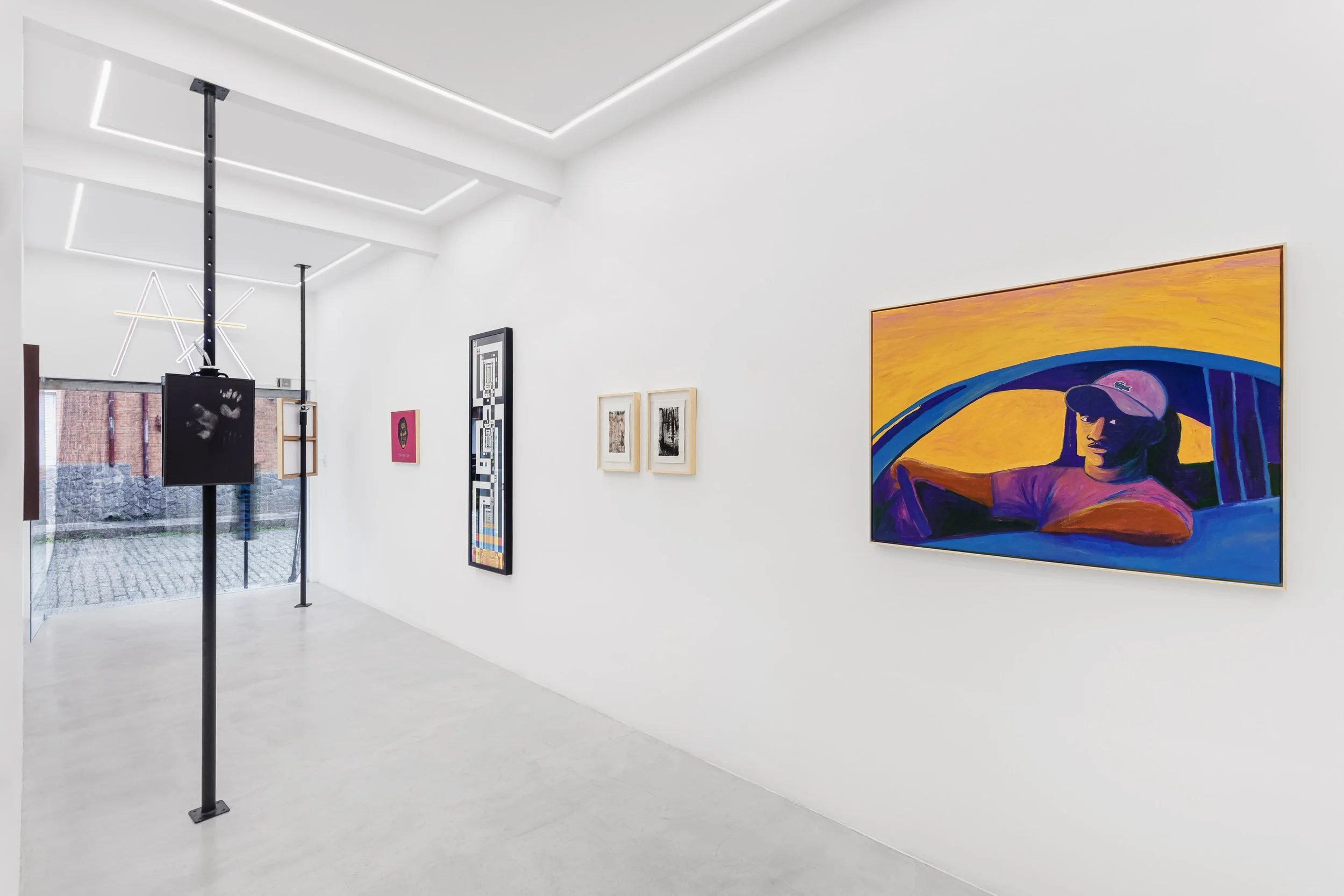
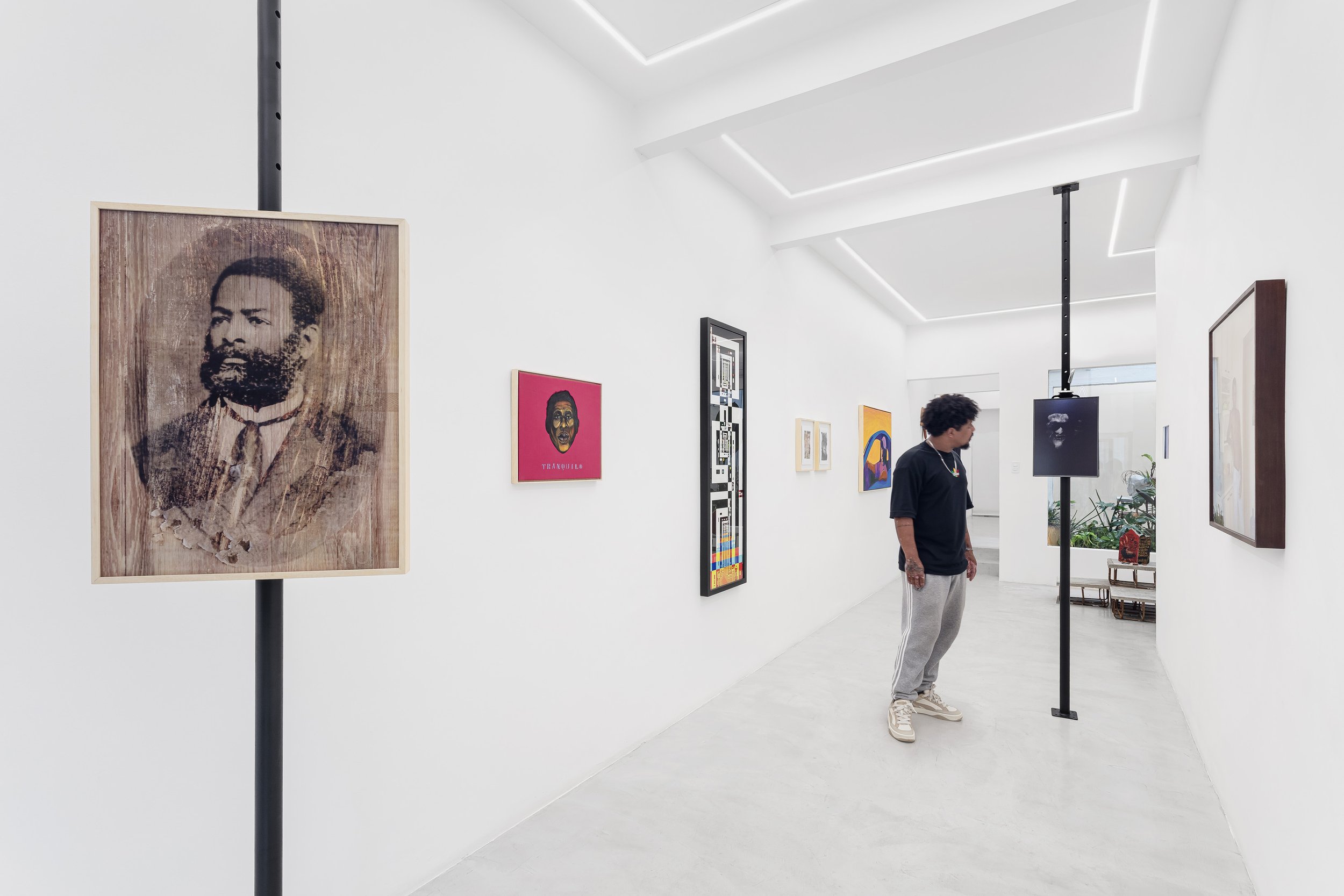
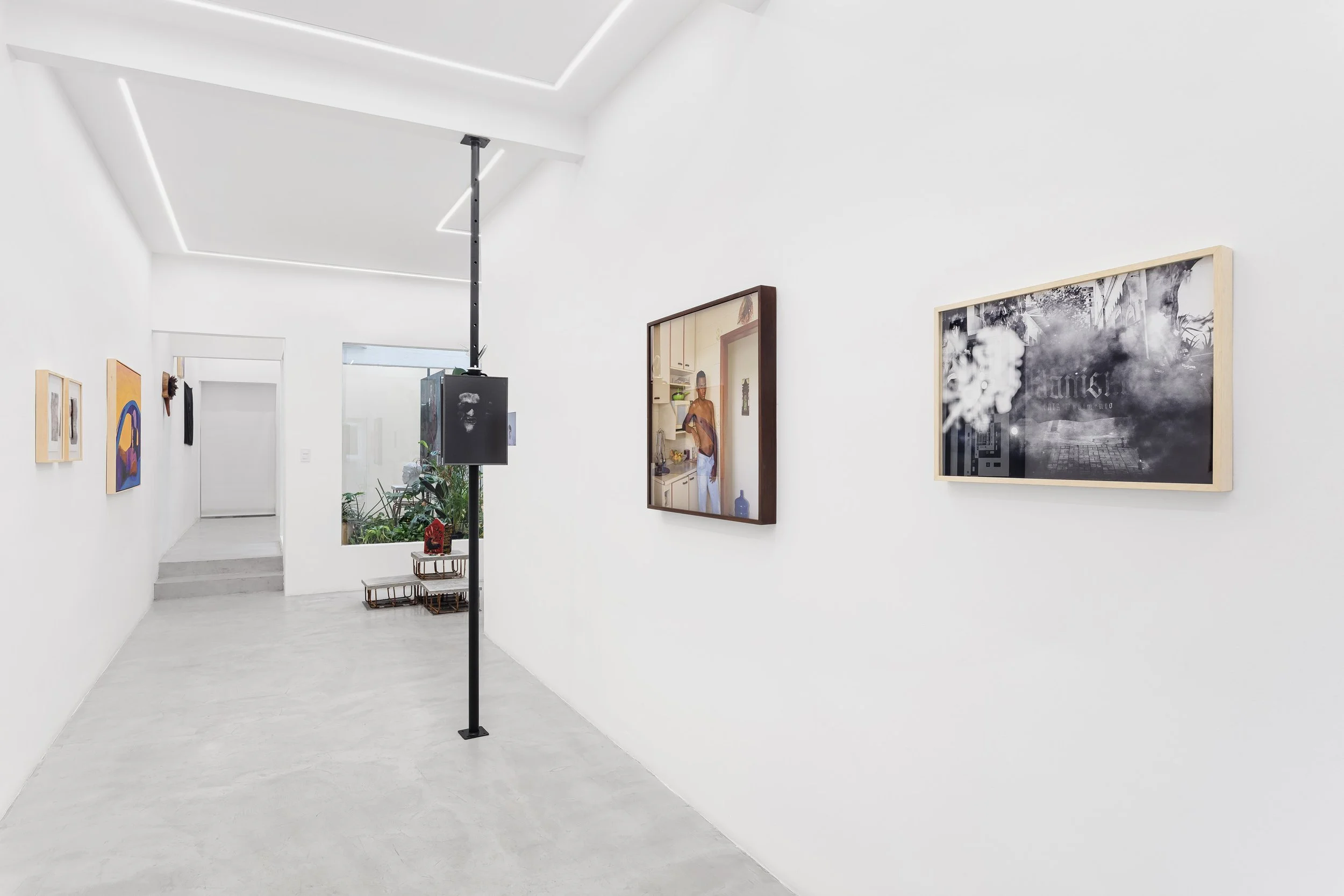
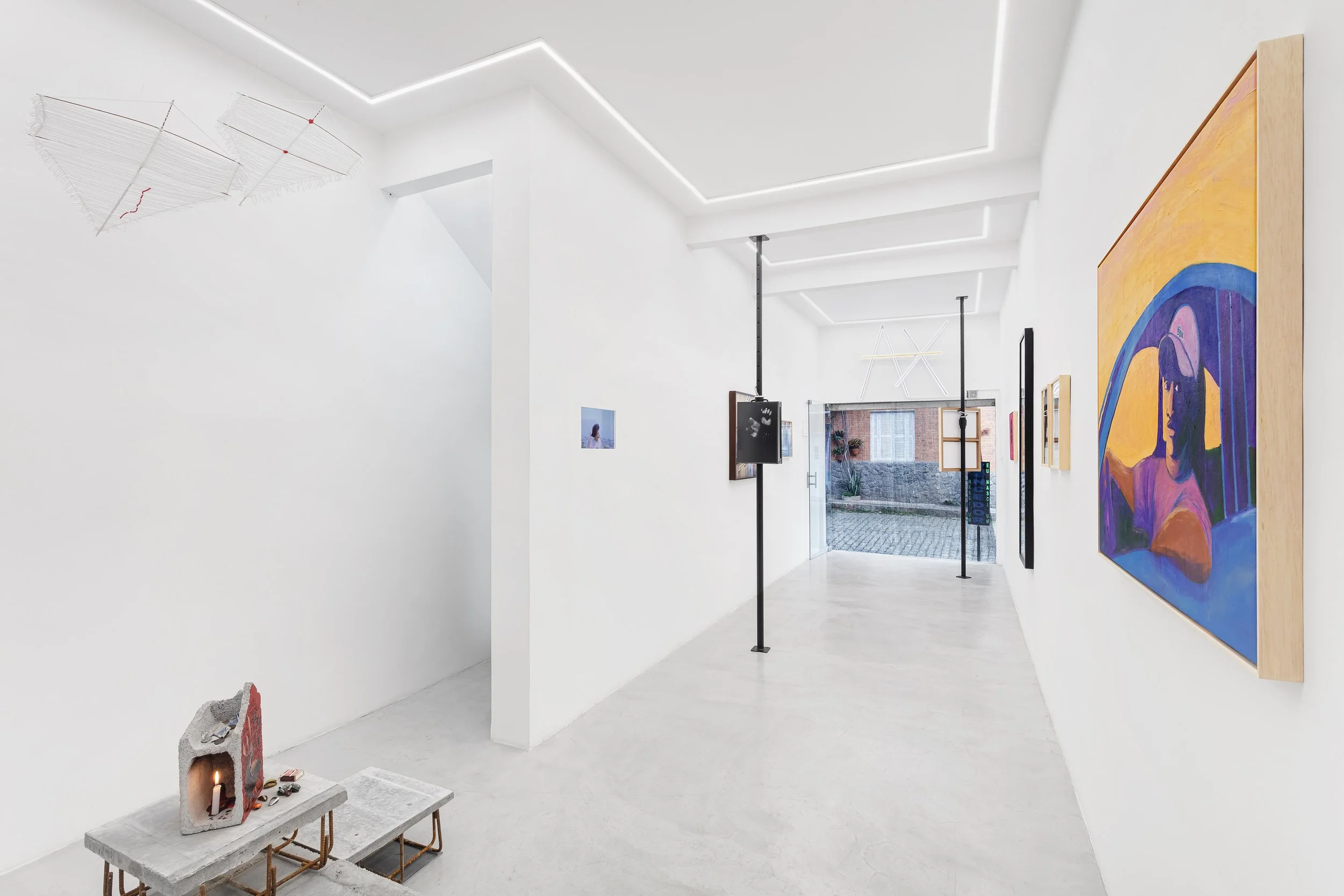
A irmandade Vilanismo inaugura a mostra Guarda-Corpo na galeria Zielinsky, em São Paulo, no próximo dia 8 de novembro. A exposição é realizada paralelamente à participação do coletivo na 36ª Bienal de São Paulo e é acompanhada de texto crítico da professora, historiadora africanista e curadora Vanicleia Silva-Santos.
Guarda-Corpo propõe uma reflexão crítica sobre as formas de proteção, cuidado e vigilância que marcam os corpos negros favelizados nas cidades. Cada Vilão —como eles se chamam— apresenta uma linguagem própria em seu trabalho e o resultado é um conjunto que combina saberes ancestrais, práticas rituais, referências contemporâneas e novas epistemologias.
O título da exposição faz alusão tanto ao dispositivo de segurança da construção civil quanto aos espaços onde corpos negros são contidos no dia a dia — e, ao mesmo tempo, às práticas coletivas do grupo, que funcionam como gestos de cuidado e proteção, afirmando a complexidade e a humanidade das pessoas pretas e periféricas.
Com isso, o coletivo traça um diálogo com a instalação Os meninos não sei que juras fraternas fizeram (2025), em cartaz na 36ª Bienal da São Paulo, que explora a ideia de espaço de trabalho, direito à terra e de conspiração. Ao expandir a conversa para o espaço da Zielinsky, o Vilanismo continua a abordar a negação histórica do direito à terra para a população negra no Brasil — e o sonho da irmandade de ter uma sede própria.
________
Sobre o Vilanismo:
O Vilanismo é uma irmandade de artistas negros das várias periferias paulistanas formada no final de 2021 com o propósito de desafiar o sistema ocidental das artes visuais. Suas ações envolvem performance, oficinas, vídeo, instalação e escrita, realizadas em espaços públicos e instituições culturais. Seu trabalho tensiona fronteiras entre raça, gênero e classe, propondo uma arte feita de encontro, cuidado e resistência que atravessa arte, sociologia e ativismo. Atualmente, o coletivo é formado por Carinhoso, Ayọ̀kàndé (Daniel Ramos) , Denis Moreira, Diego Crux, Guto Oca, Rafa Black, Ramo, Renan Teles, Robson Marques e Rodrigo Zaim.
As ações, exposições e curadorias realizadas pelo grupo incluem: leitura de contra manifesto em evento que marcou 30 anos do massacre do Carandiru (2022), Cubo Preto, no Sesc Pompeia (2023), A Regra e a Exceção, no Ateliê 397 (2023), Afeto, na Diáspora Galeria (2023), Quando eles chegam em casa eu fico feliz, na galeria Luis Maluf (2023), Chora Agora e Ri Depois na Funarte (2023 e 2024), Cortejo Negro no Instituto Moreiras Salles (2024), Ser Feliz é a Nossa Revolução no Museu Afro Brasil Emanoel Araujo (2024), Nas Horas Vagas no Edifício Tebas/VAI (2025). Atualmente, a irmandade está em cartaz na 36ª Bienal de São Paulo com a instalação Os meninos não sei que juras fraternas fizeram.
________
Vilanismo – Guarda-corpo: coletividade como tecnologia de defesa
por Vanicleia Silva-Santos (Curadora Associada, Coleção Africana, Penn Museum - University of Pennsylvania)
O que o Vilanismo traz de novo para a cena artística brasileira e internacional é a entrada afirmativa de vozes, corpos e linguagens que historicamente foram empurradas para fora da narrativa oficial das artes. Nesta exposição na galeria Zielinsky, vinte e uma obras de dez artistas colocam em jogo uma política da presença que não se limita ao gesto estético: ela é método de permanência e de potência. Guarda-corpo é sobre como se sustentar vivos, ativos e em ligação dentro de um sistema que frequentemente tenta absorver indivíduos e apagar coletividades. O “guarda” aqui não é apenas uma imagem ou um objeto: é uma prática coletiva de cuidado, uma arquitetura de proteção entre pessoas pretas e periféricas que insistem em existir plenamente. Há um sentido de luta e também de invenção — a cada obra, uma afirmação complexa da humanidade negra que reivindica espaço e afirma futuro.
O Vilanismo surge no contexto da pandemia, quando os primeiros encontros acontecem de forma virtual, como gesto de articulação política, artística e afetiva entre artistas negros oriundos das periferias de São Paulo. Em 2022, o grupo passa a se reunir presencialmente com apoio da PretaHub, consolidando uma base física de encontro. Neste mesmo ano, fundaram oficialmente o Vilanismo como coletivo. Em 2023, criaram o Co.Vil — Conspiração Vilanismo — na Funarte. Em 2024–2025, o coletivo se desloca para o edifício Co.Vil TEBAS, ampliando escala, visibilidade e estrutura. Agora, o grupo se prepara para uma nova mudança para o Edifício Panamericano. Cada deslocamento territorial é também simbólico: para o Vilanismo, ocupar o centro da cidade é gesto político; deslocar-se é técnica; permanecer é tática.
O grupo trabalha com desenho, pintura, fotografia, escultura, escrita, costura, bordado, colagem manual e digital, instalação, arte digital, vídeo, vários tipos de impressão e de técnicas mistas. Esses artistas transitaram pela educação formal acadêmica, mas seus repertórios estéticos nascem antes e além da escola — e isso produz uma epistemologia singular. Não se trata de imitar cânones nacionais ou internacionais; trata-se de produzir novos cânones. Essa escolha não é improviso: é posição. Estes artistas afirmam regimes próprios de temas, forma, cor, superfície e materialidade. Aqui, o saber técnico não substitui o saber vivido — ele se curva a ele. A pesquisa não nasce da imitação, nasce da vida: da convivência, da rua, do bairro, da troca, da prática, do risco e do corpo. Há um rigor de experimentação que transforma liberdade formal em método: uma estética que não quer confirmar padrões, mas abrir caminhos. Essas obras não cabem em rótulos estreitos — elas expandem o campo.
Evitando a classificação do Vilanismo dentro de caixinhas conceituais generalizantes, nomeio individualmente os dez artistas e suas formações artísticas. Todos possuem múltiplos talentos e habilidades para operar em distintas linguagens e meios visuais.
Carinhoso é bacharel em Produção e Política Cultural; ele utiliza a escrita, o desenho e a construção de objetos como fabulação e afirmação de narrativas visuais negras.
Ayọ̀kàndé (Daniel Ramos) é doutorando em Artes Visuais pela UNESP e pesquisa meios híbridos de produção, desenvolvendo sua prática em bordado, colagem, desenho, pintura, vídeo e instalação.
Denis Moreira é formado em Artes Visuais e pesquisa materialidades afro-diaspóricas a partir de máscaras, articulando pintura, colagem digital e fotografia.
Diego Crux é pós-graduado em Cinema e Multimeios, graduado em Turismo com especialização em fotografia e design gráfico, e desenvolve sua prática visual em fotografia, vídeo, design, samples visuais, palavras e gravura.
Guto Oca é licenciado em Pedagogia e mestre em Artes Visuais, pesquisa cultura e religiosidade afro-brasileira e integra esses estudos à prática em pintura, escultura e técnicas mistas.
Rafa Black estudou Design Gráfico na universidade e pesquisa relações entre moda, política, saúde, identidade cultural da favela e comunicação visual, operando com gravura, pintura, impressão e vídeo.
Ramo é bacharel em Artes Visuais e é especialista em Gestão Cultural Contemporânea e designer de produto, e sua pesquisa critica a violência simbólica e estrutural contra homens negros, desenvolvendo sua prática em pintura e escultura.
Renan Teles é graduado em Desenho Industrial e técnico em Processos Fotográficos. Pesquisa imagem digital, articulando fotografia, pintura, arte têxtil e instalação.
Robson Marques desenvolve pesquisa sobre representações visuais do cotidiano doméstico de famílias negras, das ruas e da religiosidade afro-brasileira, e trabalha principalmente com pintura.
Rodrigo Zaim é artista visual e curador, formado em fotografia e especialista em linguagens urbanas e em processos visuais das periferias, trabalhando com fotografia, lambe-lambe, instalação e monotipia pictórica.
Se eu precisasse propor uma única classificação, ela seria esta: o Vilanismo representa a Renascença das artes no Brasil no século XXI.
O trabalho de cada um carrega pesquisas, traços individuais fortes, mas a força se multiplica quando lemos esses gestos dentro da arquitetura coletiva que os produz. O Vilanismo compreende a coletividade como estratégia de fortalecimento em longo prazo.
Eles se inserem na longa história de formas de organização negra no Brasil — das irmandades do período escravista aos movimentos sociais negros do século XX e às organizações culturais de música negra periférica contemporânea, como o Racionais MC’s. Também se inspiram em movimentos internacionais — a Negritude em Paris e na diáspora negra, o Harlem Renaissance, o Negrismo em Cuba, o Indigénisme no Haiti, entre outros — em que o valor da obra não se dissocia da ecologia de saberes compartilhados que a sustenta. Nessas genealogias, a potência histórica não está somente nas obras, mas no fato de que elas emergem de trocas e apoio mútuo. O coletivo é a tecnologia crítica que potencializa cada artista como singularidade, preservando a força do grupo e recusando o processo de individualização que o mercado impõe. O grupo é o campo que torna possível que cada trajetória se desdobre, amadureça e resista.
A mostra Guarda-corpo, na galeria Zielinsky, articula uma metáfora de proteção que combina referências históricas, religiosas, materiais e urbanas. Ela dialoga diretamente com a instalação apresentada pelo coletivo na 36ª Bienal de São Paulo (2025) — Os meninos não sei que juras fraternas fizeram — que explora o direito à terra, ao espaço de trabalho e de se manterem vivos. Na Bienal, o Vilanismo constrói um dispositivo espacial que simula o início de uma obra de construção (a sapata), dentro do qual situam-se os trabalhos dos artistas. Esse gesto instala uma crítica à negação histórica do direito à terra para a população negra no Brasil e reinscreve o sonho — concreto, político e coletivo — de ter uma sede própria na cidade de São Paulo.
A maioria das obras de Guarda-corpo é inédita. As vinte e duas peças reunidas apresentam as várias técnicas mencionadas acima. Estas abordam temas como cotidiano na periferia, autocuidado, identidade, estética, estratégias de dominação pela igreja, pelo Estado e pelo capitalismo, violência e necessidade cotidiana de proteção como eixo estruturante. A ideia do grupo de cobrir a fachada da galeria Zielinsky com a tela de contenção da construção civil é um gesto simbólico que evidencia o quanto proteger-se é central para o grupo — porque esse corpo coletivo está exposto a múltiplas camadas de violência.
A própria escolha do título Guarda-corpo afirma sentidos ancestrais. Desde o século XVII, registros da Inquisição portuguesa mostram que homens africanos e afrodescendentes foram presos no Brasil, em Portugal, em Angola e em outros territórios por portarem amuletos chamados “guarda di corpo”, dispositivos para “fechar” o corpo contra a violência dos senhores, contra armas, contra maus espíritos e, em última instância, contra a morte. Em 2025, o Vilanismo reativa essa memória como forma de disputar o campo da existência. Isso é arte — e é também política de vida.
Vilanismo
Guarda-Corpo
Opening
November 8, 2025
3-6pm
November 8, 2025 –
January 17, 2026
Zielinsky São Paulo
The Vilanismo brotherhood inaugurates the exhibition Guarda-Corpo at the Zielinsky in São Paulo on November 8. The show runs parallel to the collective’s participation in the 36th São Paulo Biennial and is accompanied by a critical essay written by professor, Africanist historian, and curator Vanicleia Silva-Santos.
Guarda-Corpo proposes a critical reflection on the forms of protection, care, and surveillance that shape the lives of Black bodies in the favelas and urban peripheries. Each Vilão –as the members call themselves–presents a unique artistic language, resulting in a body of work that combines ancestral knowledge, ritual practices, contemporary references, and new epistemologies.
The title of the exhibition alludes both to the safety device used in construction and to the spaces where Black bodies are contained in everyday life –and, at the same time, to the group’s collective practices, which operate as gestures of care and protection, affirming the complexity and humanity of Black and peripheral people.
In doing so, the collective establishes a dialogue with their installation Os meninos não sei que juras fraternas fizeram (2025), currently on view at the 36th São Paulo Biennial. That work explores ideas of workspace, land rights, and conspiracy. By expanding the conversation into the Zielinsky space, Vilanismo continues to address the historical denial of land rights to Black populations in Brazil –and the brotherhood’s dream of having a place of their own.
________
About Vilanismo:
Vilanismo is a brotherhood of Black artists from various peripheral neighborhoods of São Paulo, formed in late 2021 with the purpose of challenging the Western visual arts system. Their practice encompasses performance, workshops, video, installation, and writing, taking place both in public spaces and cultural institutions. Their work confronts the intersections of race, gender, and class, proposing an art grounded in encounter, care, and resistance –one that moves fluidly between art, sociology, and activism. The collective is currently composed of Carinhoso, Ayọ̀kàndé (Daniel Ramos), Denis Moreira, Diego Crux, Guto Oca, Rafa Black, Ramo, Renan Teles, Robson Marques, and Rodrigo Zaim.
Vilanismo’s actions, exhibitions, and curatorial projects include: Reading of the Counter-Manifesto at the event marking 30 years of the Carandiru Massacre (2022); Cubo Preto at Sesc Pompeia (2023); A Regra e a Exceção at Ateliê 397 (2023); Afeto at Diáspora Galeria (2023); Quando eles chegam em casa eu fico feliz at Galeria Luis Maluf (2023); Chora Agora and Ri Depois at Funarte (2023 and 2024); Cortejo Negro at Instituto Moreira Salles (2024); Ser Feliz é a Nossa Revolução at Museu Afro Brasil Emanoel Araujo (2024); and Nas Horas Vagas at Edifício Tebas/VAI (2025). The brotherhood is currently featured in the 36th São Paulo Biennial with the installation Os meninos não sei que juras fraternas fizeram.
________
Vilanismo - Guarda-corpo*: collectivity as a defense technology
by Vanicleia Silva-Santos (Associated Curator, African Collection, Penn Museum - University of Pennsylvania)
What Vilanismo brings as new to both Brazilian and international scene is the affirmative emergence of voices, bodies and languages that have historically been pushed off the official narratives of art. In this exhibition in Zielinsky gallery, twenty-one works by ten artists set forth a politics of presence that does not end with the aesthetic gesture: it is a method of permanence and potential. “Body shield” is about keeping oneself alive, active and connected within a system that oftens seeks to absorb individuals and erase collectivities. The “shield” here is not a simple image or an object: it is a collective practice of care, an architecture of protection between black and marginalized people that insist on a fulfilled existence. There is a sense of struggle and also of invention - at each artwork, a complex affirmation of Black subjectivity that reclaims space and asserts the future.
Vilanismo emerged in the context of the pandemic, when the first meetings had to take place virtually, as a gesture of political, artistic and affective articulation among Black artists from the peripheries in São Paulo. In 2022, the group began to meet in person with the support of PretaHub, establishing a physical base for gathering. In this same year, they officially founded Vilanismo as a collective. In 2023, Co.Vil was created - Vilanismo Conspiracy - at Funarte. In 2024-2025 the collective moved to Co.Vil TEBAS building, expanding its scale, visibility and structure. Now the group is getting ready for another move, this time to Edifício Panamericano. Each territorial migration is also symbolic: for Vilanismo, occupying downtown is a political gesture; displacement is the method, remaining is the tactic.
The group works with drawings, paintings, photography, sculpture, writing, sewing, embroidery, manual and digital collage, installation, digital art, video and various forms of printmaking and mixed media. These artists passed through formal academic education, but their aesthetical repertoire was born before and beyond school - producing a singular epistemology. It is not about imitating international or national canons; but producing new ones. This choice is not improvised: it is a stance. Those artists claim their own regimes of theme, form, color, surfaces and materiality. Here, technical knowledge does not replace lived knowledge - it bows to it. Research does not stem from imitation, it stems from life: coexistence, the street, the neighborhood, from exchange, practice, risk and the body. There is precision on experimentation that transforms formal freedom in method: an aesthetic that does not seek to confirm patterns, but opening paths. Those artworks do not fit straight labels - they open the field:
To avoid any classification of Vilanismo on these overgeneralized conceptual frameworks, I name the ten artists and their artistic backgrounds. Each of them has multiple talents and the ability to work across different languages and visual media.
Carinhoso holds a bachelor’s degree in Cultural Production and Policy; he uses writing, drawing, and object-making as forms of fabulation and affirmation of Black visual narratives.
Ayọ̀kàndé (Daniel Ramos) holds a PhD in Visual Arts from UNESP. His research explores hybrid modes of production, developing a practice that spans embroidery, collage, drawing, painting, video, and installation.
Denis Moreira holds a degree in Visual Arts and researches Afro-diasporic materialities through masks, articulating painting, digital collage, and photography.
Diego Crux holds a postgraduate degree in Film and Multimediums, a bachelor’s degree in Tourism with a specialization in photography and graphic design, and develops his visual practice through photography, video, design, visual samples, words, and printmaking.
Guto Oca holds a degree in Pedagogy and a master’s in Visual Arts. He researches Afro-Brazilian culture and religiosity, integrating these studies into his practice in painting, sculpture, and mixed media.
Rafa Black studied Graphic Design and researches the relationships between fashion, politics, health, cultural identity in the favela, and visual communication, working across printmaking, painting, printing, and video.
Ramo holds a bachelor’s degree in Visual Arts, is a specialist in Contemporary Cultural Management and a product designer. His research critiques the symbolic and structural violence against Black men, developing his practice through painting and sculpture
Renan Teles holds a bachelor’s degree in Industrial Design and a technical degree in Photographic Processes. His research focuses on digital imagery, articulating photography, painting, textile art, and installation.
Robson Marques researches visual representations of the domestic daily life of Black families, the streets, and Afro-Brazilian religiosity, working mainly with painting.
Rodrigo Zaim is a visual artist and curator, trained in photography with a specialization in documentary photography focused on urban languages and visual processes from the peripheries. He also works with lambe-lambe posters, installation, and pictorial monotype.
If I had to propose any classification, it would be: Vilanismo represents Renaissance from the Brazilian arts in the XXI Century.
The work from each of them carries research and strong individual traces, but the strength multiplies when the gestures are read within the collective architecture that produces them. Vilanismo understands collectivity as a strategy of long-term strengthening.
They insert themselves into the long history of forms of Black organization in Brazil — from the brotherhoods of the slavery period to the Black social movements of the 20th century and the contemporary cultural organizations of peripheral Black music, such as Racionais MC’s. They also draw inspiration from international movements — Négritude in Paris and the Black diaspora, the Harlem Renaissance, Negrismo in Cuba, Indigénisme in Haiti, among others — in which the value of the artwork is inseparable from the ecology of shared knowledge that sustains it.
Within these genealogies, historical power lies not only in the artworks themselves, but in the fact that they emerge from exchange and mutual support. The collective is the critical technology that amplifies each artist as a singularity, preserving the strength of the group and rejecting the process of individualization imposed by the market. The group is the field that makes it possible for each trajectory to unfold, mature, and resist.
The exhibition “Guarda-corpo”, at Zielinsky Gallery, articulates a metaphor of protection that combines historical, religious, material, and urban references. It directly dialogues with the installation presented by the collective at the 36th São Paulo Biennial (2025) — “Os meninos não sei que juras fraternas fizeram” (translated “The boys — I don’t know what fraternal vows they made.”) — which explores the right to land, to a workspace, and to remain alive. At the Biennial, Vilanismo constructs a spatial device that simulates the beginning of a construction site (the foundation), within which the artists’ works are placed. This gesture installs a critique of the historical denial of land rights for the Black population in Brazil and reinscribes the dream — concrete, political, and collective — of having their own headquarters in the city of São Paulo.
Most of the works in the exhibition are new. The twenty-two pieces gathered here present the various techniques mentioned above. They address themes such as daily life in the periphery, self-care, identity, aesthetics, strategies of domination by the Church, the State, and capitalism, as well as violence and the everyday need for protection as a structuring axis.
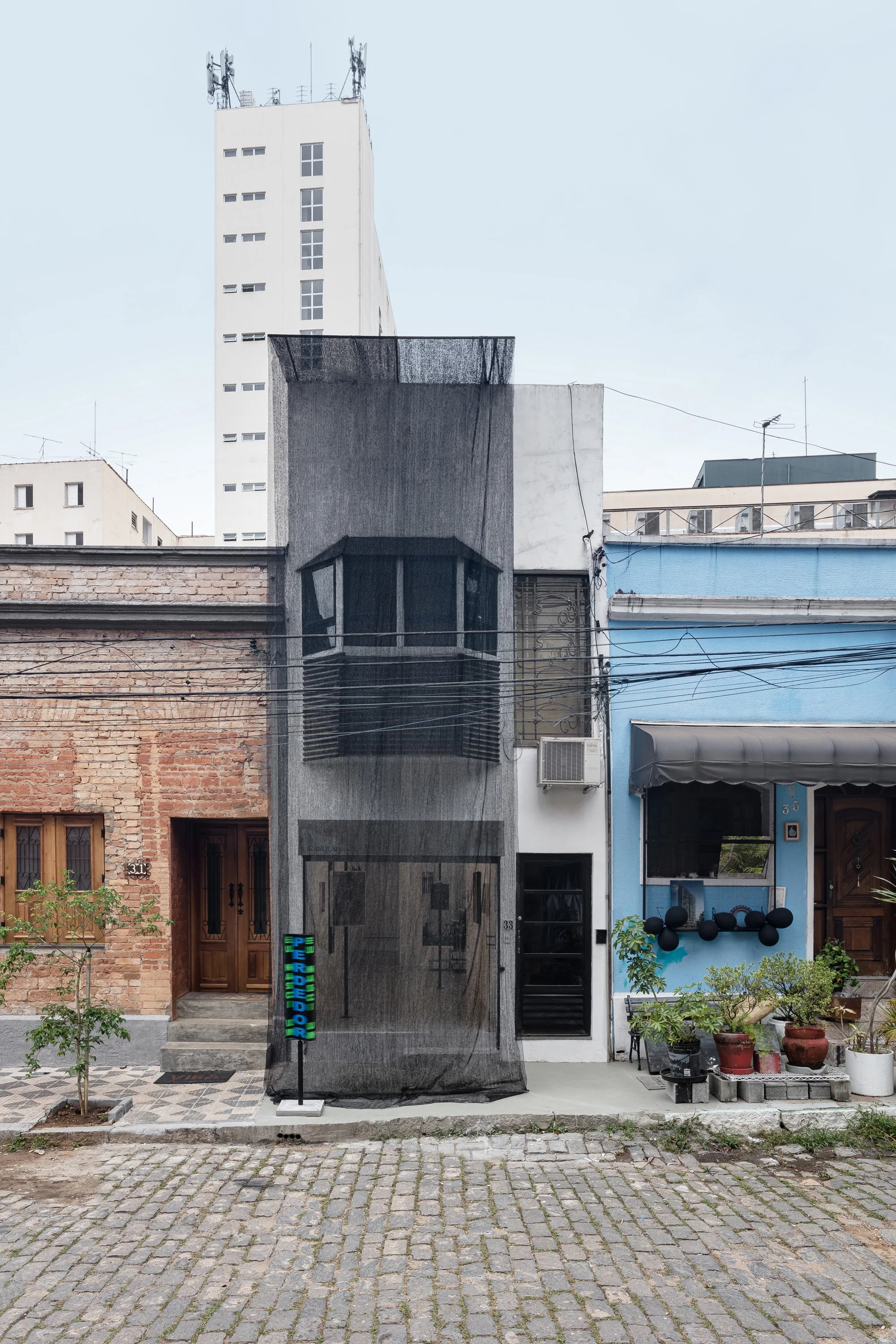
The group’s idea of covering the façade of Zielinsky Gallery with construction safety mesh is a symbolic gesture that highlights how central protection is to them — because this collective body is exposed to multiple layers of violence.
The very choice of the title “Guarda-corpo” affirms ancestral meanings. Since the 17th century, records from the Portuguese Inquisition show that African and Afro-descendant men were imprisoned in Brazil, Portugal, Angola, and other territories for carrying amulets known as “guarda di corpo” — devices meant to “close” the body against the violence of masters, against weapons, evil spirits, and, ultimately, against death.
In 2025, Vilanismo reactivates this memory as a way of contesting the field of existence. This is art — and it is also the politics of life.
*In this text, Guarda-corpo is a term that can refer to civil construction — a safety net or barrier mesh — elements that compose the installation covering the façade of the gallery during the current exhibition. At the same time, the term transcends its literal meaning: it can also be understood as body-shield, evoking the ancestral amulets carried by enslaved African and Afro-descendants as protection against spiritual and physical violence. Ultimately, the title brings together ancestrality, materiality, and collective political (group) resistance.